Lunar Occultation of Uranus – 5th December

On the evening of the 5th of December The Moon moves in front of (occults) Uranus.

Timing is roughly…

Disappearance: 16:45 UT. Moon and Uranus are low down in the eastern sky.
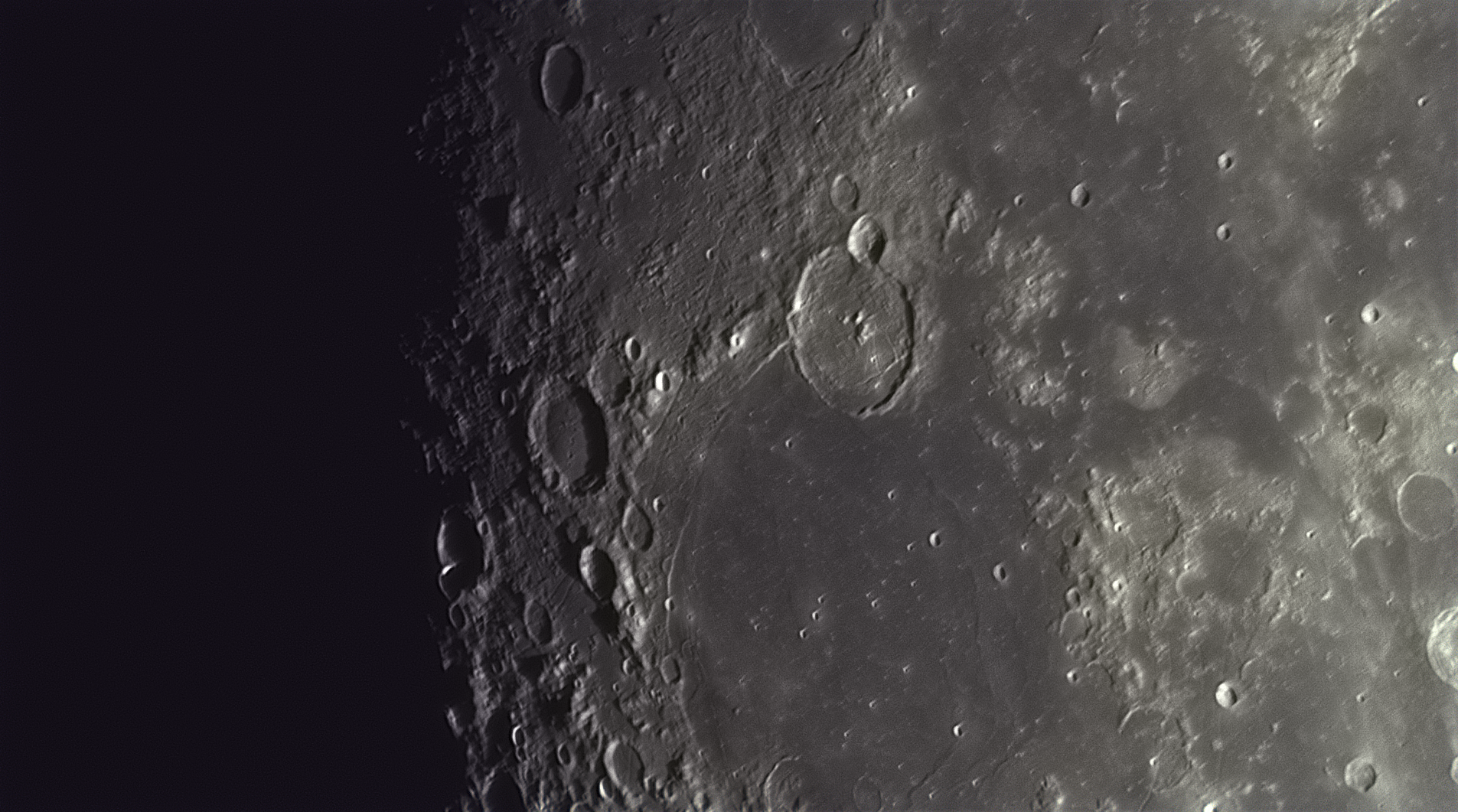
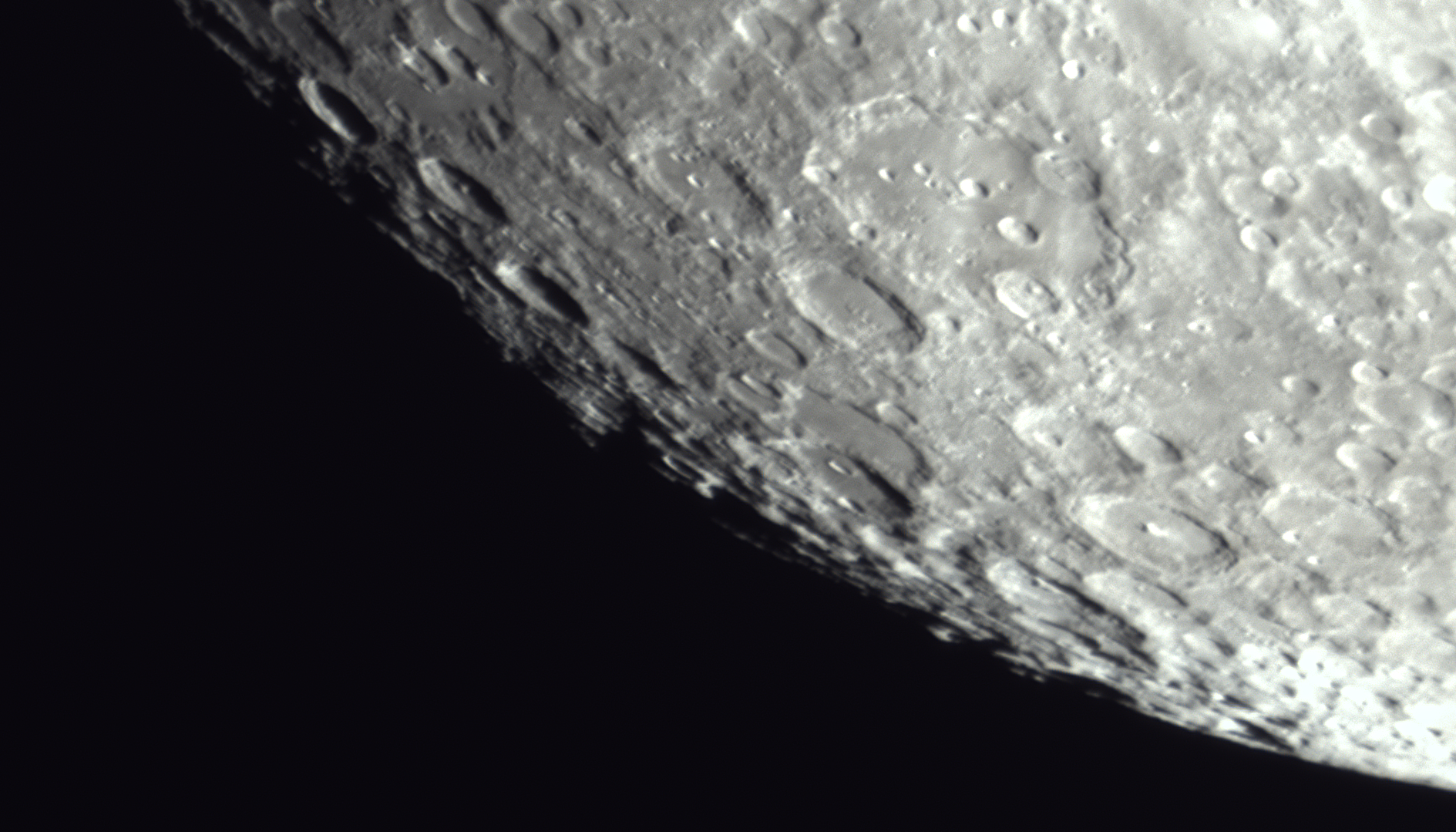
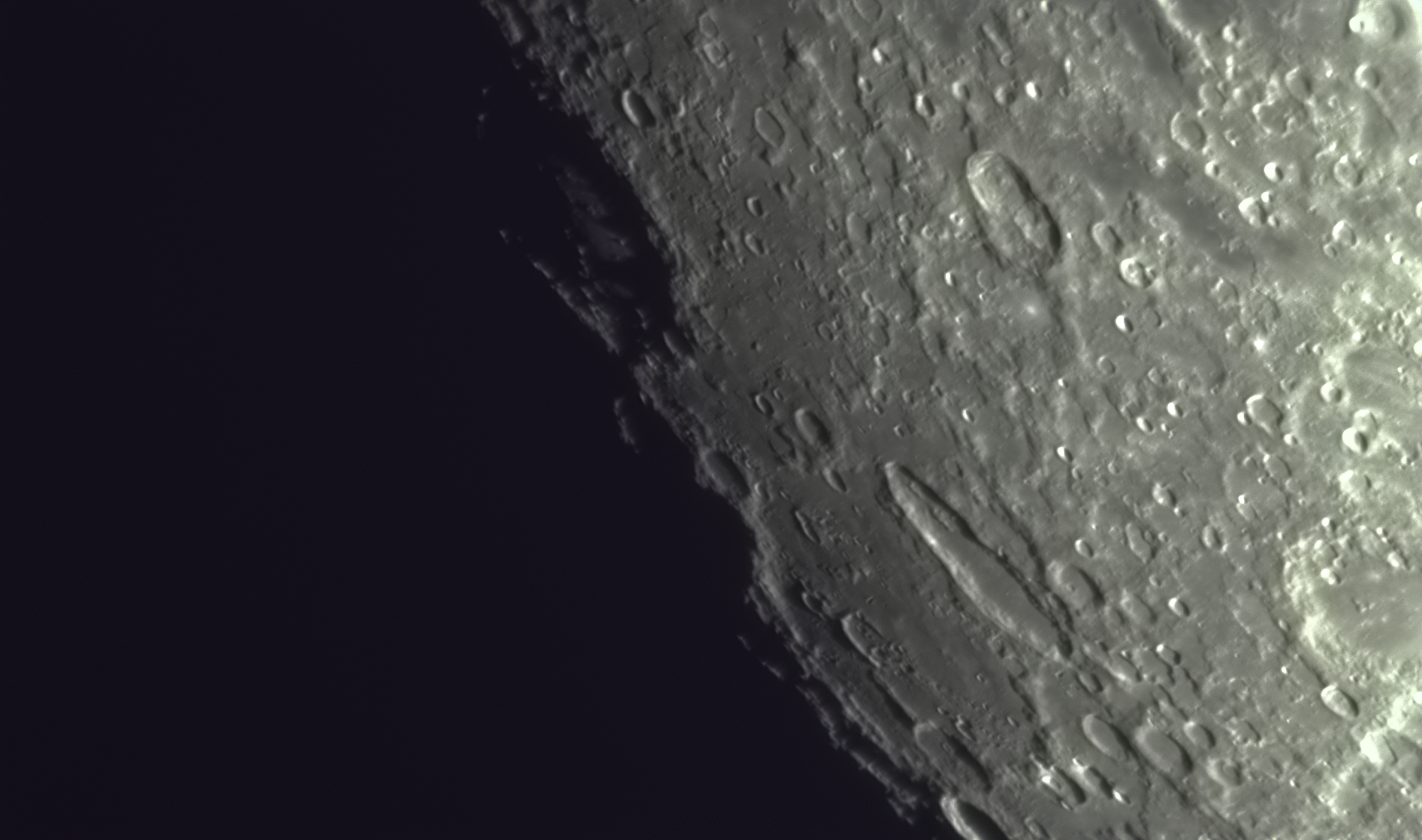
Uranus disappears at the dark limb, close to crater Pythagoras.

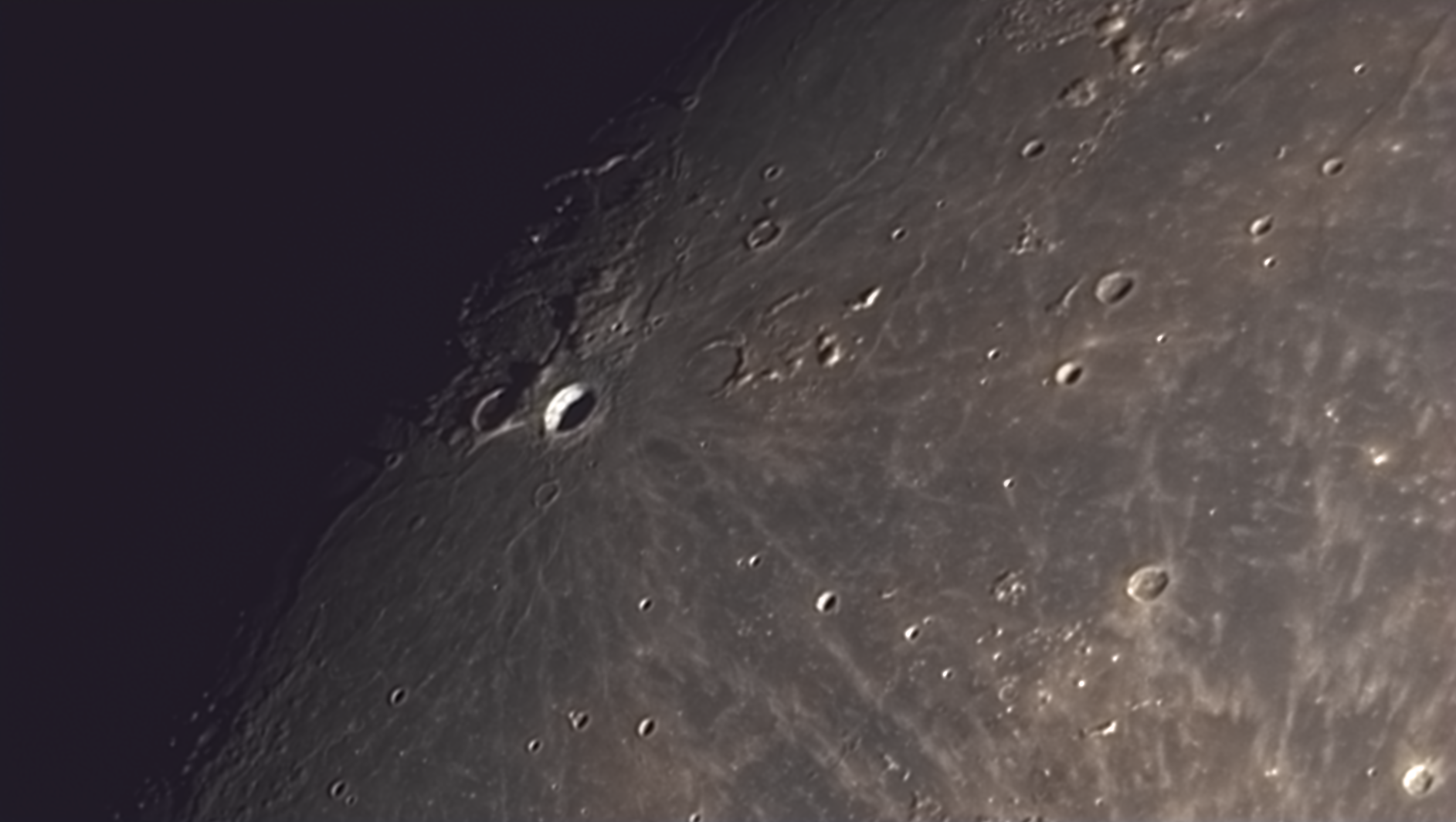
Reappearance at the bright limb, by crater Reimann: 17:20 UT.

The timings shown are as seen from my location, so your timings may be slightly different from these.

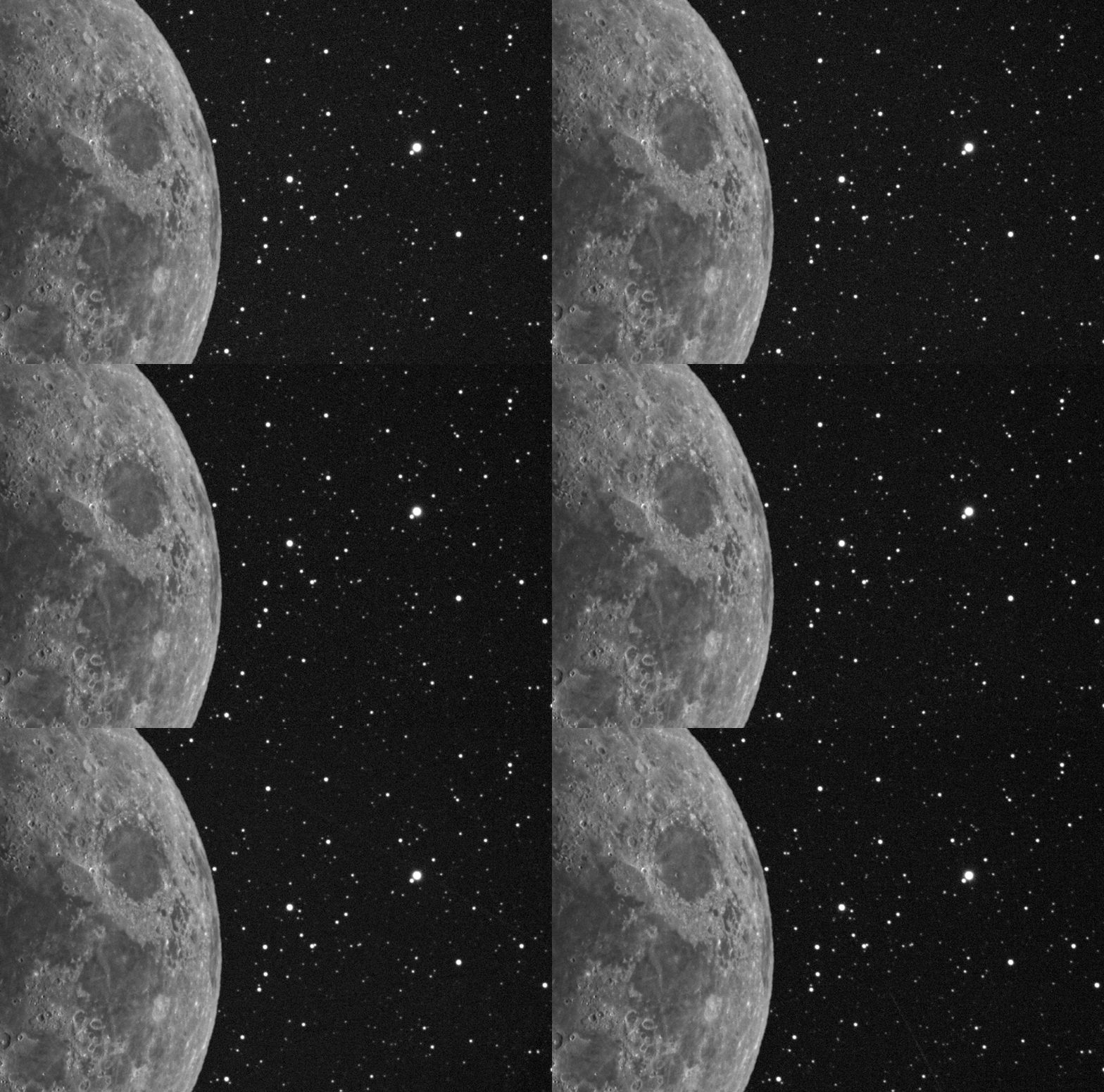
The speeded up animation below, created using Stellarium, shows what we might be able to see at disappearance and reappearance.

Comet C/2022 E3 (ZTF) Naked eye in the new year?

Comet C/2022 E3 (ZTF) is meant to become just about bright enough to be seen with the naked eye in the new year.

It is currently at about 7th magnitude (3rd January 2023) in the northern part of the constellation of Corona Borealis, low down in the early morning eastern sky.

Over January, it heads northwards, slowly picking up speed and brightening.

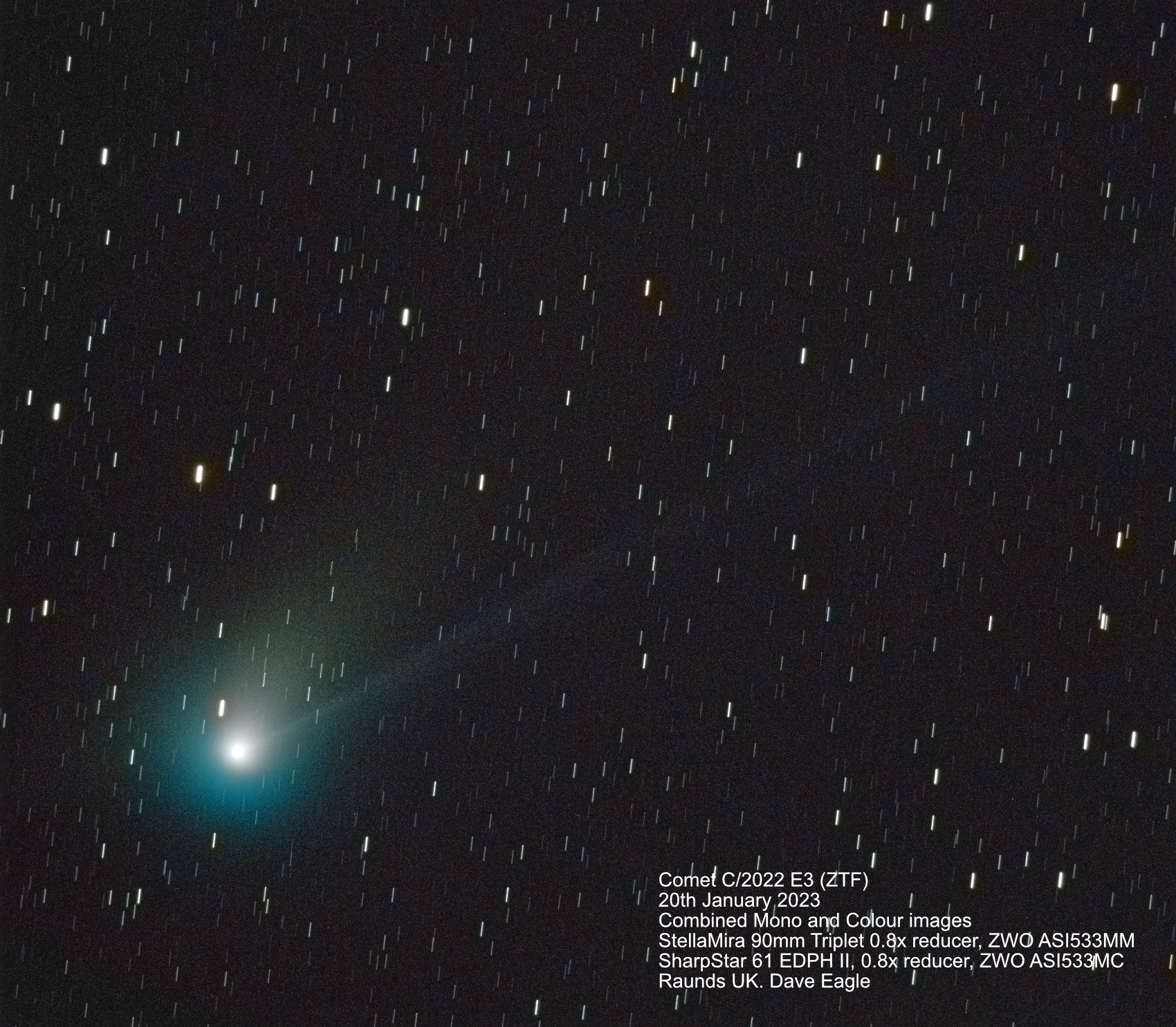
Image of the comet taken on the morning of the 20th of January.
C2022E3-ZTF-20220120-Autosave003-Small

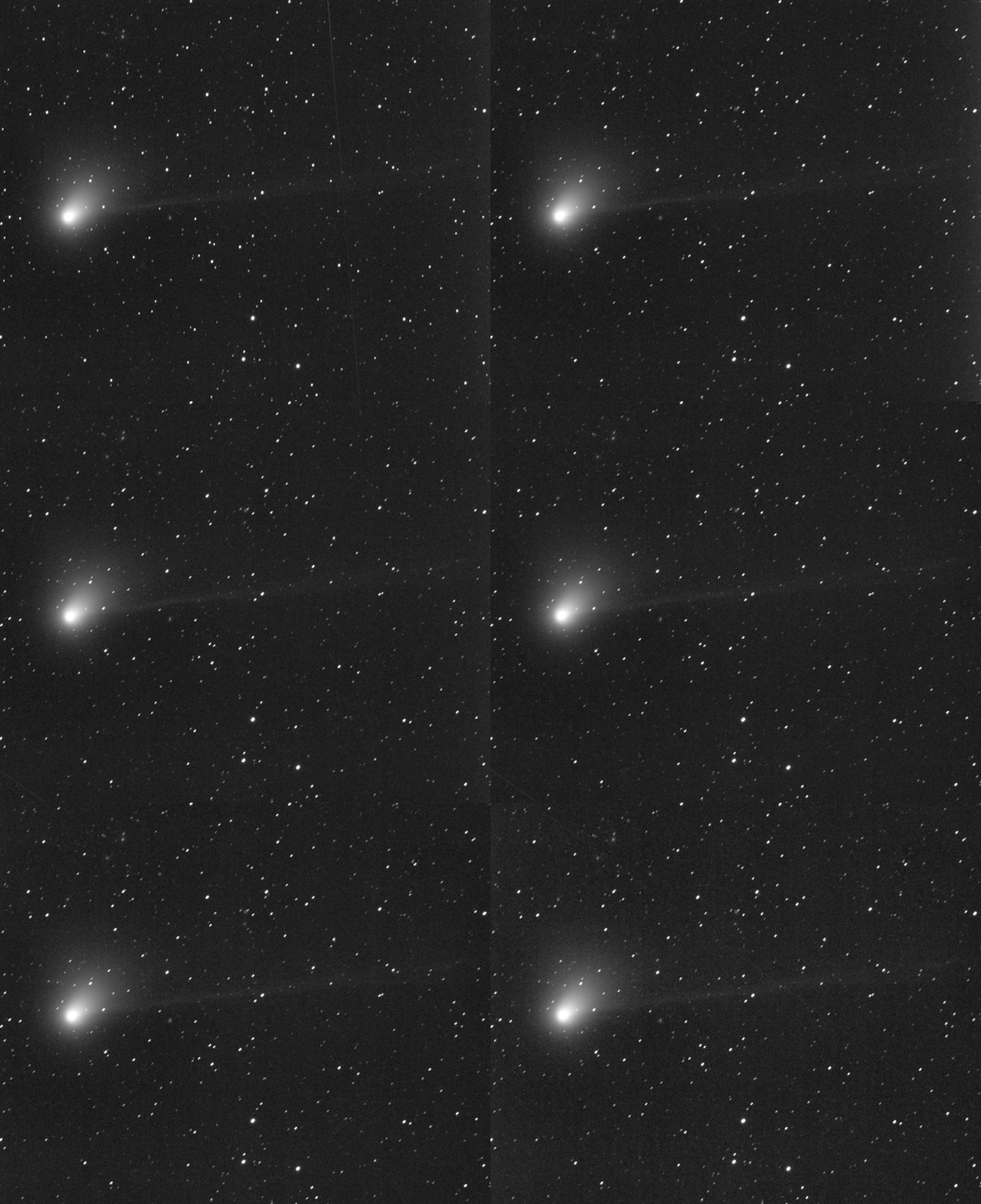
Animation of C/2022 E3 (ZTF) moving northwards through Corona Borealis on the 6th of January in bright moonlight.

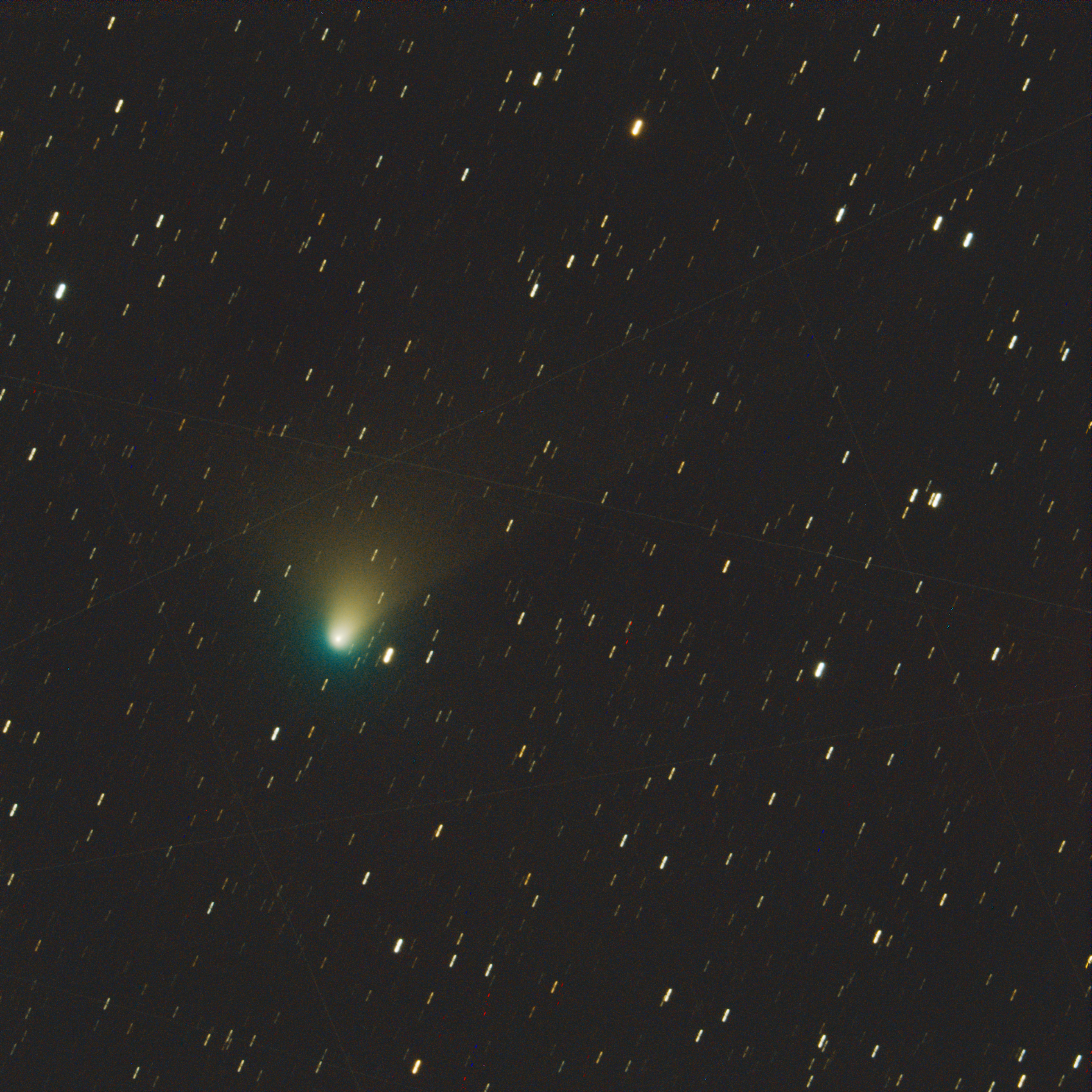
Colour image of Comet C/2022 E3 (ZTF) taken 3rd January 2023 through the murk.

CometC2022E3-ZTF020220103-Full-Stack-Small

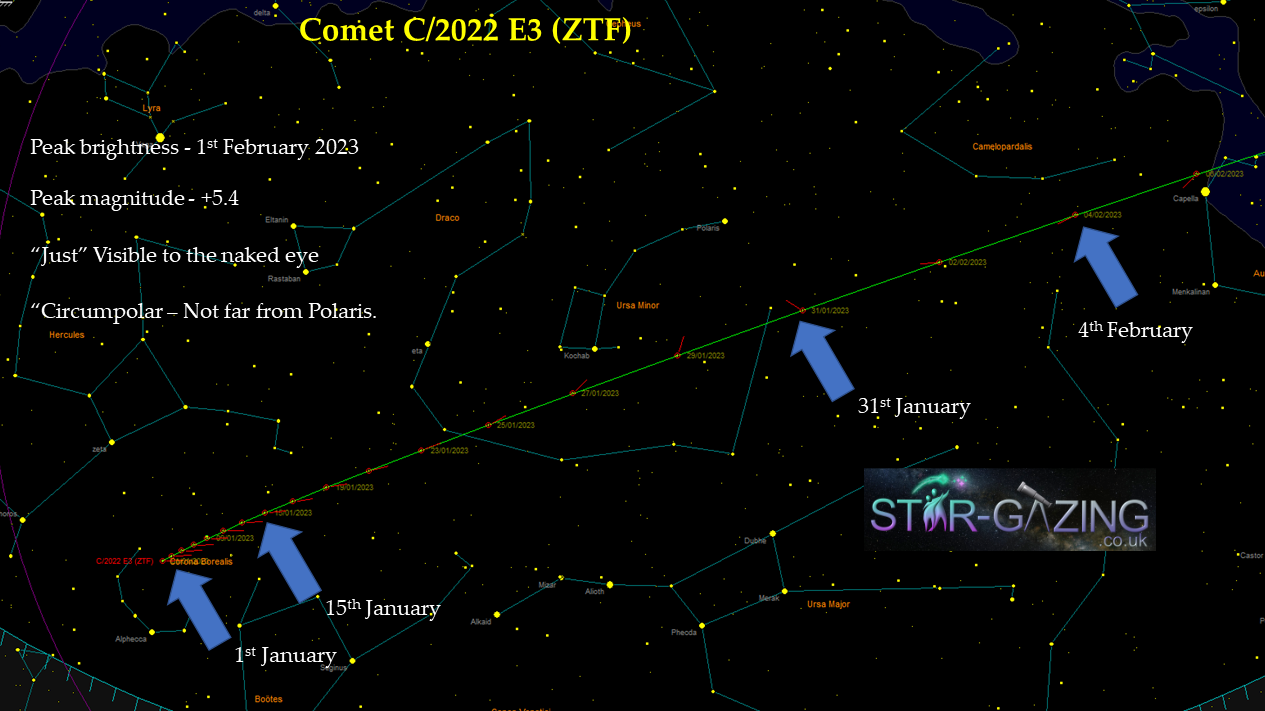
At the start of the new year it is located just north of Corona Borealis.

It reaches Perihelion (closest to The Sun) on the 12th of January.

It reaches the middle of Draco’s body by the 24th of January, where it should now be a lot brighter.

By the end of January the comet is passing close to Ursa Minor and Polaris, so will be at a respectable altitude throughout the night.

It reaches its maximum magnitude of +5.4 on the 1st of February, when it should “just” be visible the the naked eye from a dark sky.
The beginning of February is when the comet will be at its closest to Earth.

A bright gibbous Moon will be visible in the evening sky, so may be best to observe or image the comet in the morning sky, once The Moon has set.
It’s not going to be a spectacular comet, but should give us something nice to look at or image.

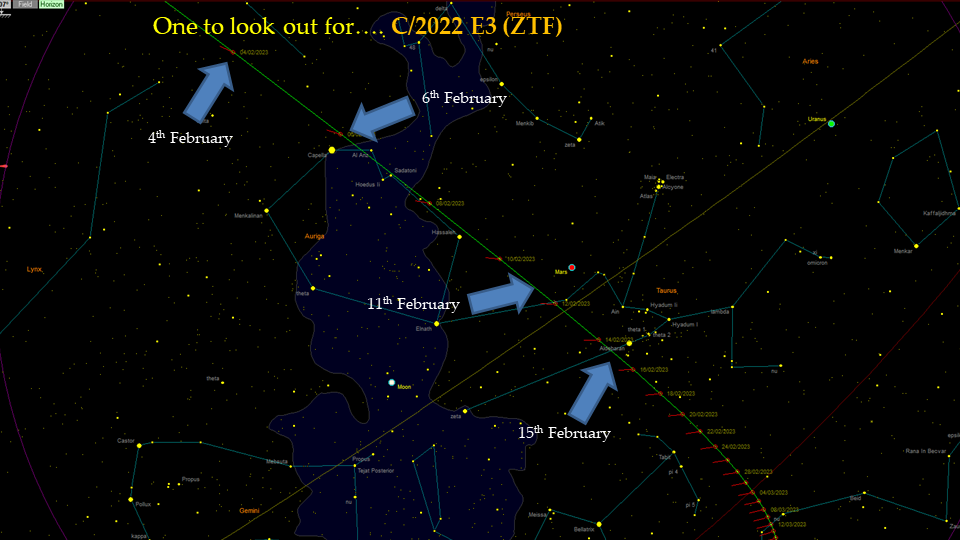
On the 6th of February the comet moves through Auriga passings very close to the first magnitude star Capella.
The Moon rises a little bit later that night, so get out before that rises fairly quickly after dark.

Moving southwards by the 11th of February the comet passes to the east of Mars in Taurus.
The Moon is now well out of the way and visible in the morning sky, so will not interfere with viewing or imaging the comet in the evenings.

A few days later on the 14th & 15th of February it passes to the east of the first magnitude star Aldebaran and the Hyades open star cluster.

After passing through Taurus, the apparent motion of the comet is now slowing as it fades.

It passes just west of the shield of Orion the last two weeks of March and then on into Eridanus.
The comet is moving in a large retrograde loop, which swings it just south of the first magnitude star Rigel in the foot of Orion towards the end of April.

It’s developing very nicely now, so let’s hope for a good show.

🤞

The maps below show the path of the comet from January until March.


My latest astrophotography guide now available to order.

Star-Gazing Guide to High Resolution Lunar & Planet Imaging.
My latest imaging guide is now available to order from my online shop.
Click here to visit my online shop.

BookCoverWebCamImaging-Front-Cover-20221002  Saturn-Jupiter-Mars-2022-10-02-2233_6-Capture_____150r_40T_626regP2 

Almost 2 years in the writing, trying out lots of different techniques, this edition of my astrophotography guide leads you step by step through a number of tried and tested image capture and processing workflows to help you get the very best out of your lunar and planet imaging.

My guide covers the taking of video images and subsequent stacking and post-processing using a number of software packages.

Among the techniques covered within this guide are:

  • Introduction to the planets and Moon.
  • The equipment and accessories used to take images.
  • Why we use videos to capture Moon and Planet images.
  • Using SharpCap to capture Moon & Planet images.
  • Stacking the video files using AutoStakkert! and AstroSurface.
  • Sharpening the stacked images using Registax and AstroSurface.
  • Colour correcting images using Registax and AstroSurface.
  • Final image polishing using Photoshop and Affinity Photo.

Visit my online shop or the link below for more details:
https://www.star-gazing.co.uk/Shop

High Resolution Lunar & Planet Imaging

Mars Approaches Opposition.

Mars is approaching Opposition.
As a result the distance between The Red Planet and Earth is decreasing, so the apparent size is getting bigger.
It reaches opposition on the 8th of December, when The Moon will also move in front of it (an occultation).
More details about this later.

As the disk gets bigger, it makes it a bit easier to view and image features on the planets surface.
Mars is high up in Taurus as well, so that really helps, keeping the planet clear of most of the clag in the atmosphere lower down.

It still has a fairly small disk compared to Jupiter and Saturn, but you can quite clearly see the north polar cap and the dark triangular-shaped feature of Syrtis Major in my image of the gibbous phase below, taken on the 8th of September 2022.
Mars-2022-09-08-2318_7-CapObj_AS_p50_g4_ap25_Drizzle15-RGB-AS

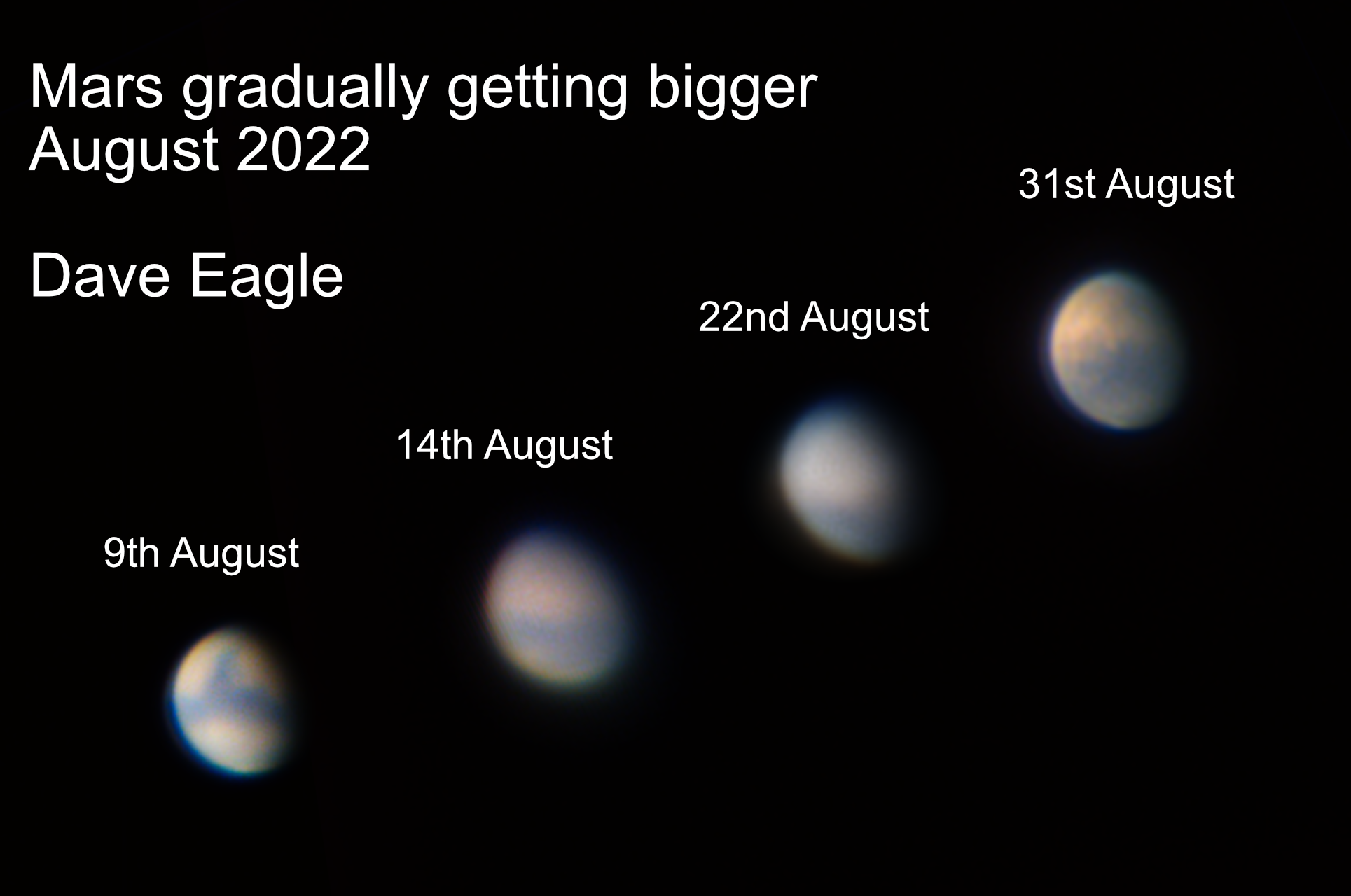
My images below taken under varying conditions, were taken in August.
This shows progress in growth even over just a month.
Mars-Growoing20220809-20220831

How big is Mars going to get?
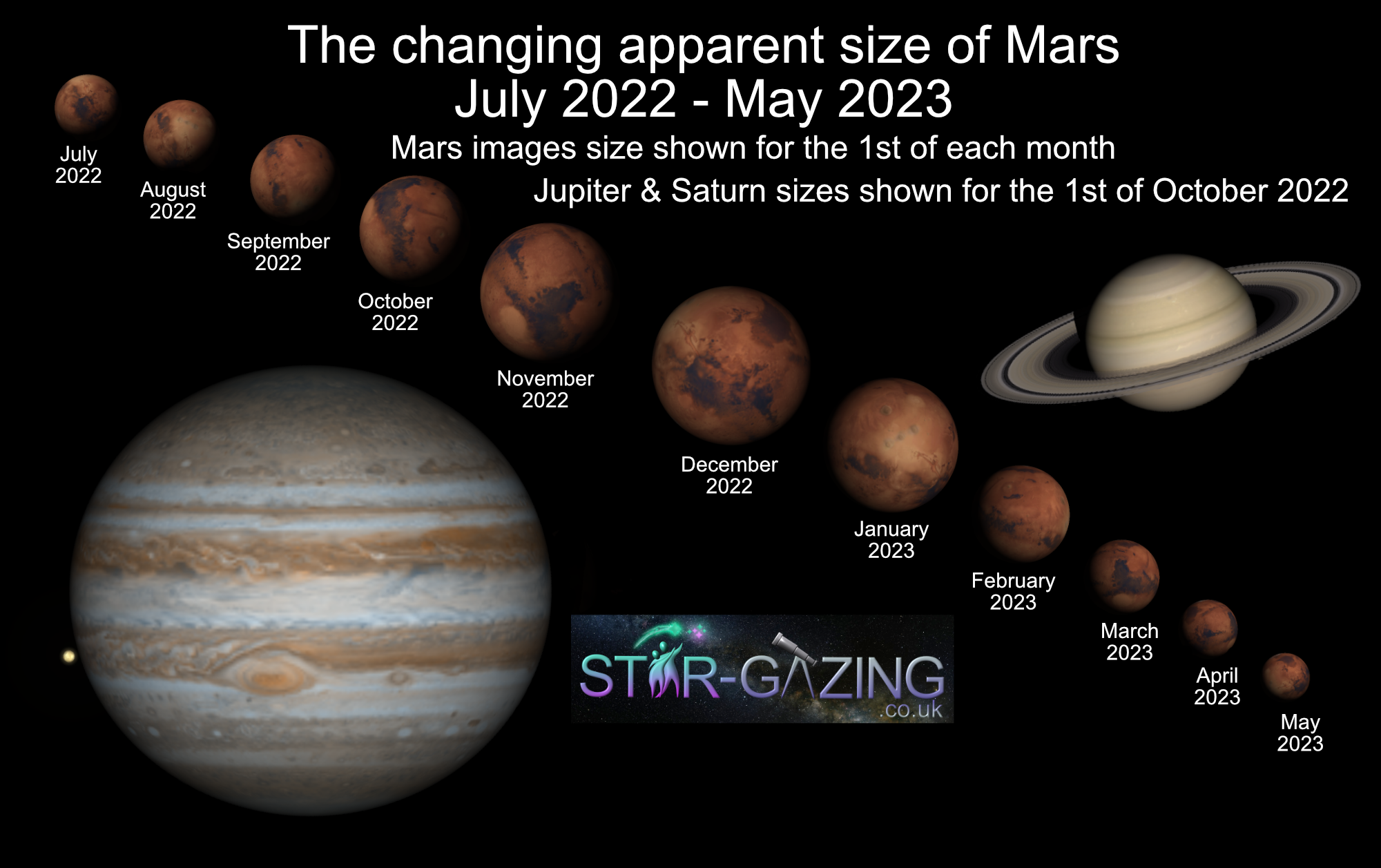
I have used Stellarium to create the diagram below to show just how big Mars will get over the next few months and the changing of its phase, as the angle to The Sun changes.

In December the disk will be about the same size as Saturn’s.
But you do have to be quick!
The distance increases rapidly in the new year, so by February it will be almost half that size, making features much more difficult to make out.

Here’s to a good Mars apparition, and let’s hope we have some good clear skies for us to view it.


Mars-Change2022

A morning of planets

I managed to wake in time to catch Jupiter and Mars before the sky started to brighten.
I could see Saturn just about to dip below the neighbours roof, so was too low for me to get in the scope.

I easily got Jupiter in my sights, being a lot higher in the sky.
As soon as my first images were starting to focus, it was obvious something wasn’t quite right.

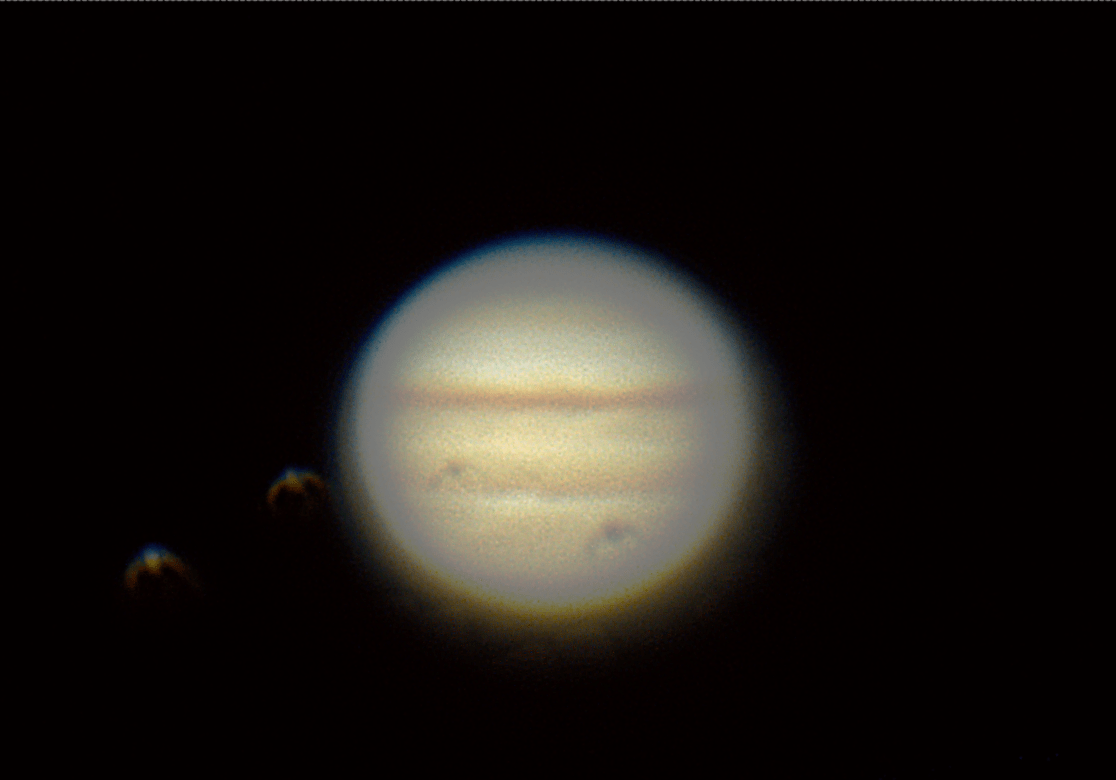
There were two shadow transits on the disk of Jupiter and I could clearly see that they looked strange.
In the over-processed first image below, arcs are visible on the satellite shadows and Io and Ganymede.

2022-08-09-0211_2-CapObj_AS_p20_g4_ap137_Drizzle15-Bad-Collimation-WP-Over

I’m definitely not going to get much detail with that right mess.

It was immediately obvious, that despite me thinking I had collimated my C11 the previous morning, it definitely needed tweaking again.
Collimation was was well out. SCT’s can be notoriously difficult to collimate.

I thought it was going to be one of those nights out with the scope when everything goes wrong as patchy cloud started to fill the sky.

Undeterred, I slewed the scope over to a bright star in the clear gap and de-focused to produce a bright ring.

Using the defocused star, I took quite some time using my trusted method to get the ring concentric, meaning that the scope was collimated.

I then sent the scope back to Jupiter, which was now peeking in and out of clouds.

Within half an hours, the clouds had mostly cleared. Game On!

The image now looked much, much better. The satellite shadow and satellites were now nice and sharp.

I could see the twilight starting to creep in, so didn’t try and use the Atmospheric Dispersion Corrector (ADC).
Setting that up properly would have eaten up even more valuable time, when I could be capturing images.

But I was now running out of time…

I ran off a few videos, before putting in a 2x Barlow lens to increase the image size of the disk on the camera chip.

I was still able to see that the focused image was much better than the last time I tried that, so should be able to get some decent enough images.

Once I had captured a few videos of Jupiter, in the brightening twilight, I pointed the scope towards Mars, centering it easily in the Barlow camera view.

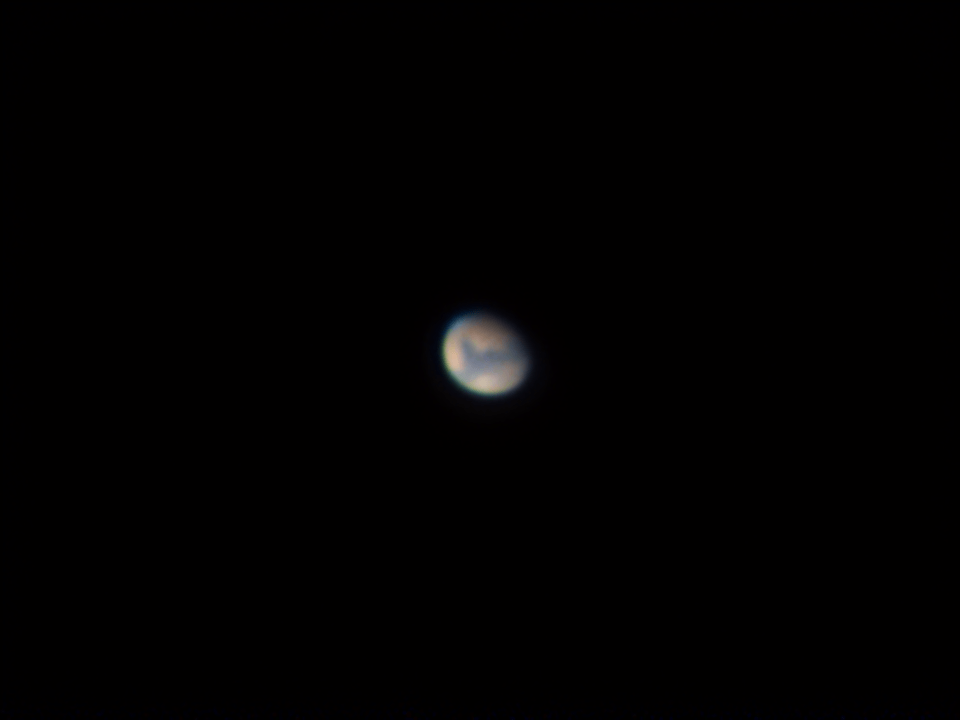
The dark triangular feature of Syrtis Major was showing very nicely on the gibbous planet.

I then took a few images of Mars, which had  then packed away.

I turned out to be a great morning, plus I didn’t lose too much sleep either. ?
Next time I’ll leave enough time to use the ADC to try and sharpen the images a bit better.

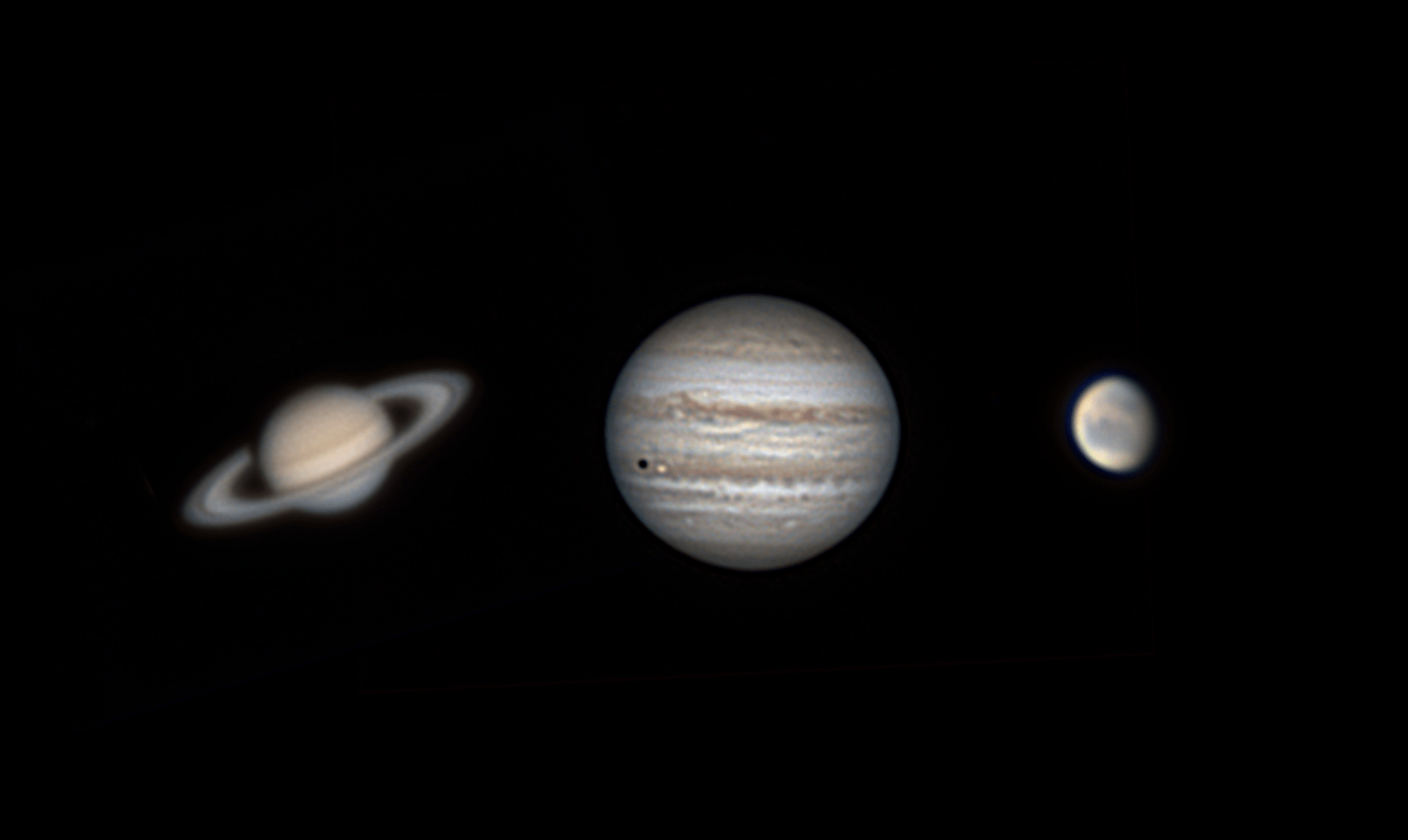
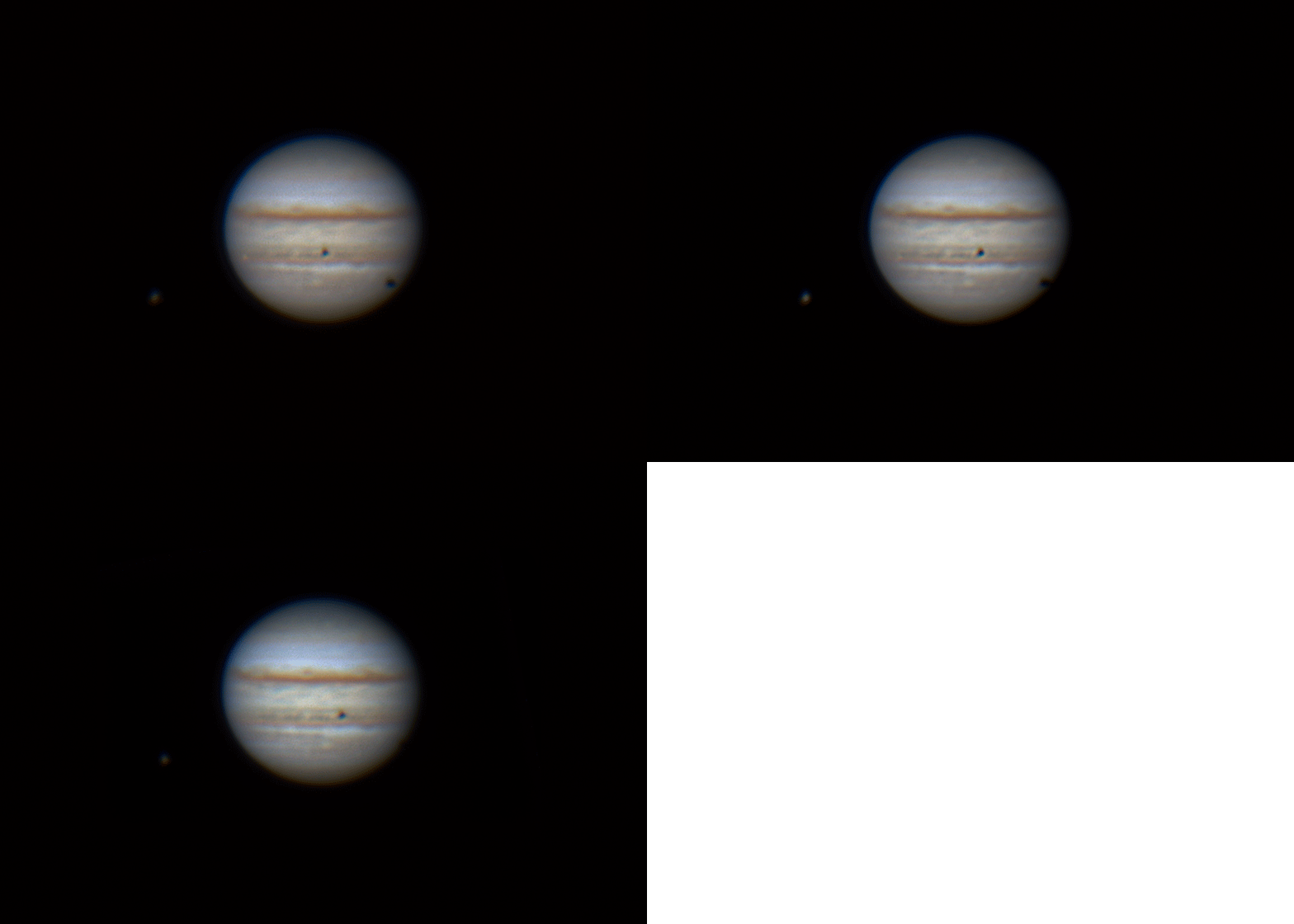
Below are my images and at the bottom I have put an image showing the relative sizes of Mars & Jupiter, to show just how small Mars is at the moment.


Webb’s Solar System Test Images

In a much quieter way, some images of some solar system objects were released by The Webb Space Telescope team.

OK, they may not be as spectacular as the deep sky images released a couple of days ago, but they do show just how capable The JWST will be at collecting data and imaging objects within our solar system. So it won’t only be exploring the deep sky. The telescope may be able to see signatures of the deposits on the surface from plumes on the surface of Europa and Enceledus and analyse them from afar.
It also told the scientists how accurately the telescope can track a fast moving solar system object.

Just remember that these are only test or calibration images taken as test images, and are not as refined as the previous released images.

But they are stil quite extraordinary, showing just how powerful and adaptable this telescope is for observing different types of objects.
Deep Sky and much nearer within our own solar system.

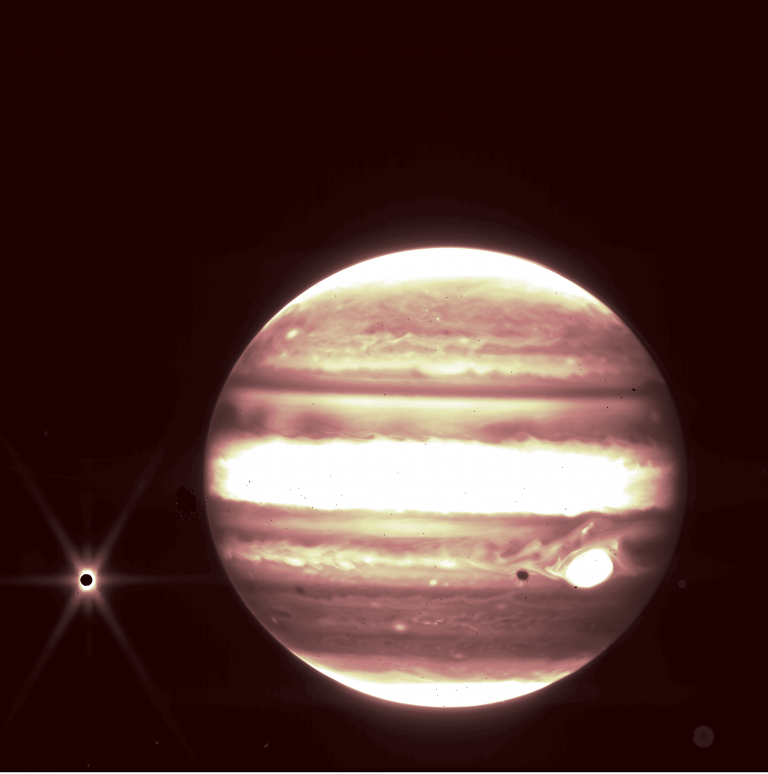
The first image below is of Jupiter taken by the NIRCam instrument with a 2.12 micron filter.
The bright moon Europa is also seen to the left of the planet.

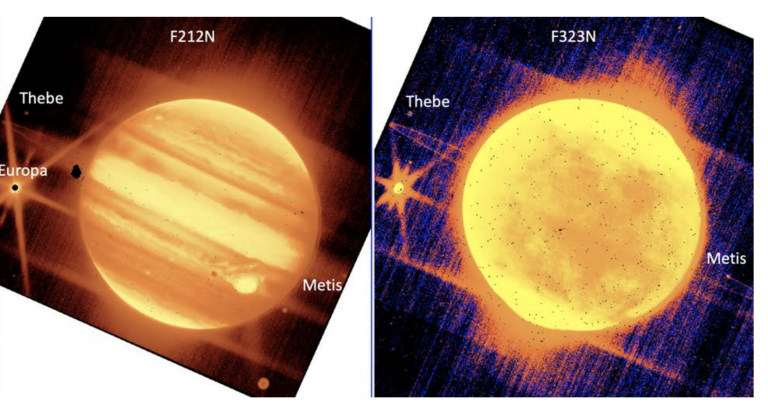
The second two images are also of Jupiter taken with the NIRCam instrument 2.12 micron filter (Left) and NIRCam’s 3.23 micron filter.

Not only are Jupiter and Europa visible, but the much fainter moons Thebe, and Metis, and look closely at the images for another feature.

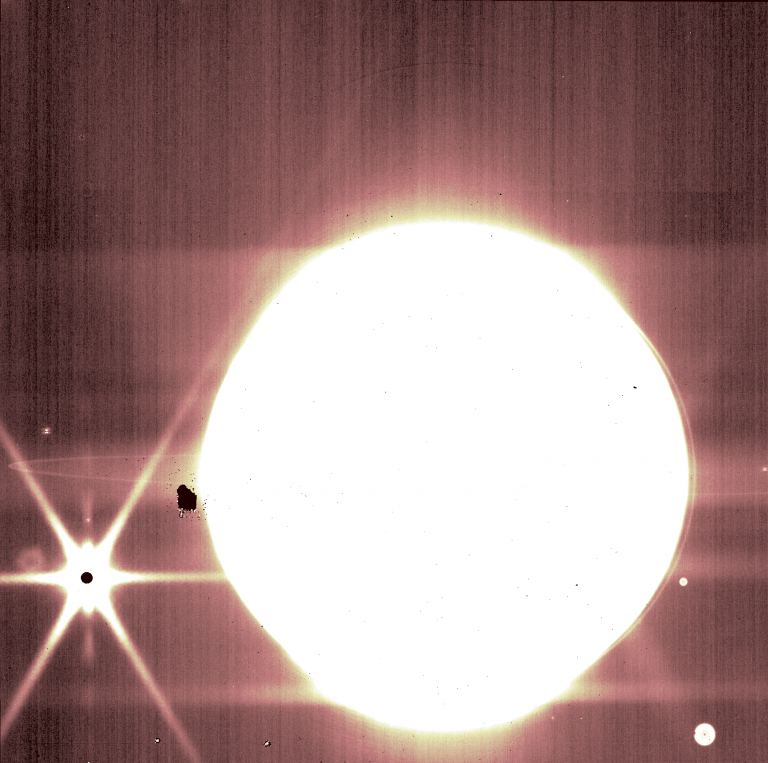
Yes, this enhanced image also shows the faint rings around Jupiter, which can also be seen in the images above.

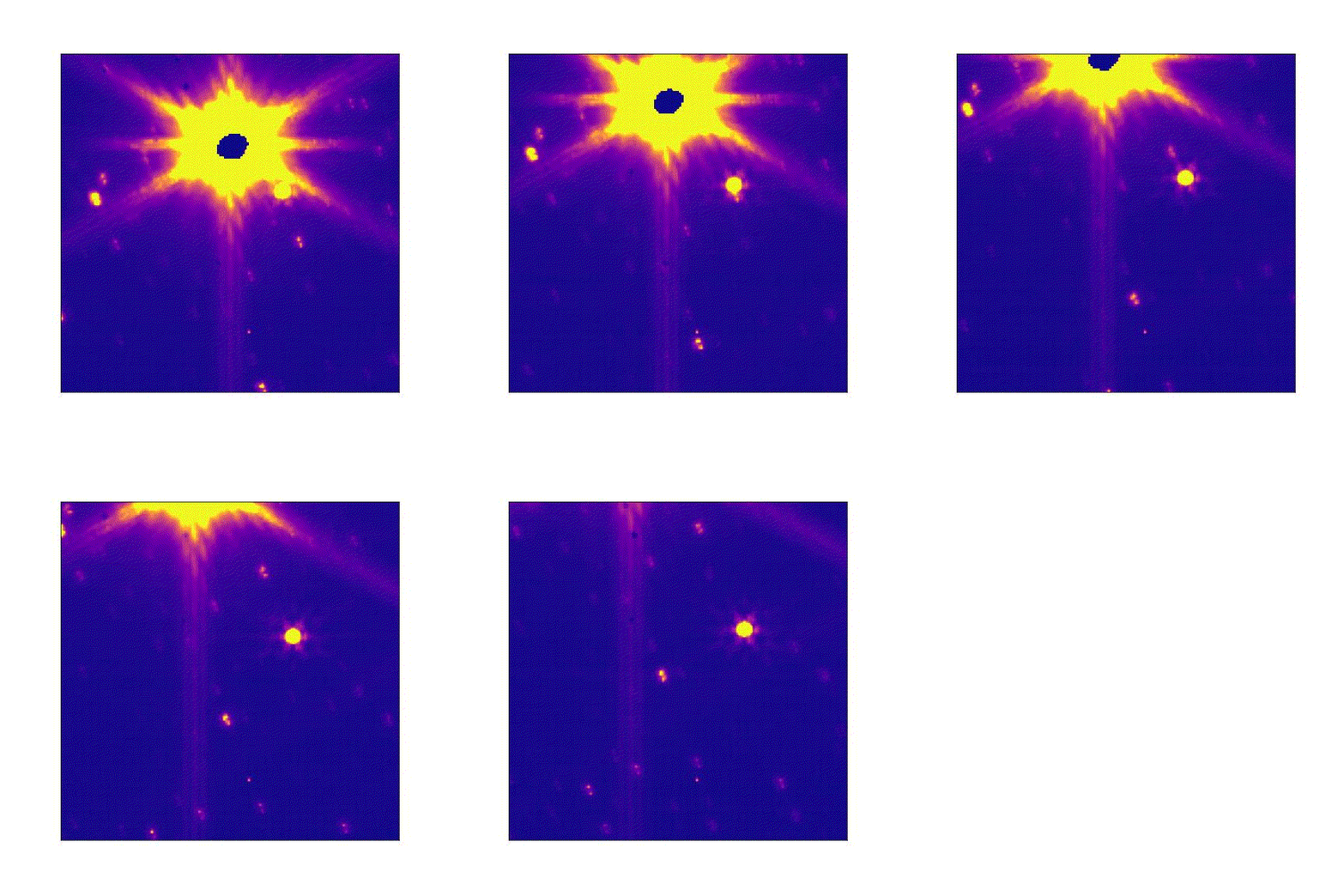
The last image is of the asteroid 6481 Tenzing, taken with the NIRCam instrument, tracking the asteroid accurately.
This is to see how accurately the telescope can track a much faster moving object.

obs1_f277w

Absolutely marvellous achievements proving everything is working as well as expected.
I am really looking forward to seeing a lot more over the next 20 years of the mission.

You can read more here:
https://blogs.nasa.gov/webb/2022/07/14/webb-images-of-jupiter-and-more-now-available-in-commissioning-data

Webb’s Carina Nebula

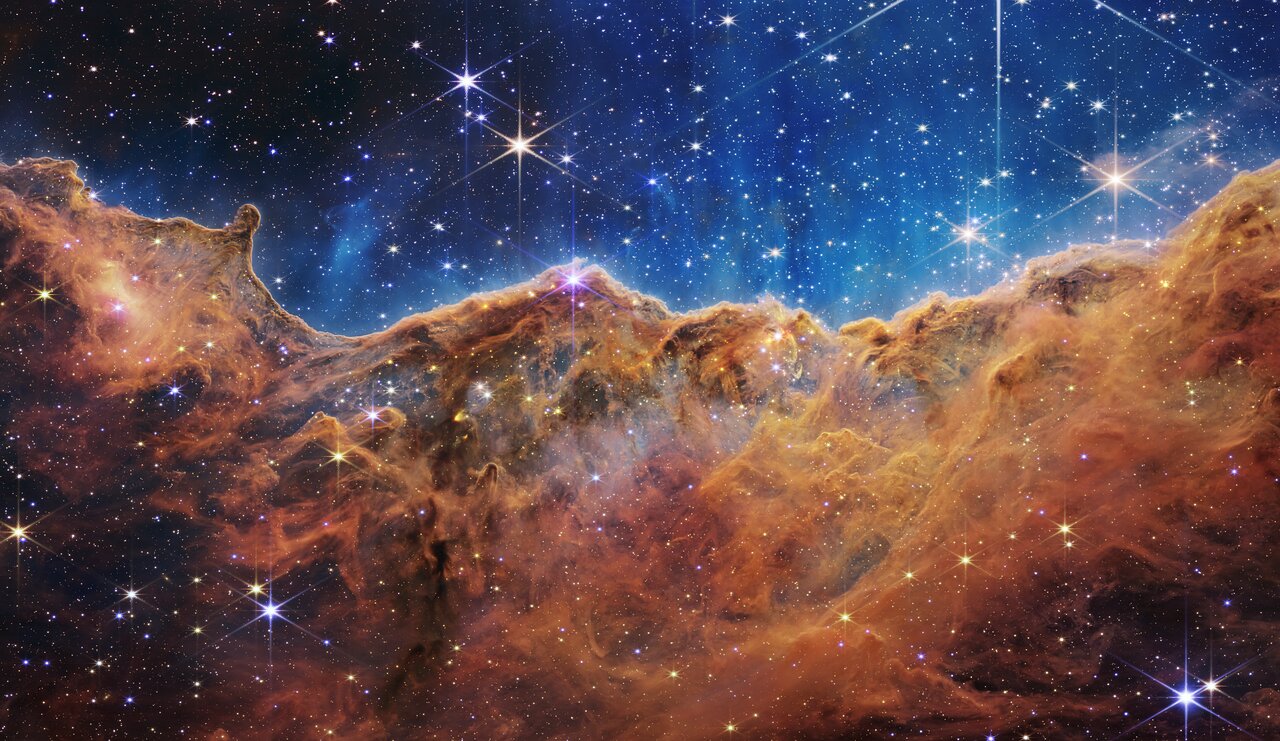
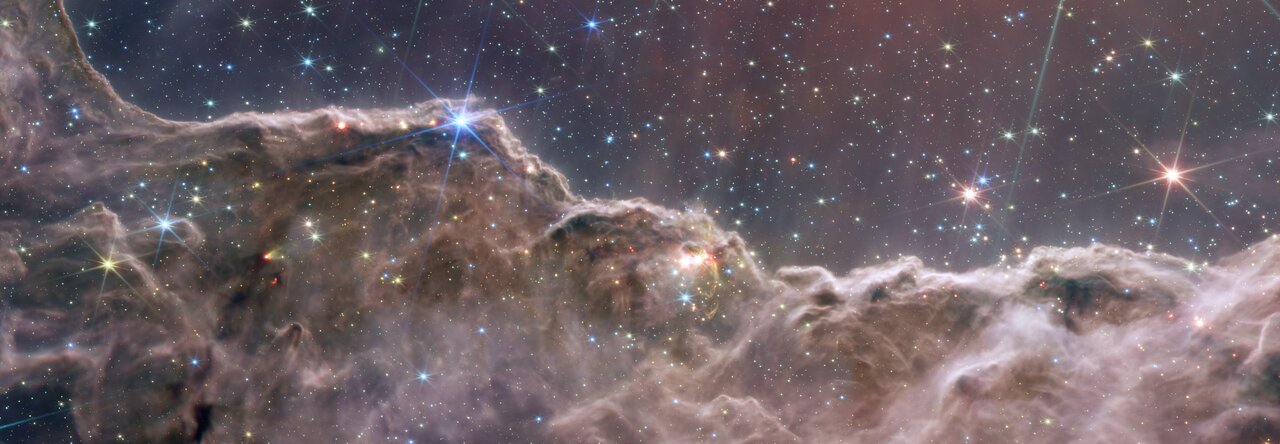
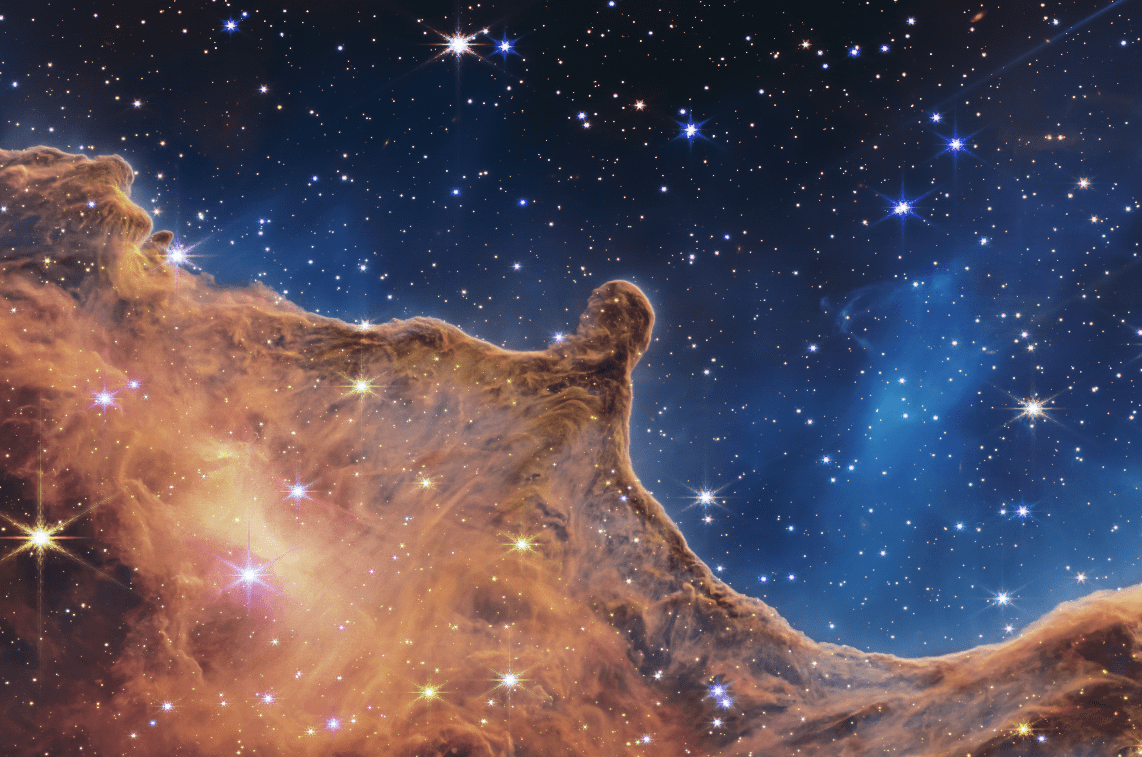
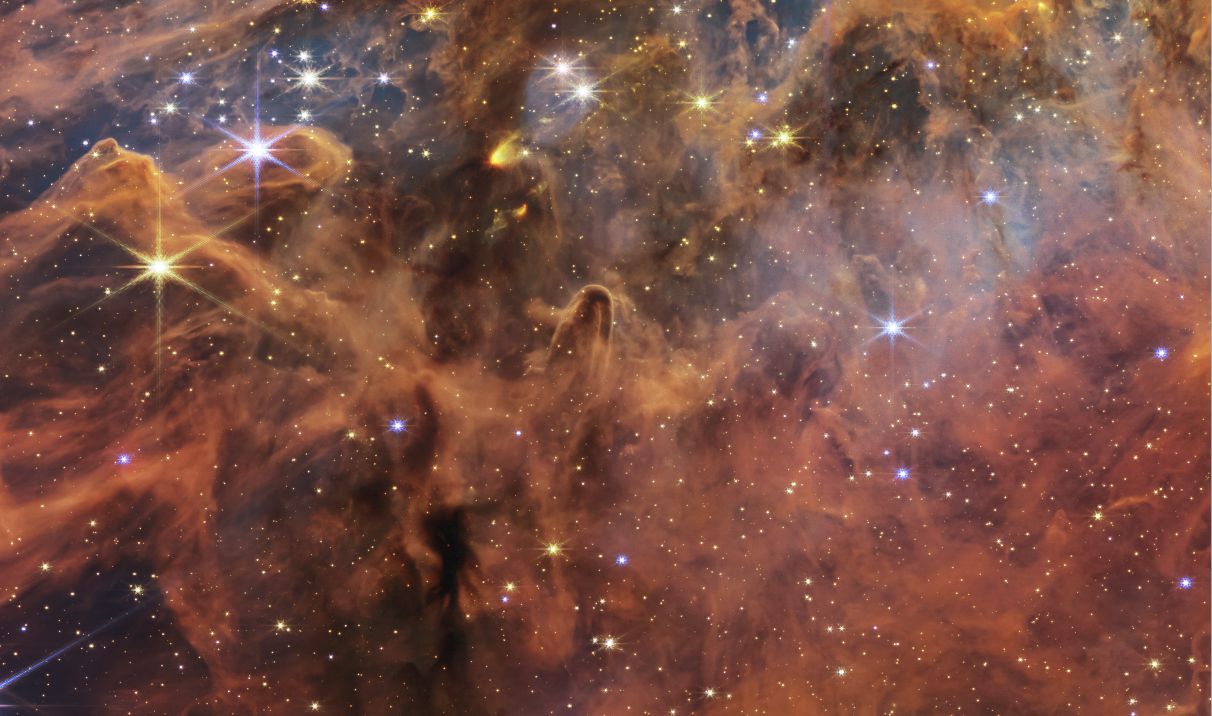
Webb also revealed a NIRCam image of the “Cosmic Cliffs” within the Carina Nebula.

This nebula is also in the far southern sky, and shows an absolute wealth of detail.

This is a huge cloud of mainly hydrogen gas and dust, where stars are being born.
A huge star-forming region.

The Hubble Space Telescope could not see into these clouds at the visible and near-visible wavelengths it used.

Webb, however, being able to detect infra-red light can see the newly created hot stars nestled deep within the gas and dust.

Another image of the same area, using NIRCam and MIRI data reveals more of the stars nestled within the gas and dust.

I just love these two wonderful structures revealed in the images.
I wonder if these will become just as iconic as Hubble’s “Pillars of Creation”?

Carina-Pillar-2


Carina-Pillar

Webb’s Stephan’s Quintet

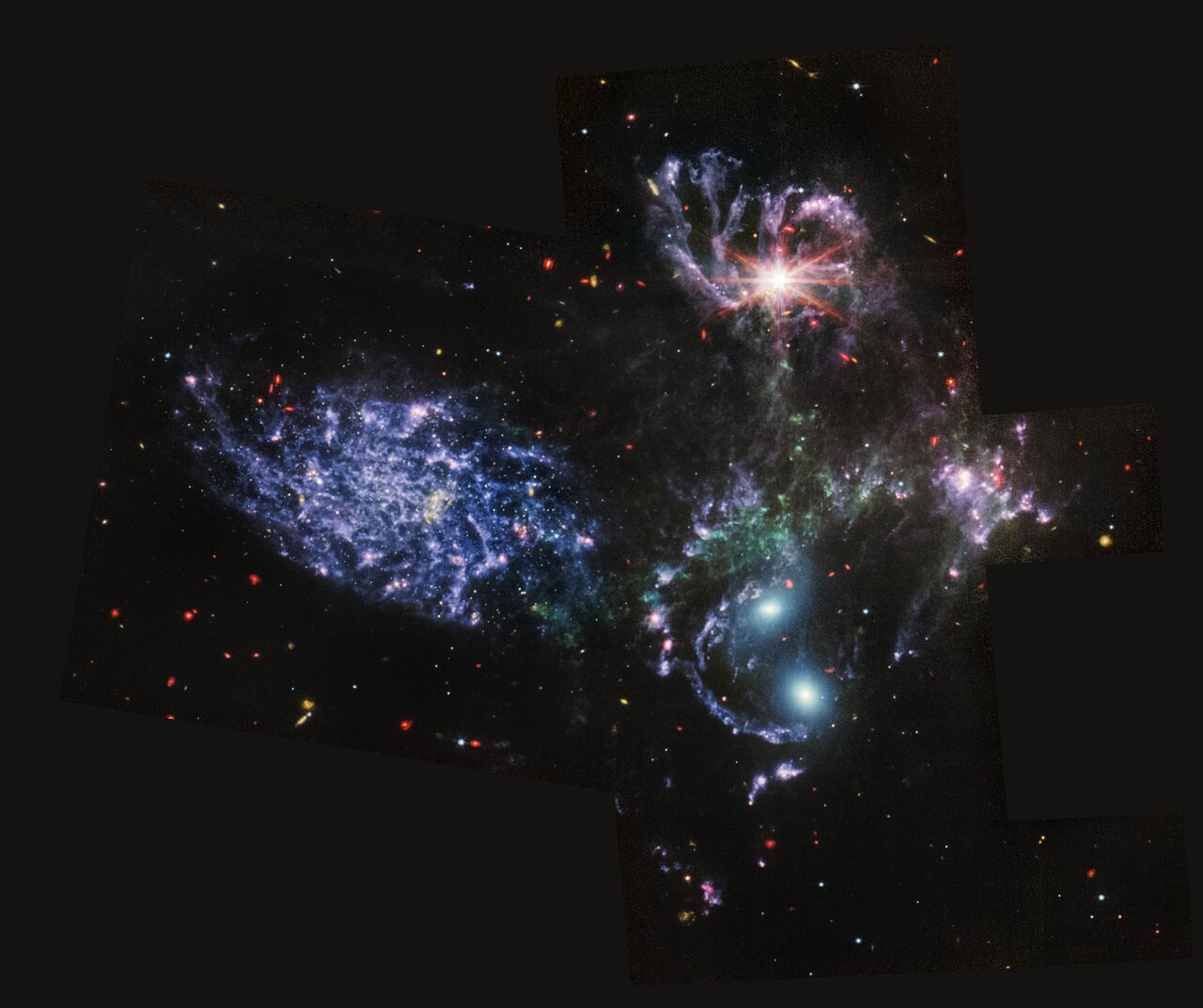
Another extraordinary couple of images returned by Webb is of five galaxies interacting with one another, Stephan’s Quintet.

This is a group of Galaxies located in the constellation of Pegasus.

Due to Webb’s small field of view, these images are made of mosaics of over 1,000 individual images to get this wide field of view.

The galaxy on the left-hand side of the image is NGC 7320 which is 40 million light-years from Earth.
The other four galaxies (NGC 7317, NGC 7318A, NGC 7318B, and NGC 7319) are about 290 million light-years away.

Three of the galaxies are certainly interacting.

Long strings of stars can be seen pulled out from the galaxies due to their gravitational interactions between NGC 7318A, NGC 7318B.
Bright red areas can be seen where these shock waves have initiated star formation areas, rich in Hydrogen, where new stars will be born.
Webb has even resolved individual stars within some of the galaxies.

This image was taken by the NIRCam Instrument in near Infra-red light.

The image below was produced using the MIRI Instrument.
This shows the same galaxies, but in Mid Infra-Red light.
The shock waves around the galaxies in this image, shows just how much these galaxies are interacting as NGC7318B is crashing through the cluster.
The bright reddish “star” revealed in this image in the galaxy at the top is actually a black hole located in the centre of the galaxy.

Webb’s Southern Ring Nebula

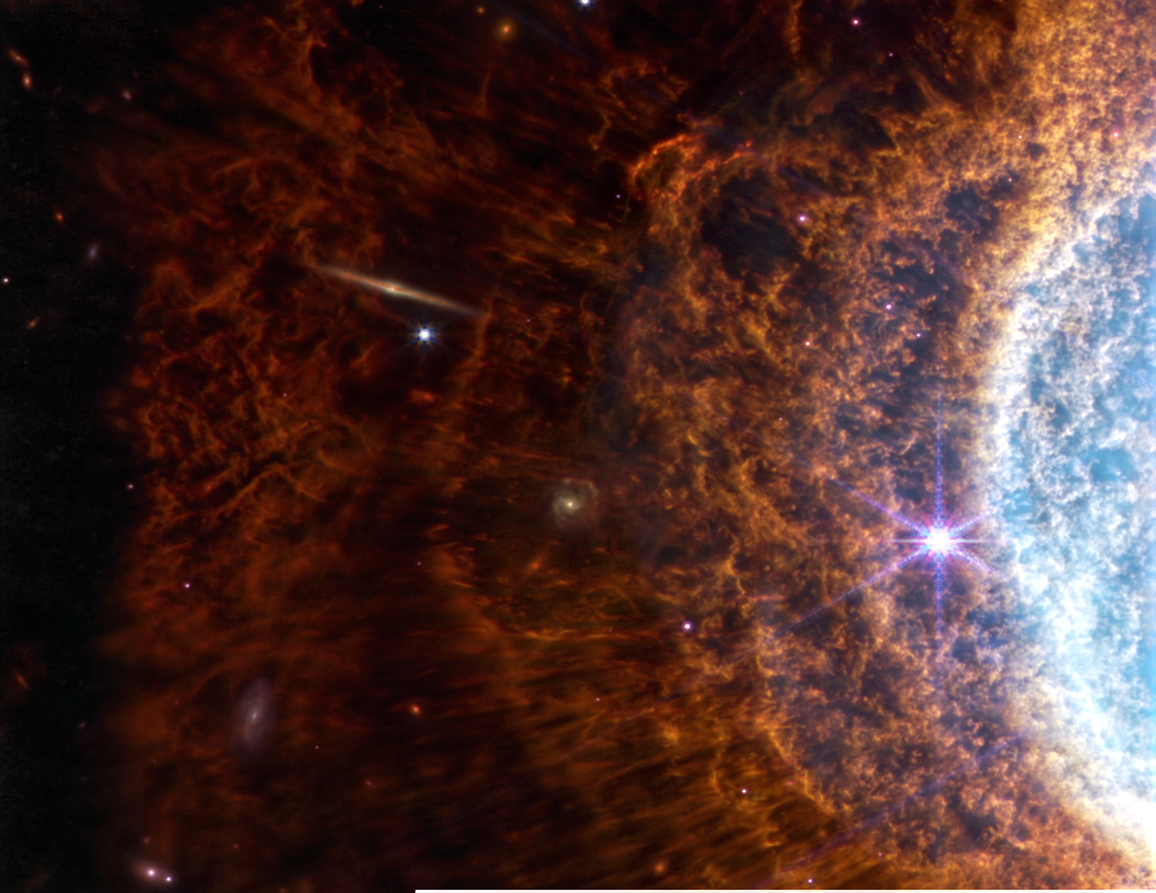
Webb returned data to create two images of The Southern Ring Nebula.
These images were created using data from the NIRCam (Left) and MIRI (Right) Instruments

The Southern Ring Nebula (NGC 3132) is a bright and extensively studied planetary nebula in the southern constellation of Vela.
Its distance from Earth is estimated at about 2,000 light-years, so is well within our own Milky Way.

Despite the name, this nebula has nothing to do with planets.
These clouds of gas and dust were first called Planetary Nebulae when early observers thought they looks like faint planetary disks.

They are in fact stars at the end of their lives, struggling to keep burning.
As a result they are throwing out their outer atmospheres to try and keep their internal nuclear fusion going.
They will eventually lose that battle and expand into a red giant star, before shrinking and fading.
This will be the fate of our very own Sun in some 5 billion years time.

The intricate detail within the structure of the shell of gas is quite extraordinary and shows how the gas is expanding out into space around the star.

The MIRI Image on the right reveals, long suspected, that the central star is a binary system.
There are two stars orbiting around one another.

The crop of the left-hand region of the nebula shows a few beautiful faint galaxies lying way behind, photo-bombing the nebula.

Utterly, utterly marvellous stuff.

Southern-Ring-Galaxies

Webb Spectra

A huge part of The James Webb Space Telescopes capabilities is to analyse the collected light using a spectrograph.
This splits the light into the different colours, where we can see signatures in the light, which tell us what the stars might be made of.

The bright lines we see in these spectra tell us what elements the stars are made of.

Later stars, like our Sun, have lots of heavier elements in them, as these elements can only be created within stars.
Today’s universe has been enriched with these heavier elements from stars that have gone supernova (exploded, for want of a better word) at the end of their lives.

Webb will be looking so far back in time that it will be able to see the very first stars and galaxies that were formed.
These should have very little of these heavier elements and should mainly be composed of hydrogen & helium.

A Spectrum isn’t as attention grabbing as the colour images, but these will give us a huge insight into the objects Webb can observe.

A couple of spectra have already been published.

Distant Galaxy SMACS 0723 – Captured by the NIRSpec Instrument.

We have never been able to take an observation like this of a galaxy that is so far away.

So what does this spectrum show us?
Plotting Relative Brightness Vs Wavelength there are a number of distinct peaks.
These show us that there is an abundance of Hydrogen, as expected, but also Oxygen, Hydrogen and Neon.

This galaxy is 13.1 billion light years from Earth, so we are seeing it as it looked 13.1 billion years ago.
The Universe is only 13.8 billion years old, so this galaxy was formed less than 0.7 billion years after the Universe came into existence.

I am sure the appearance of the much heavier element of Neon in this early galaxy is going to cause some head scratching.

The Distance of the Galaxies.
Another observation Webb has been able to make is to compare the red-shift of the spectra to see how far each galaxy is.
The further to the right the spectral lines are shifted in the spectrum, the faster the galaxy is moving away from us.
We know from Edwin Hubble’s observation in 1929, that the further away and object is, the faster it moves away from us.
This shifts the wavelengths of light into the red or infra-red. So-called Red-Shift.

Four Galaxies within the newly released deep field have had their distances measured as shown below:
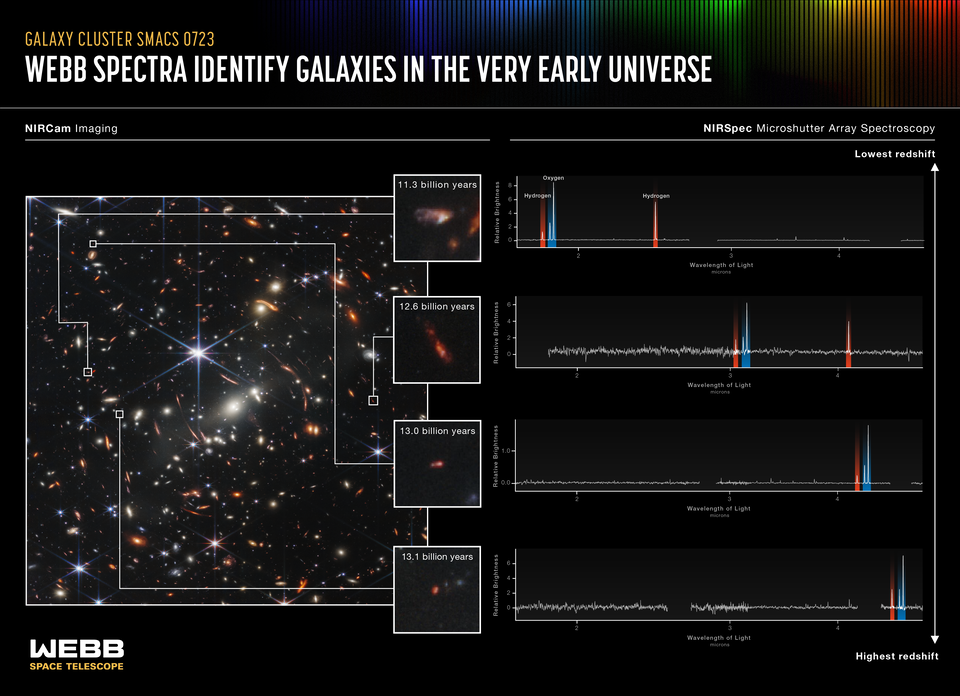
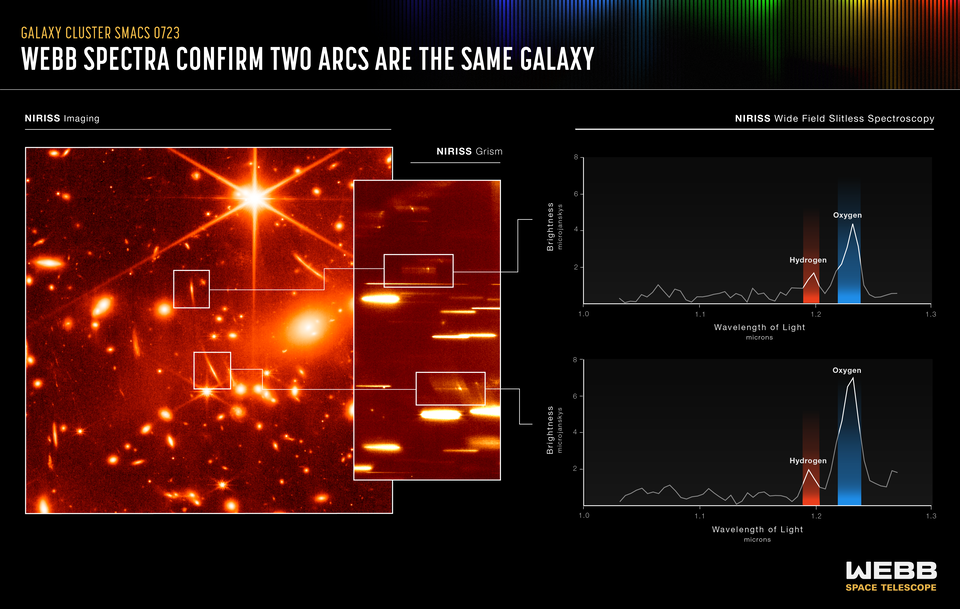
In the wide-angle view released on Monday evening, two separate arcs shown in the image above have also been confirmed as being created from as the same distant galaxy using the spectrum.
Exoplanet Atmosphere Studies.
The other exciting observation that Webb can do is to look for Exoplanets and measure their spectrum.
Exoplanets are planets orbiting around distant stars.
Astronomers have currently confirmed over 5,000 of these exist, and there are probably many more for us to find.
These distant planets can either be observed and their spectra taken directly (As long as they are far enough away from the glare of their parent star).

Or the stars spectrum can be compared when the planet transits across the star as shown below.
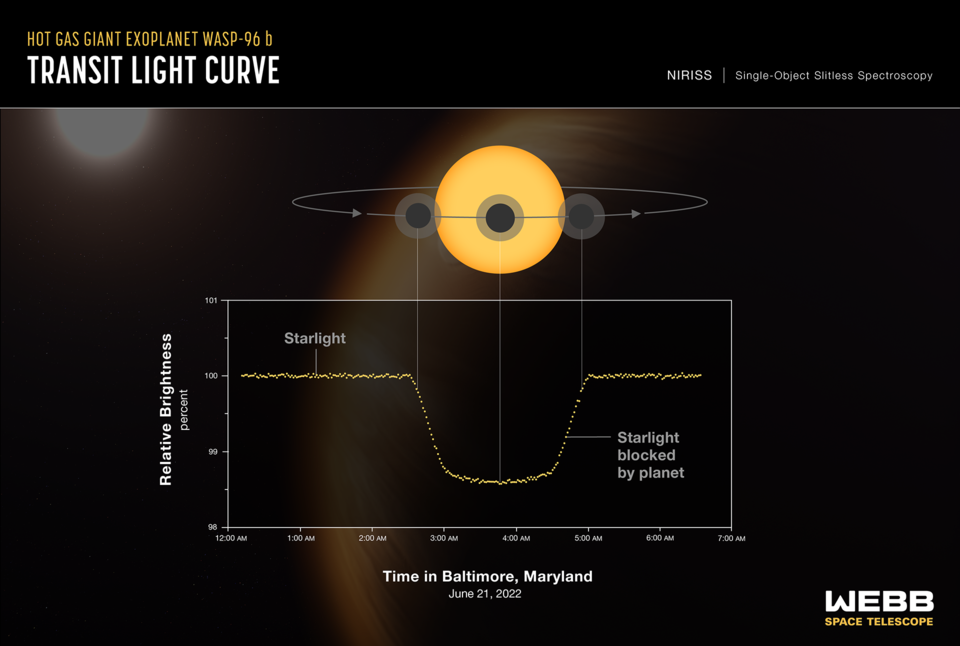
Webb can capture the spectra and work out what the planets atmosphere is composed of.
We may then be able to look for chemicals that might suggest life could exist on the planet.

So if we want to find life that is similar to ours, we’d look for the presence of Water, Oxygen, Methane and Carbon Dioxide within those atmospheres.
There could be some false positives along the way, but it helps narrow down where life might just exist beyond Earth.

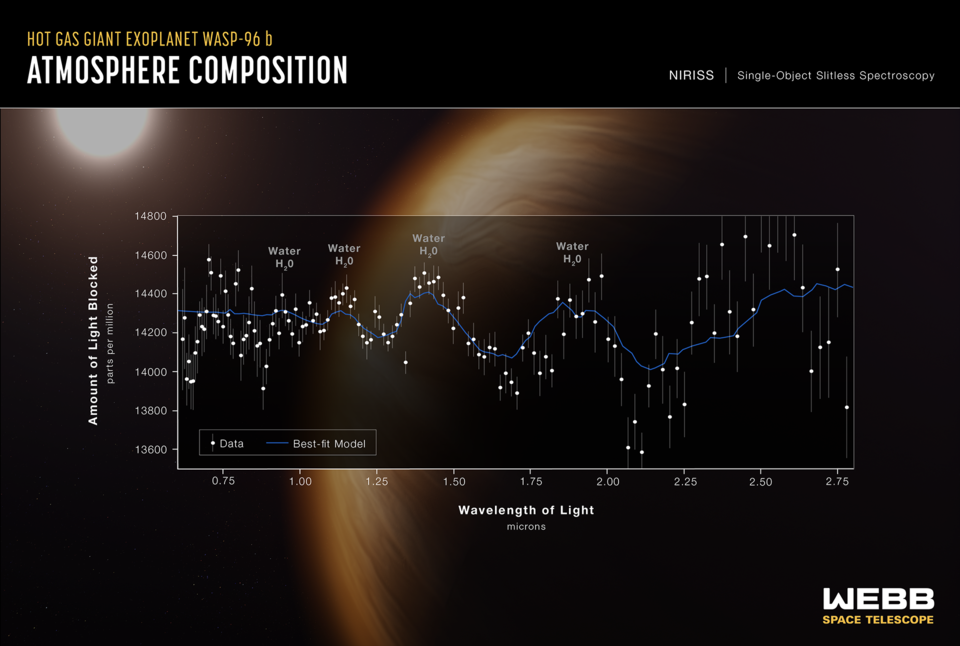
Webb has already measured the atmosphere of a distant exoplanet called WASP-96 b.
It found the atmosphere to be very steamy, with plenty of water vapour present in its atmosphere as shown in the spectra at the bottom of this page.

It did not detect oxygen, methane, and carbon dioxide at this time, but other planned observations by Webb using different instruments could reveal these later.

We really are living in very exciting times.

Webb is really going to revolutionise a lot of what we know and produce lots of surprises along the way during its 20 years or so service we now have ahead of us.

 

Webb’s First Image Release.

After much anticipation, there was a very delayed, frustrating and extremely brief, shambolic and somewhat farcical media presentation to show the first image from The James Webb Space Telescope from The White House on the 11th of July 2022.
No-one who waited for all that time for it to start will forget the earworm that was played for over 45 minutes.
I almost gave up and went to bed, but I’m so glad I persevered.

Webb-Space-telescope-Final

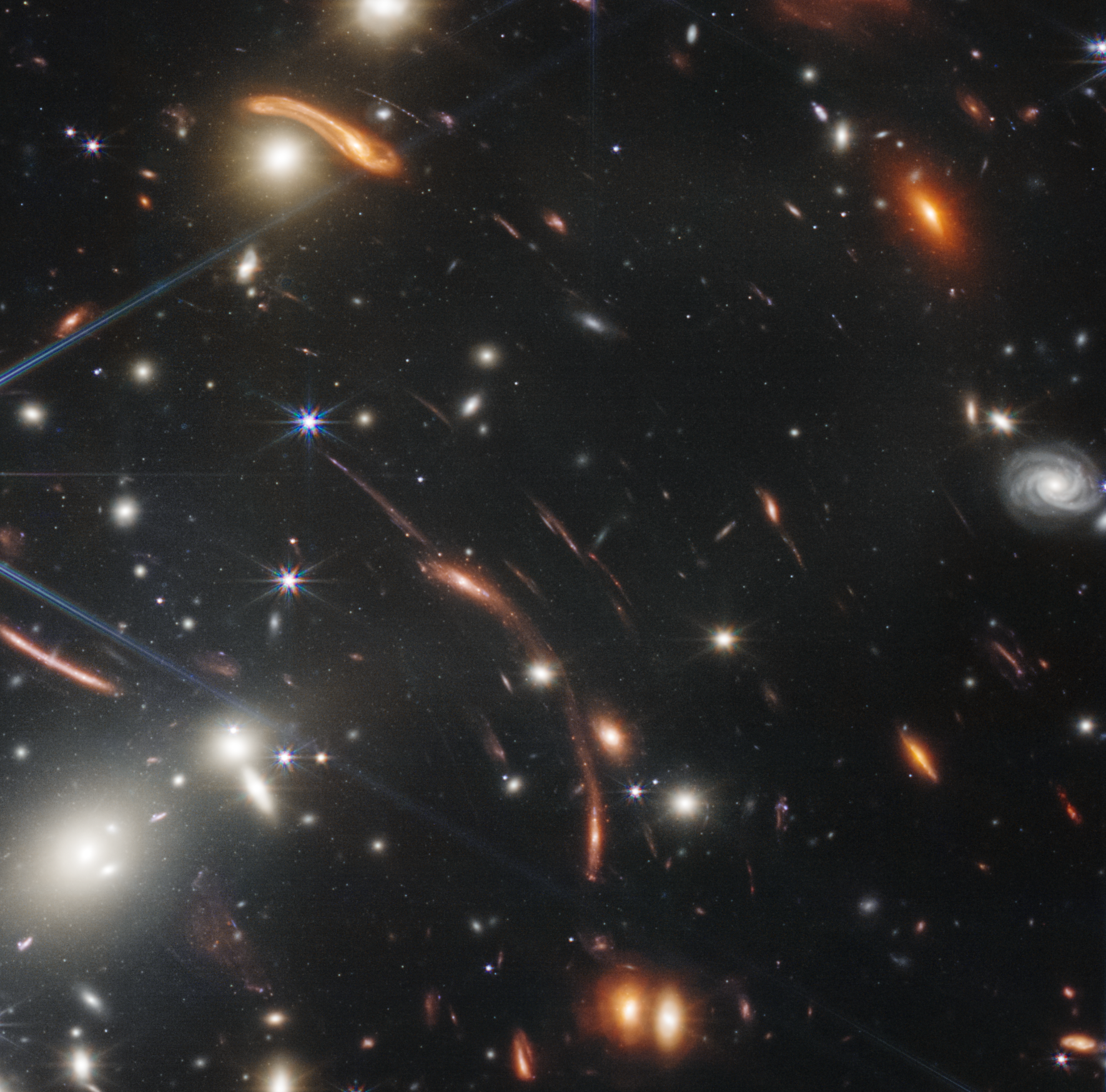
The much awaited image is below.

What a Beauty! ??

So what does it show us?
The image is a very small area of the sky taken by the Near Infra-red Camera NIRCam.
It’s such a tiny field of view, it’s the same size as a grain of sand held at arms length.

We are looking at a galaxy cluster in the southern hemisphere, called SMACS 0723 in the constellation of Volans.

When you see how many hundreds, maybe thousands of faint galaxies there are in this image, multiply that by the rest of the sky.
You’ll then start to get some sort of idea just how many galaxies are out there in the universe.
Each of these galaxies contain billions of stars, many of them bigger than our own Milky Way Galaxy.

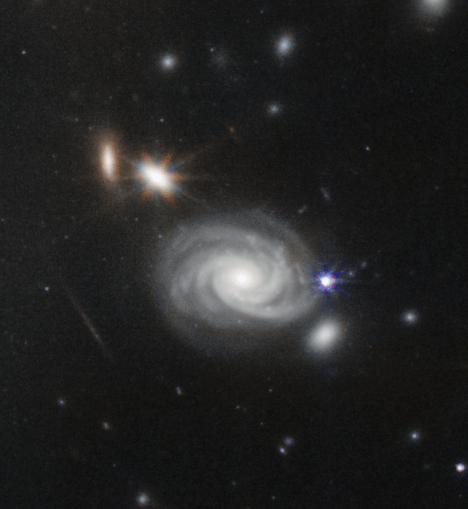
I just love this beautifully formed spiral galaxy cropped from this image.

Spiral-Galaxy-STScI-01G7JJADTH90FR98AKKJFKSS0B

The main galaxy cluster is located 4.6 billion light years from us, so light takes that long to reach us and we are seeing these galaxies as they were 4.6 billion years ago.
We really are looking well back in time, so we are seeing them as they were when our own solar system was being formed.

As if that’s not enough, look a bit closer.
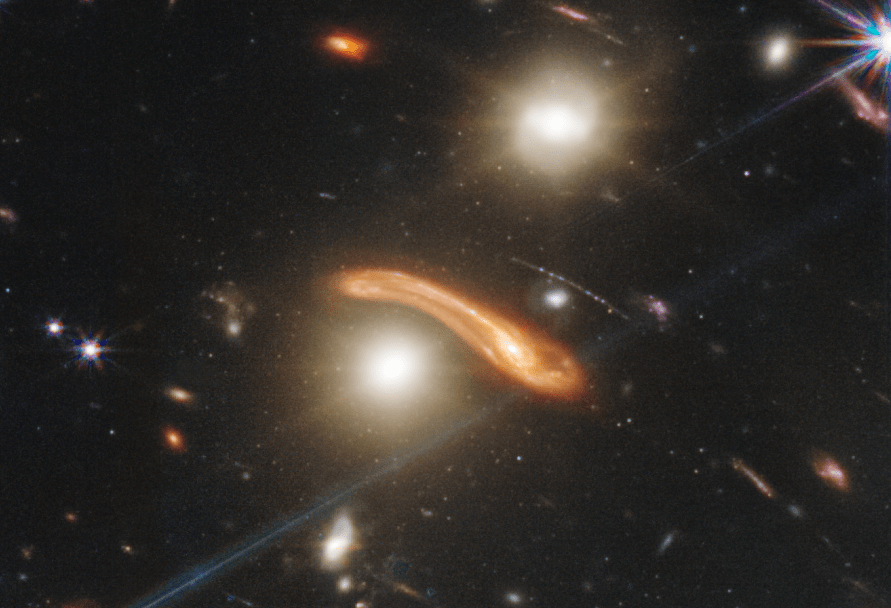
Nestled between the nearest galaxies you can see some elongated curves of light, swirls and strings of light, enlarged below.

STScI-01G7JJADTH90FR98AKKJFKSS0B-Crop

These are really faint galaxies lying behind the galaxy cluster and much more remote.

As the distant light passes through the gravitational field of the nearer galaxy cluster it is being diffracted, bending and distorting the light, very much like a lens.
It’s a bit like peering through a full wine glass, where the light from behind is bent and warping the image from behind.
Look at this close crop of a galaxy gravitationally warped to look like a slug, and the wonderful string of pearls just above it.

Flatwork and string of pearls-STScI-01G7JJADTH90FR98AKKJFKSS0B

So bending of the light makes the galaxies appear warped and bent, much like a Salvador Dali painting.
This is known as Gravitational Lensing, or An Einstein’s Ring, after Albert, who was the first person to predict that light could be diffracted by a strong gravitational force.

This effect magnifies those faint more distant galaxies, so that they are visible in the image, when they would normally be too faint to see.

How far away are those more distant galaxies?
Possibly ~13 billion light years away.
So we are seeing very young galaxies as they were in the very, very early years of our universe.
Our Universe is 13.8 billion years old.

I’m sure that there will be multitudes of scientific papers to follow, just from this one single image, which JWST took from only 12.5 hours of exposure.

I for one am very relieved, as it’s an absolutely stunning image and shows just what the JWST is capable of.

Let me put this image into perspective.
We have NEVER seen the universe in this much detail in infra-red before, as JWST enables us to see these distant galaxies light, for the very first time.
Red Shift over this distance has caused the visible light of these galaxies to move into the Infra-red.

The diffraction spikes on the brightest objects aren’t even quite as much of a distraction as I thought they would be from the initial image we saw some weeks ago.

So I will be eagerly awaiting some new images and data today, and for many more years to come.


All good things come to an end.

Those of you who joined The Virtual Astronomy Club last night will know that I announced after Karim Jaffer’s talk on the 17th of May, instead of VAC stopping for the summer, I will hang up VAC’s coat permanently. ?

It’s something I have been thinking about for a long time now and believe me, and it has been a very tough decision to do this.
As life gets back to some sort of normality, I am getting increasingly busy.
As a result, I am finding that I am getting less time to do some of the things that I really do need to get on with, or dedicate time to other things that I really enjoy doing.

So something has to give. Well, it’s a few things really, and VAC is unfortunately one of those.

I will really miss VAC, and interacting with you folks who have joined me over the past two and a bit years, which has made VAC a fantastic success.

I really could not have done it without you all, and your support.

I do feel I have made some very nice friends, without even meeting many of you in person yet.

Also a huge THANK YOU to everyone who has presented to VAC, and everyone who kindly donated to make sure we were able to pay our invited speakers for giving up their valuable time.

THANK YOU SO VERY MUCH TO EVERYONE who has been a part of our shared VAC journey, which helped in part to get us through some difficult times.

I may consider some sort of astronomy online presence later, but will look at this towards the end of this year, or early next.

But don’t forget, VAC’s not finished quite yet.
So please join us for Karim’s talk for the final meeting on the 17th of May.
Let’s go out on a high.
www.virtual-astro-club.com

See you all then.

Keep Safe.
Keep Well.
Keep Looking Up.

20220224 – A worrying day, but success in Makemake

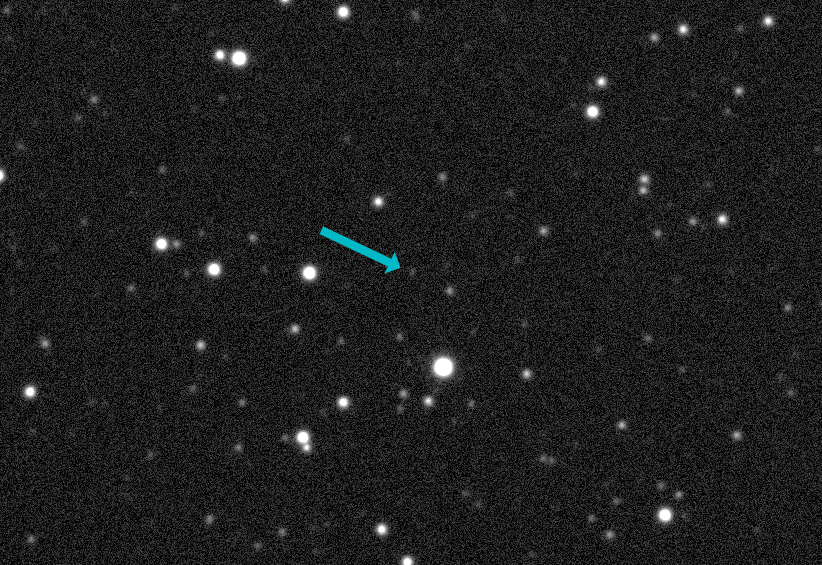
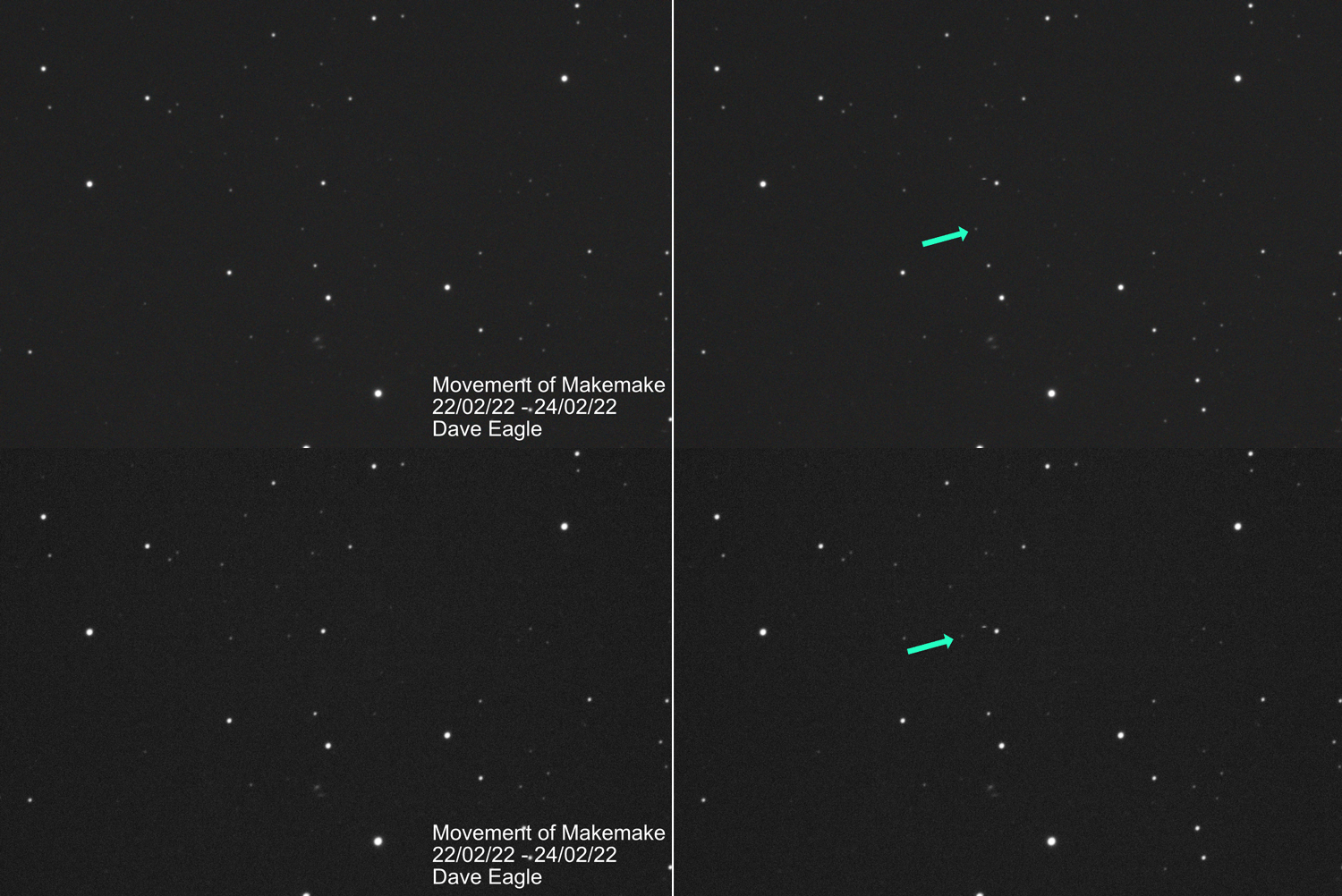
If you saw my last blog entry you’ll know that I think I captured the Kuiper Belt object Makemake on the 22nd of February.

So I was determined to go back on the next clear night to confirm this by showing some movement.

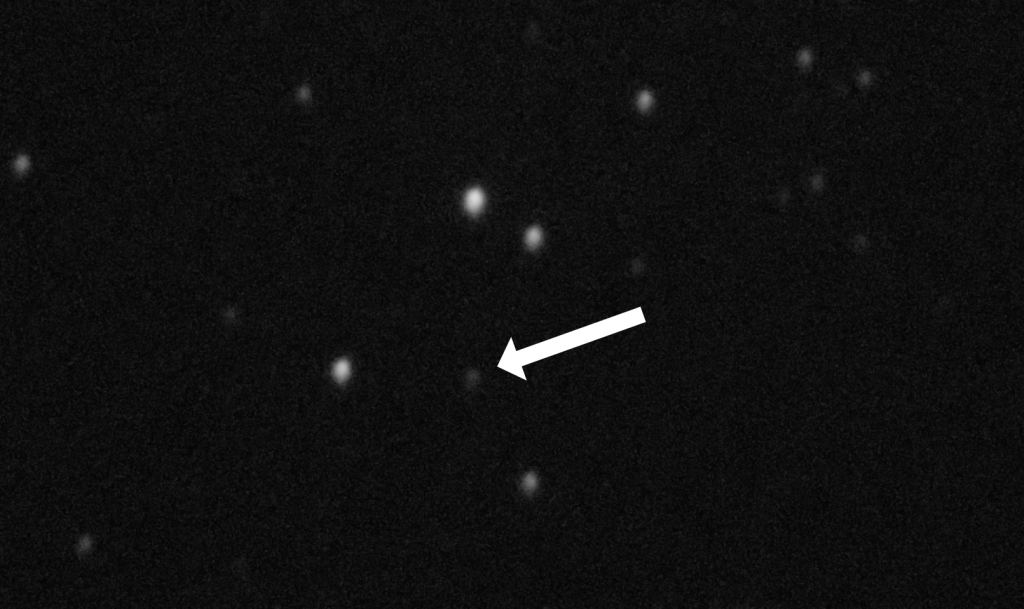
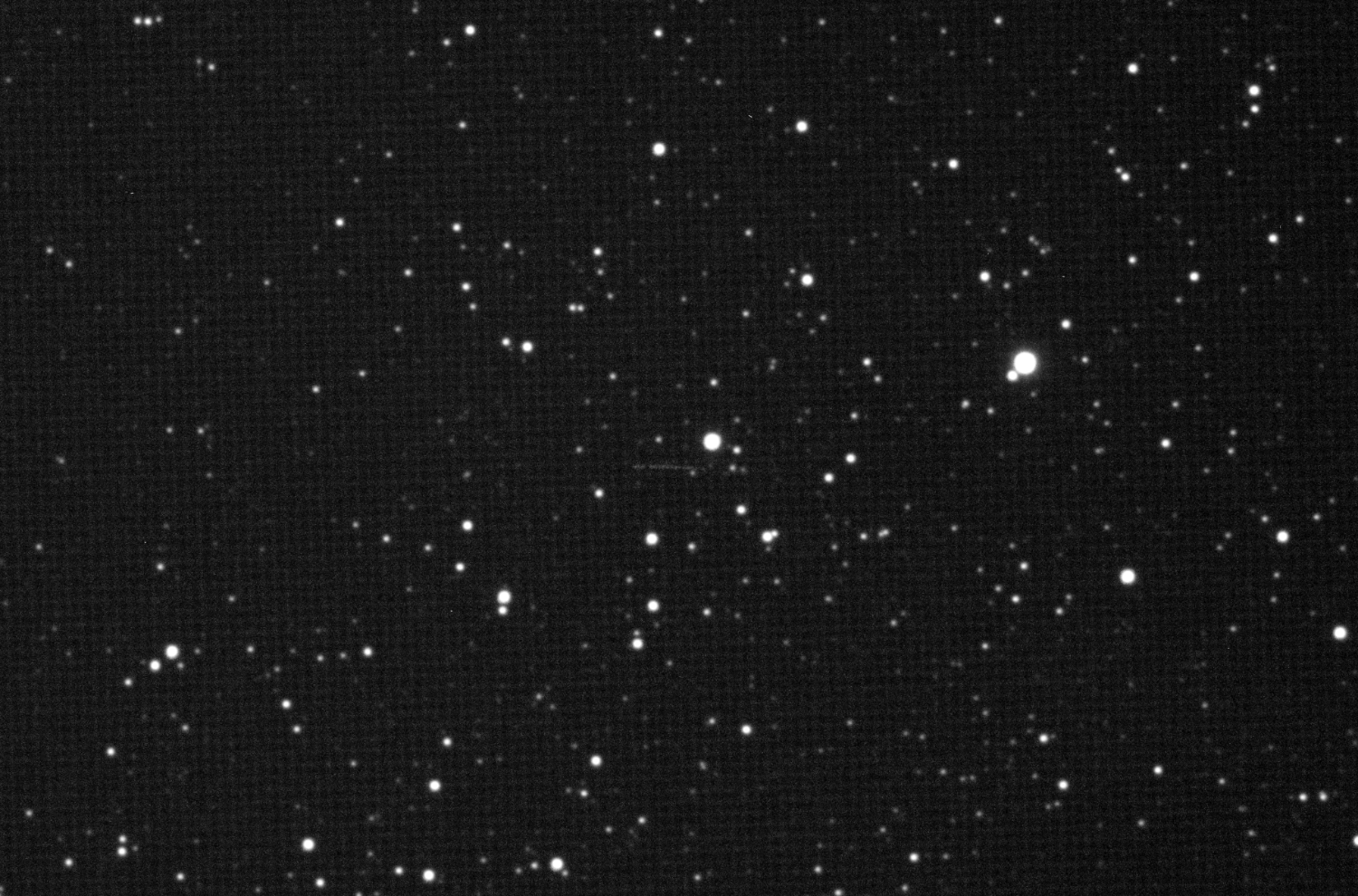
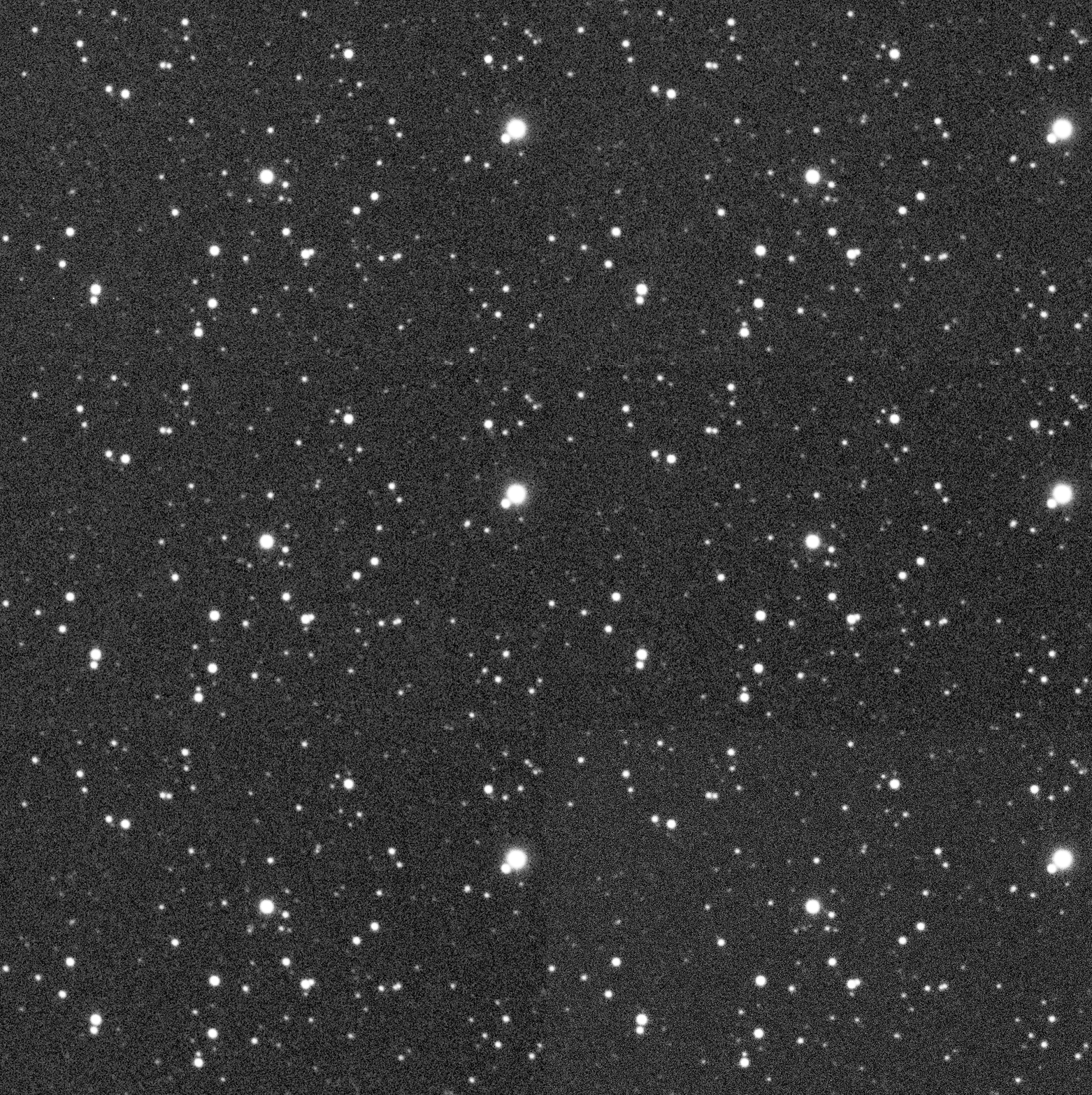
Despite a few technical problems I managed to catch a few images and compared them below in an animation.
The two animations are identical, but I have marked the position of Makemake with an arrow in the right hand pair.

20220222 – A Productive Palindrome Night

After all the rain and winds over the last few days, it was good to see a nice clear sky, with relatively still air.

So I set up to see if I could capture The Webb Space Telescope now it was way out at it’s L2 orbit.
Little did I know I would end up venturing so much further into the outer solar system beyond Neptune.

I set up ProjectPluto to calculate Webb’s current location in the sky:
https://projectpluto.com/sat_eph.htm
This always gave the most accurate positions up until I last tried this in mid-January, before Webb reached L2.

I plotted the positions on my planetarium software and found Webb was now located in Cancer, heading southwards as expected as it will always stay opposite The Sun when in operation.
I then used the trusty ASIAIR+ to set the scope in the correct position and I took 60 second exposures.

I watched each image coming off the camera to see if i could spot any small specs of light moving between each image.

Expecting not to be able to catch it was really shocked to spot something moving very close to the calculated position, just approaching a star.
One I got the scope centred and re-focused I set the AAP+ to take multiple 60 second images as Webb started to move away from the star.

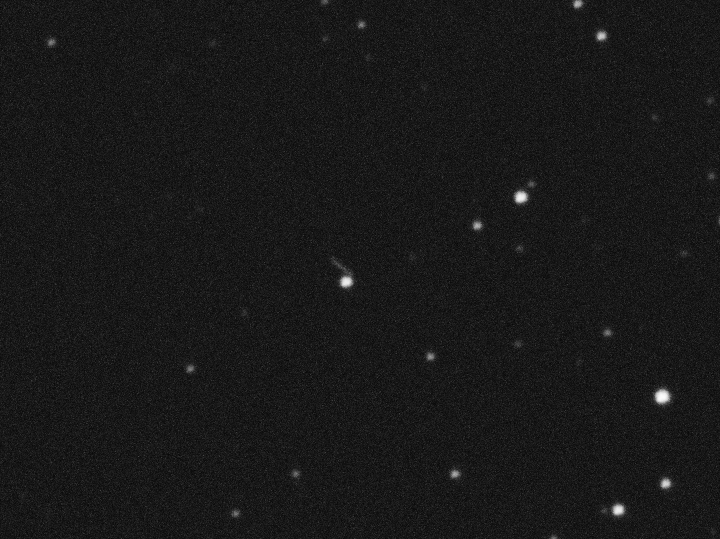
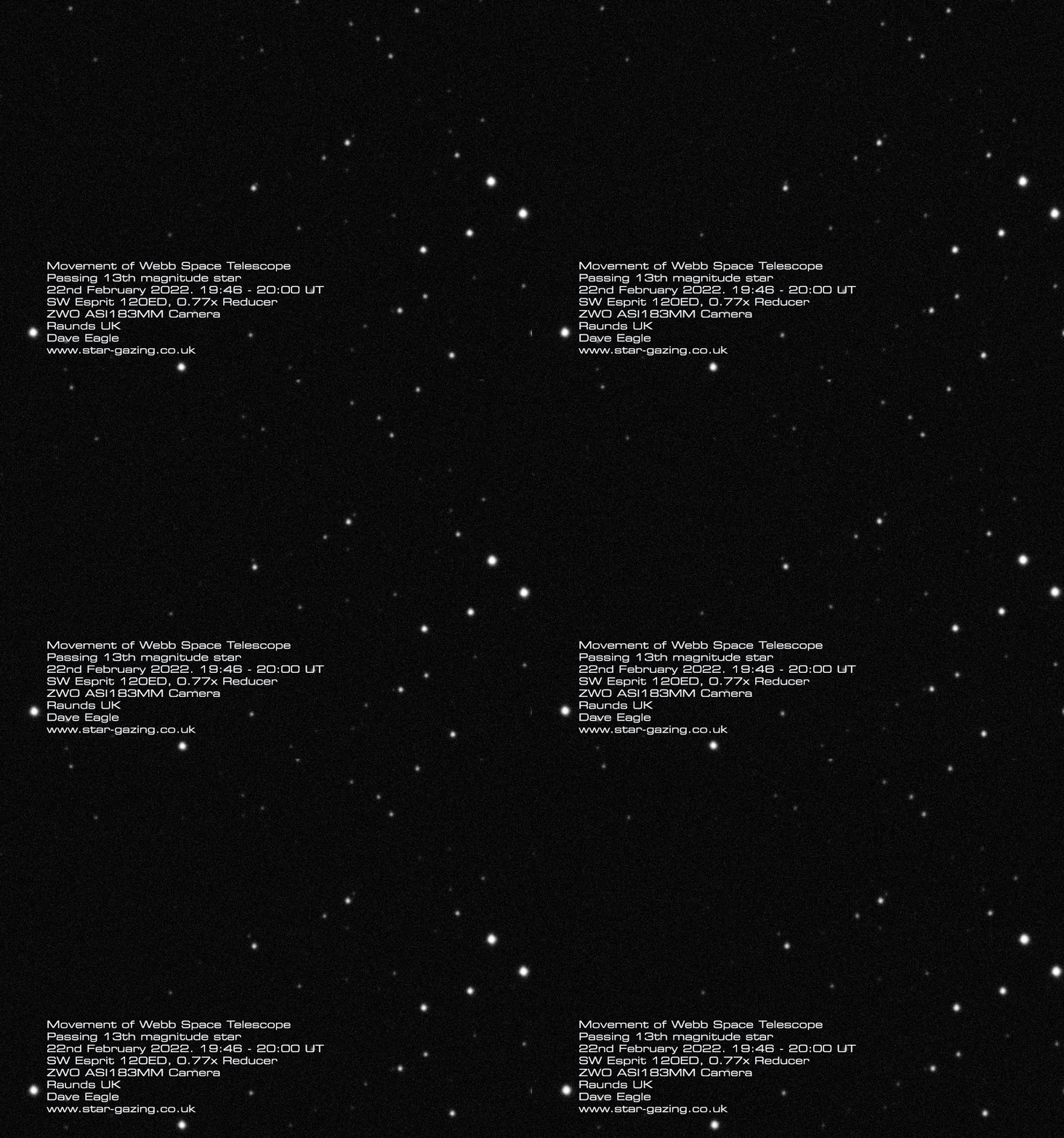
I stacked these images to create composite and animation from them as shown below.
I estimated it was between +16th and +17th magnitude.

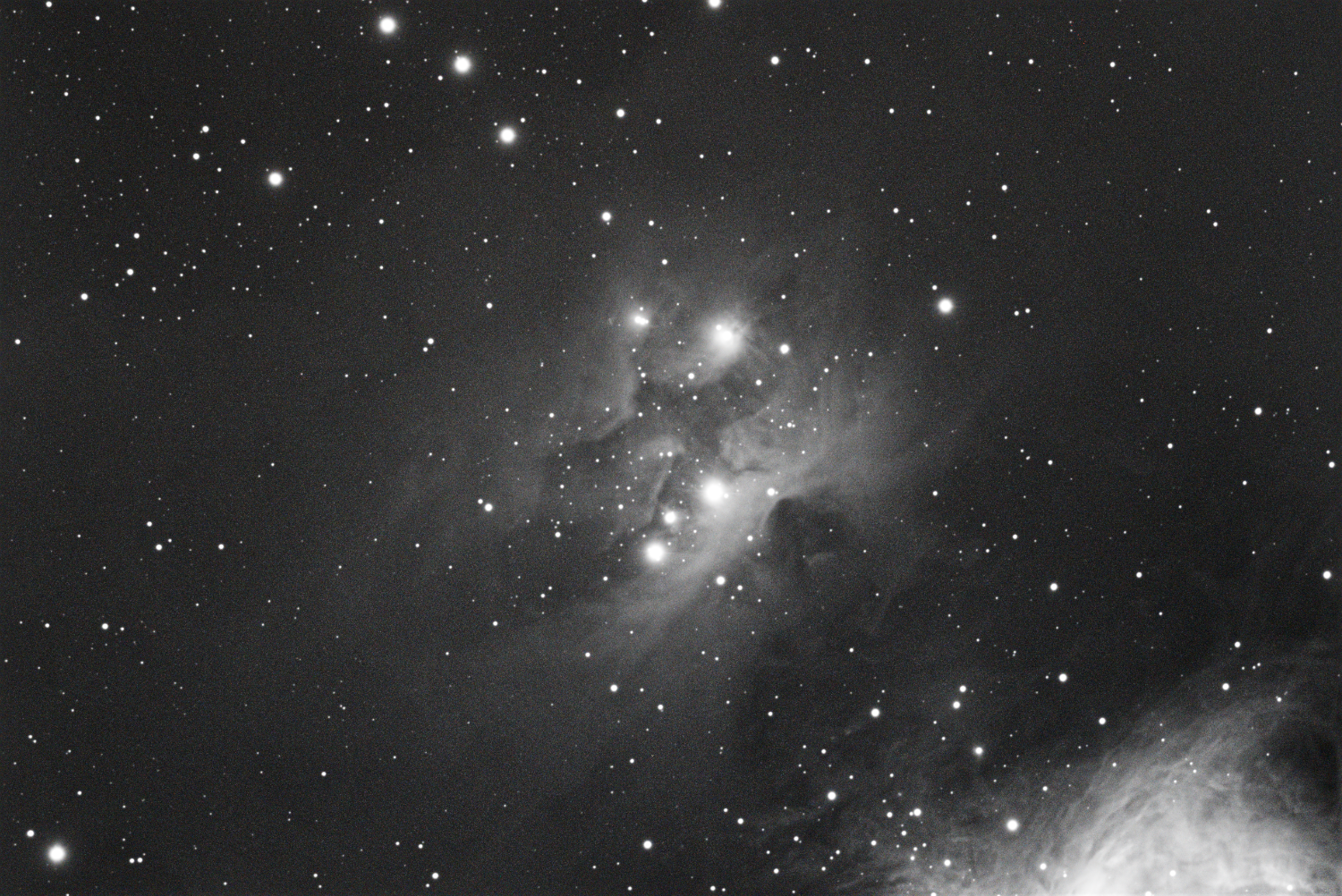
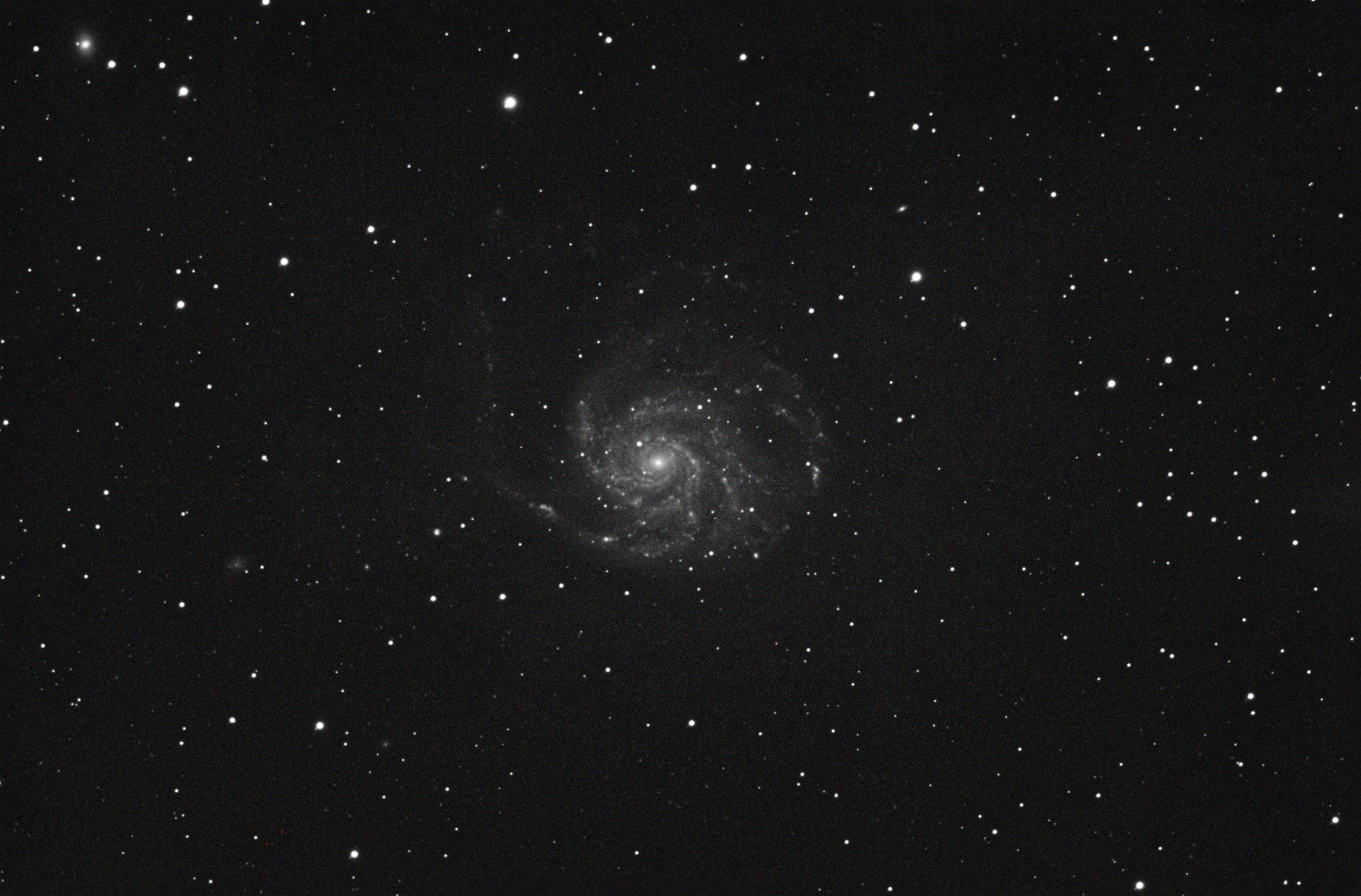
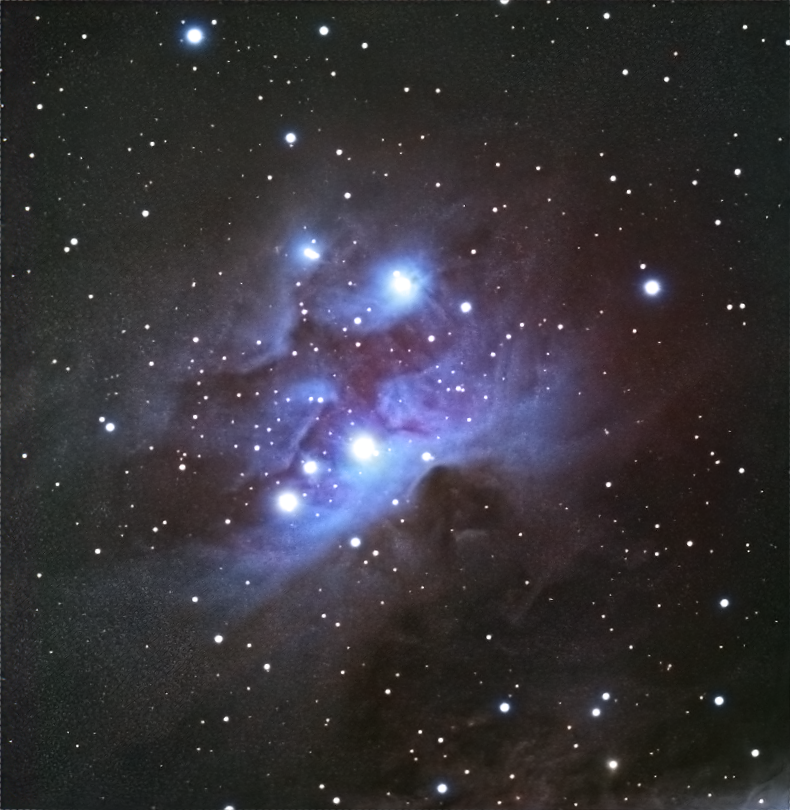
I was on a roll, so sent the scope to a few different objects, including the Running Man Nebula in Orion and M101, the Pinwheel Galaxy in Ursa Major.

I later added colour data from old DSLR images.

By this time, spurred on by my Webb capture, which I had now estimated at about +16th to +17th magnitude, I pondered whether it would be possible for me to capture something a lot fainter, let’s say something way out in the Kuiper Belt.

Looking at Sky Safari, I found that Makemake was well above the eastern horizon and was about magnitude +18.

So I thought I’d give it ago and using the ASIAIR+ I sent it to the coordinates given by Sky Safari.

Once all centred in the image I managed to identify star patterns around the Sky Safari Map.

But there was no sign of a faint star that should not be on the map. ?

I upped the exposure to 180 seconds to try and capture fainter stars.
Once I did this, fainter objects could be seen in the images, including a very faint object that was not shown on the maps.

Mind-blowing to think that this is 4,824,698,760 miles (7,764,600,000 km) from Earth. ?
The weak sunlight reflected from it takes over 7 hours to reach us.
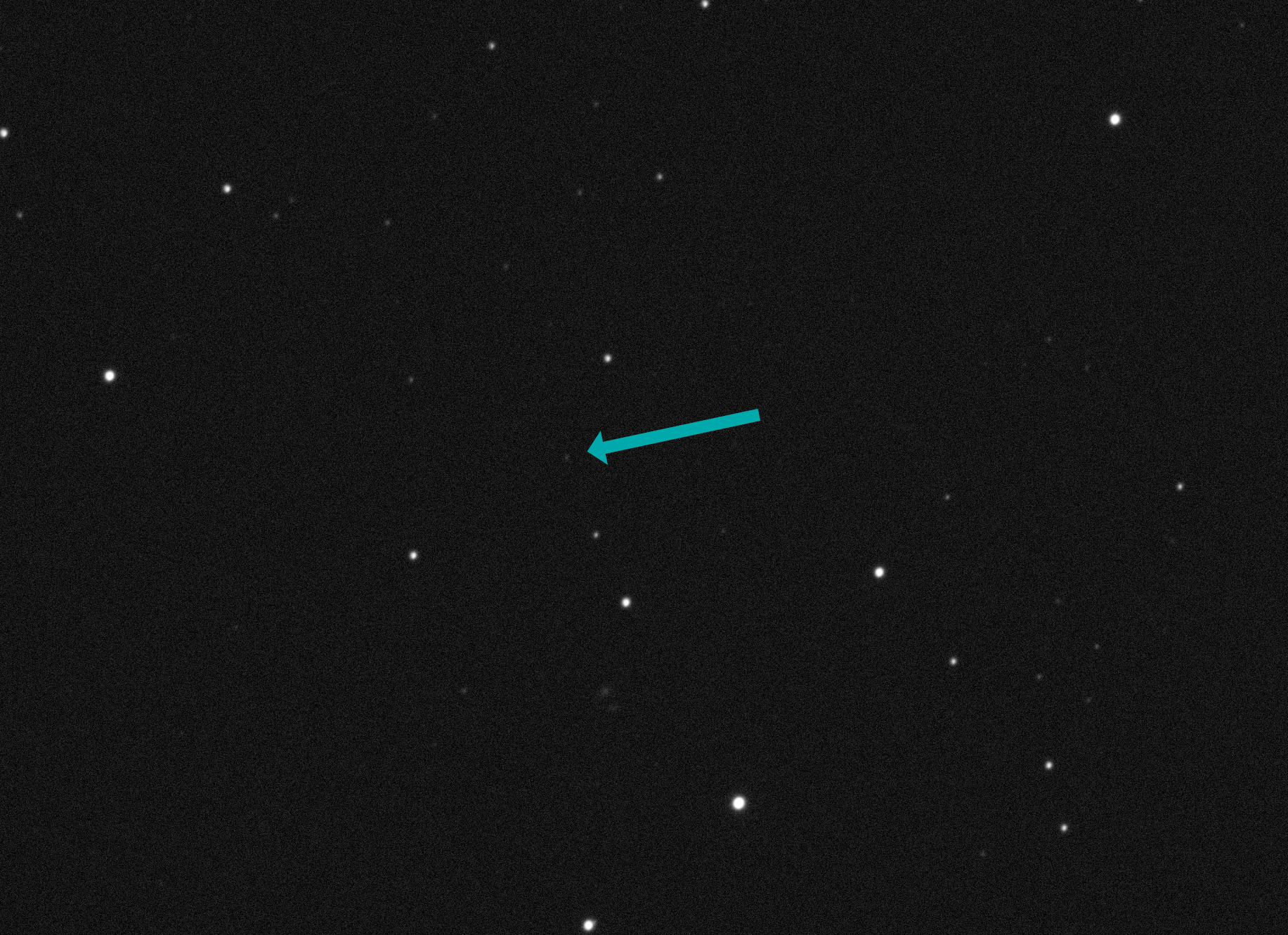
I could not find a star in this location on the Sloan Sky Survey, so this looks very promising.
Now all I’ve got to do is take another image on another night to see if it moves. I’ll let you know.

Webb Space Telescope – The big gun comes out.

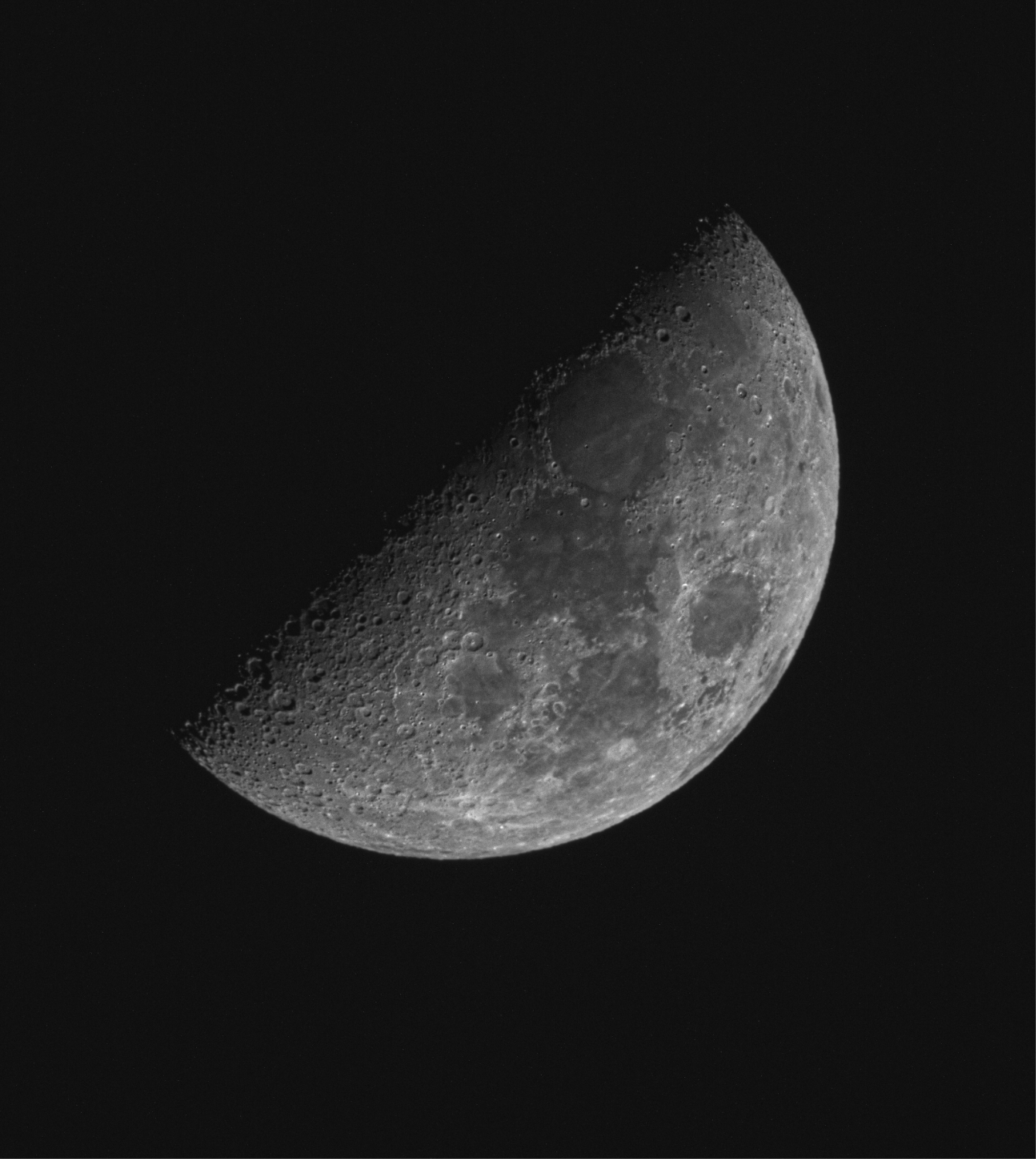
After a rest of a couple of days, on a very clear and frosty evening (It was very slippery under foot), I decided to do some Moon images with my C11 and then once it got high enough, see if the extra light gathering of the bigger telescope would still enable me to image Webb.

I tried the new Video functionality in The AAP+, but using the full frame for the videos, the disk on the device was soon full.
The best images are shown below.

Gassendi-2022-01-14-175150-Moon-Bin1 17Clavius-Area-2022-01-14-181028-Moon-Bin1 15 Schuckard-Schiller-2022-01-14-175244-Moon-Bin1 17Aristarchus-2022-01-14-182608-Moon-Bin1 15.5C_AS_p20_g4_ap126-AS

By the time Monoceros, where The Webb Space Telescope is currently located, I got the AAP+ to send the scope to the position given to me by ProjectPluto: https://projectpluto.com/sat_eph.htm

I have found this Web page to produce the most accurate positions for me.
Each time, Webb has been slap bang in the middle of the field of view.
It took me a while to find, it but it was definitely still there, despite competing with a bright gibbous Moon, not that far away from it.

JWST-20220114-Discovery

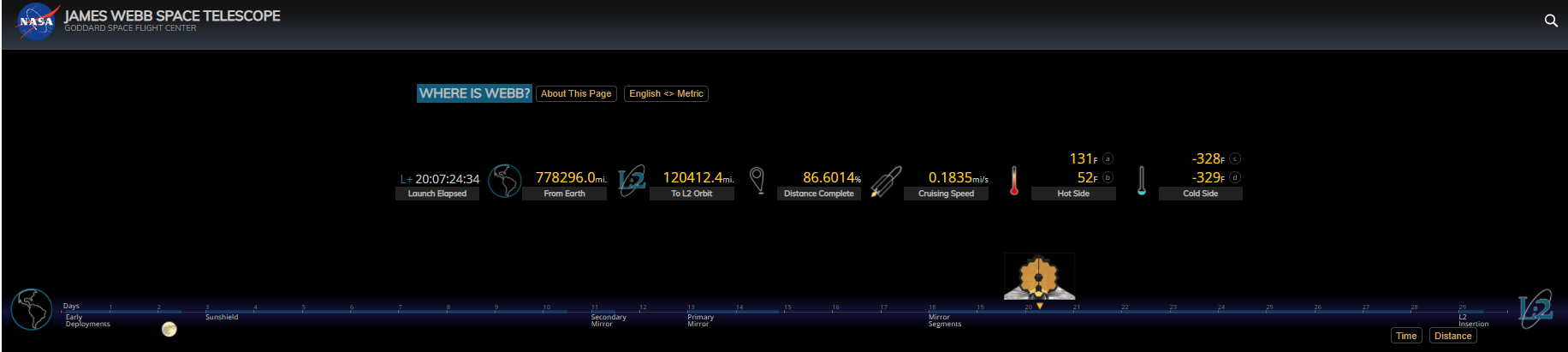
Webb was a massive 778,296 miles from Earth at that time!
That really does blow my mind that we can image it from our own back gardens that far away. ?

Where-is-Webb
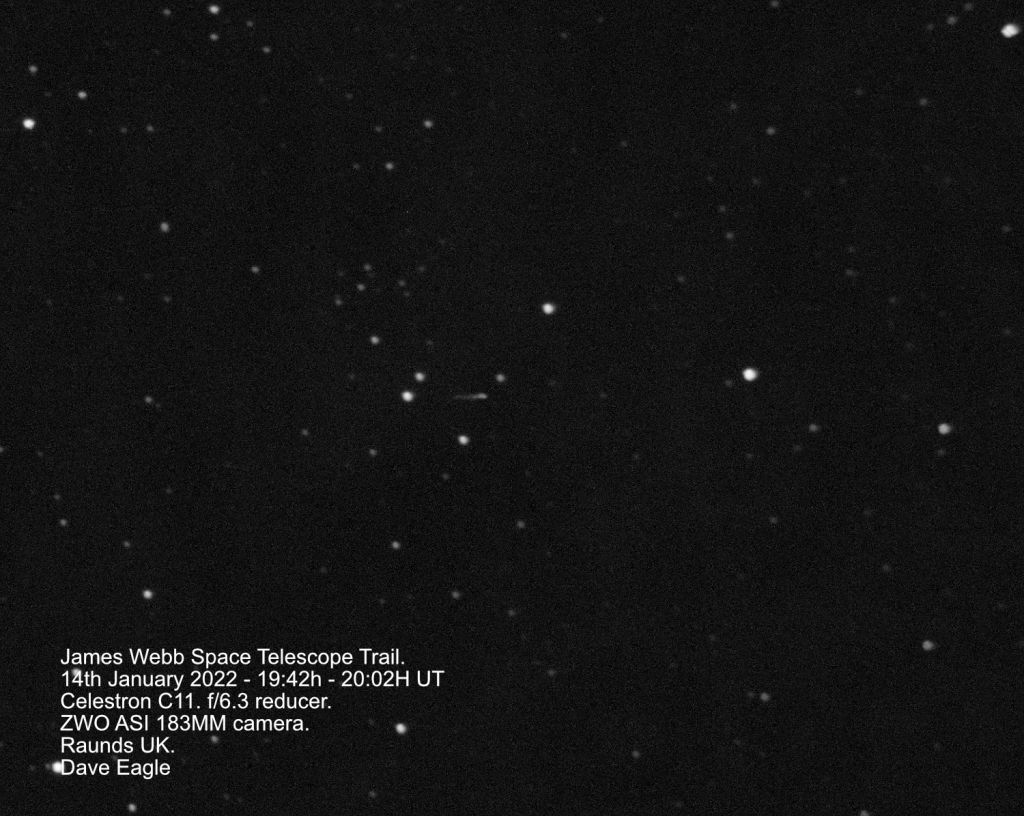
I created my usual trail image from the resulting images, here’s the first one.
I lost some data when I lost contact with the AAP+ (Don’t ask!).
As I only set it to take 30 images, I lost some data before I got back into it and started taking more images.
I could see Webb was getting a bit fainter and looking outside, the corrector plate, despite the dew shield being fitted had started to dew over and I could see it was starting to get a bit misty.

So at that point I packed everything away and went to bed.

You can really see the changes in brightness as it moves across the image.

JWST-2022014-1

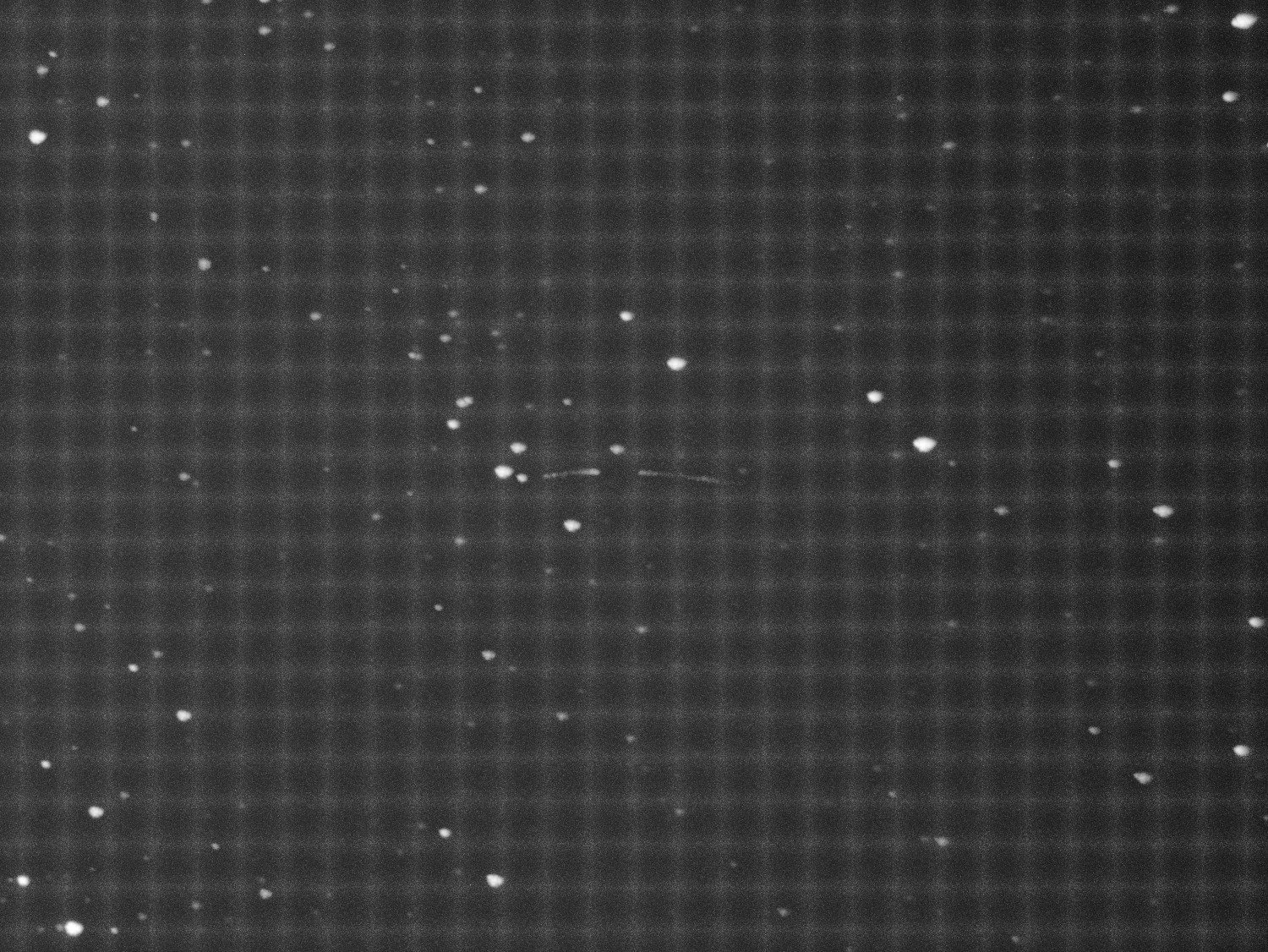
The fuller trail is here showing the gap in the trail.
(Sorry about the grid effect).

WST-Trail-20220114-2

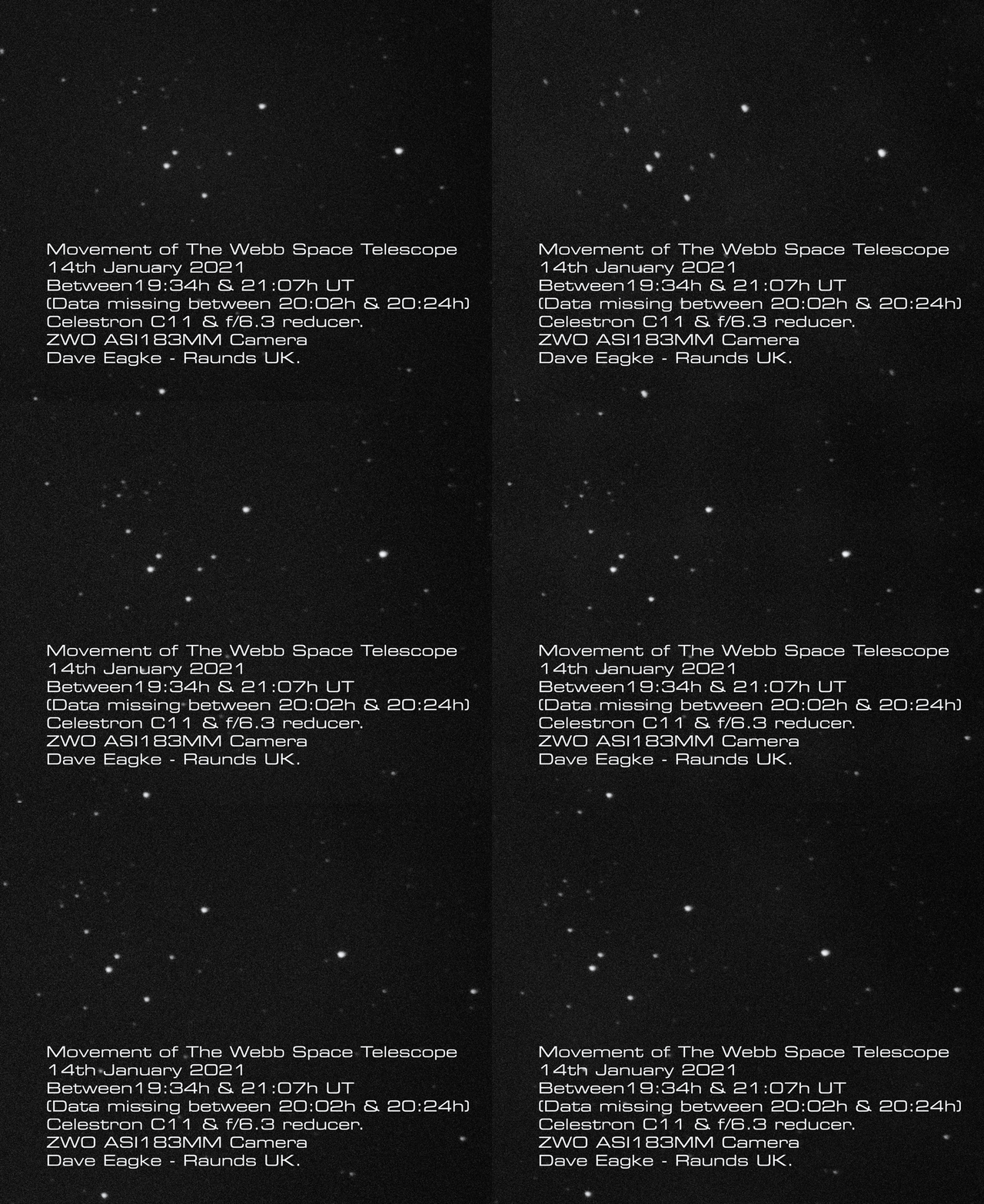
For a change, I thought I would create the animation locked on Webb’s position.
This shows the brightening really well, but the gap in the data is awful (Soz!). ?


Webb Space Telescope on the 9th of January.

After what I thought was going to be the last opportunity to catch The Webb Space Telescope on the 8th of January, I did manage another couple of evenings on it on the 9th and 14th.

9th January.
The Moon was close to first quarter so I would now be struggling with the light from that swamping the fainter objects out.
But I thought I would give it a go anyway.

Light_Moon_10.0ms_Bin1_183_H_gain205_20220109-211858_-20.0C_0002-wEB

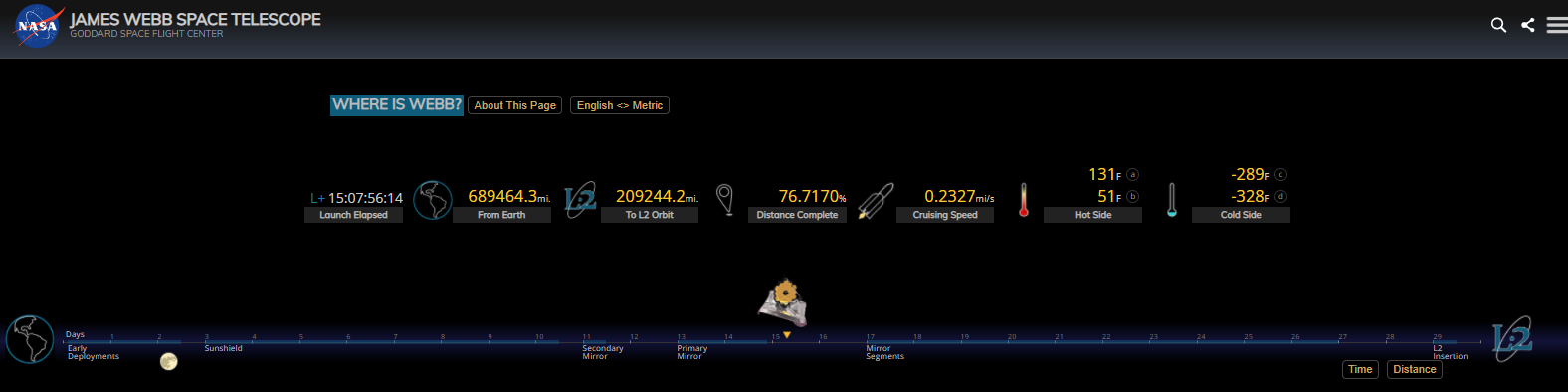
Webb was now almost 690,000 miles away from Earth as you can see from the Where Is Webb Screen Capture taken at the time.
I mean, how on Earth am I going to pick up something that small so far out from us?

Where-Is-Webb-20220109

It took quite a while to see something moving between the images captured, but I could finally see a very faint object moving very slowly across the field of view.

Below is the first image acquired.

WST-Capture-Light_Capella_180.0s_Bin1_183_L_gain205_20220109-201930_-20.0C_0004
So I captured all my images and created a trail revealing Webb’s movements.

WST-Trail-20220109
I created the usual animation which also has a couple of satellites flashing through.
I then then popped that image of The Moon taken with the same setup taken the same night into another animation without the satellites, to show the sort of scale that we are looking at in these images.

After a horrible week around my birthday, I took a couple of days off, despite fairly clear skies.

So my next jaunt out to catch it was on the 14th January.
See separate blog entry for this.


Near Earth Asteroid (7482) 1994 PC1

You may have seen on the news recently that next Tuesday, there is going to be a near Earth object passing us by.
https://www.bbc.co.uk/newsround/59963475

Asteroid (7482) 1994 PC1 is in a very stable circling around The Sun in 575 days.

It will be passing The Earth on the 18th of January, travelling at passing us by at a huge distance of 1.2 million miles (2m km).
That’s over 4 times the distance of The Moon.
This is almost the same distance that The Webb Space Telescope will be once it reaches it L2 orbit.
So there is no chance of it hitting us.
But there is a chance we may be able to spot it as it passes us by.
NASA’s Horizon Web Tool will enable you to generate positions and magnitude estimates from your location.
https://ssd.jpl.nasa.gov/horizons/app.html#/

Have fun! ?

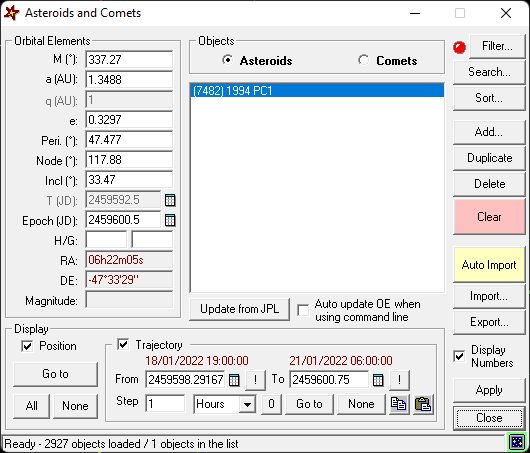
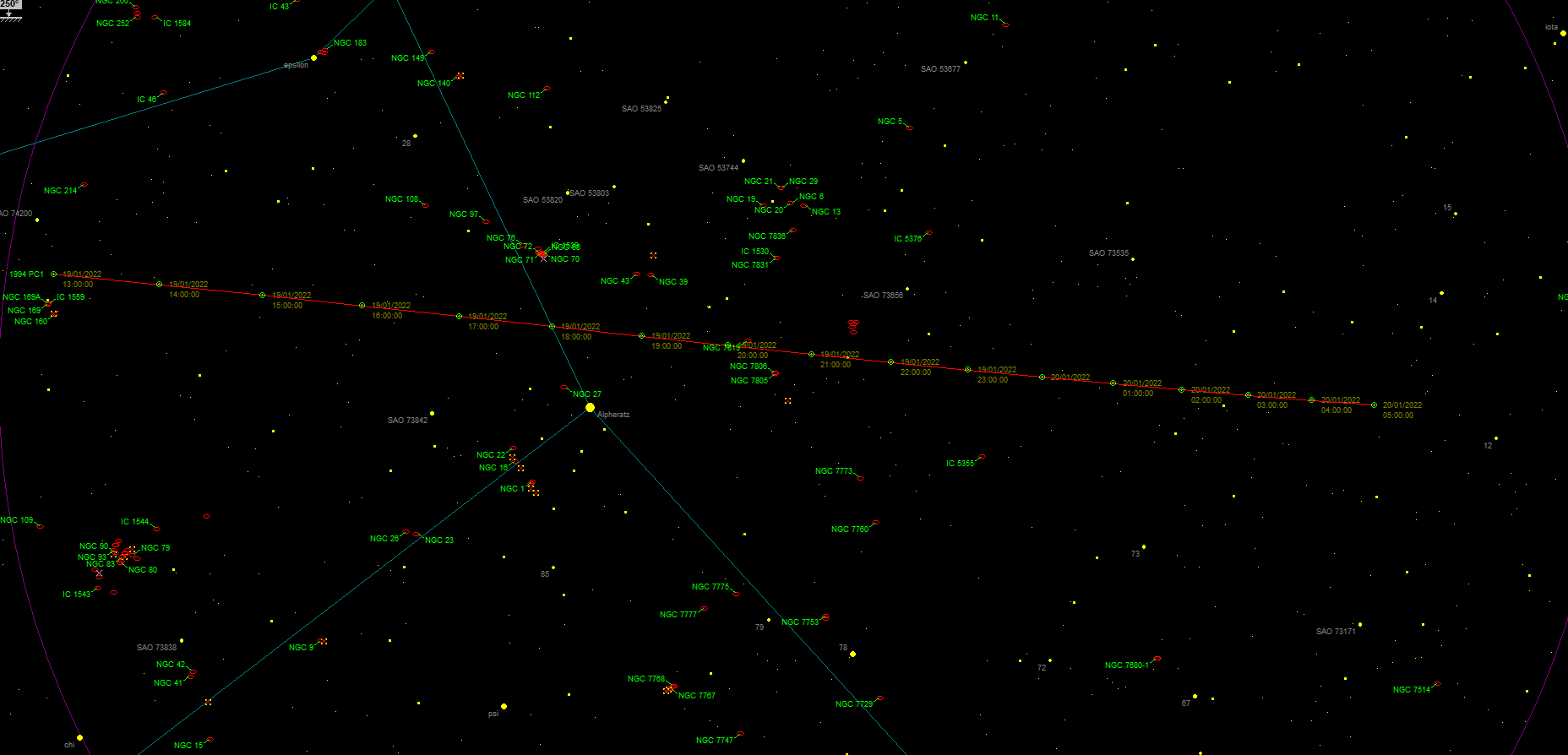
I have used these Orbital Elements to add the object into the planetarium program C2A to produce the maps below showing where it will be.
7482-Orb-Elems

Pisc-Peg

Before the evening of the 18th, 1994 PC1 is going to be too far south to be seen from the UK in the constellation of Eridanus.
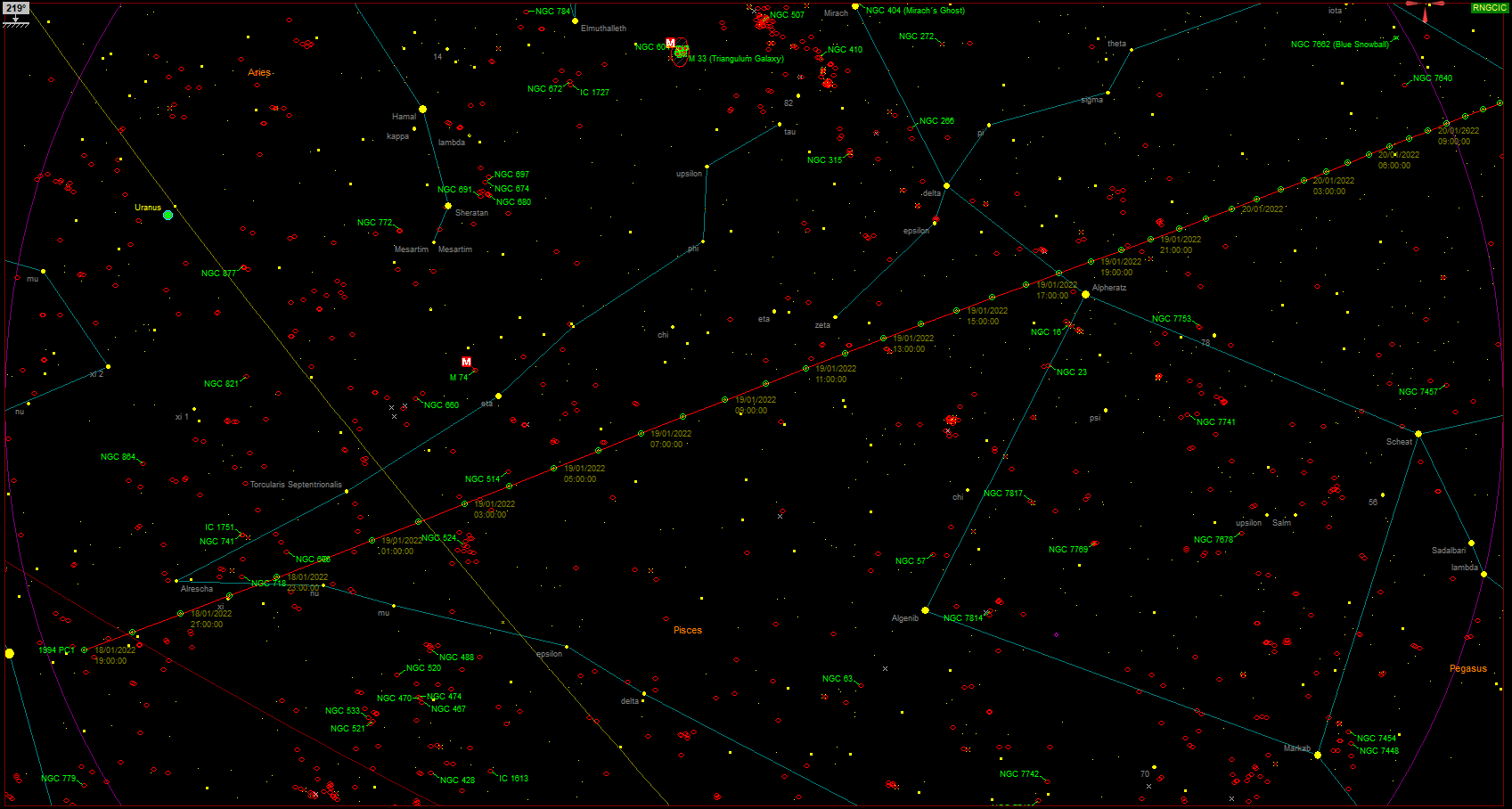
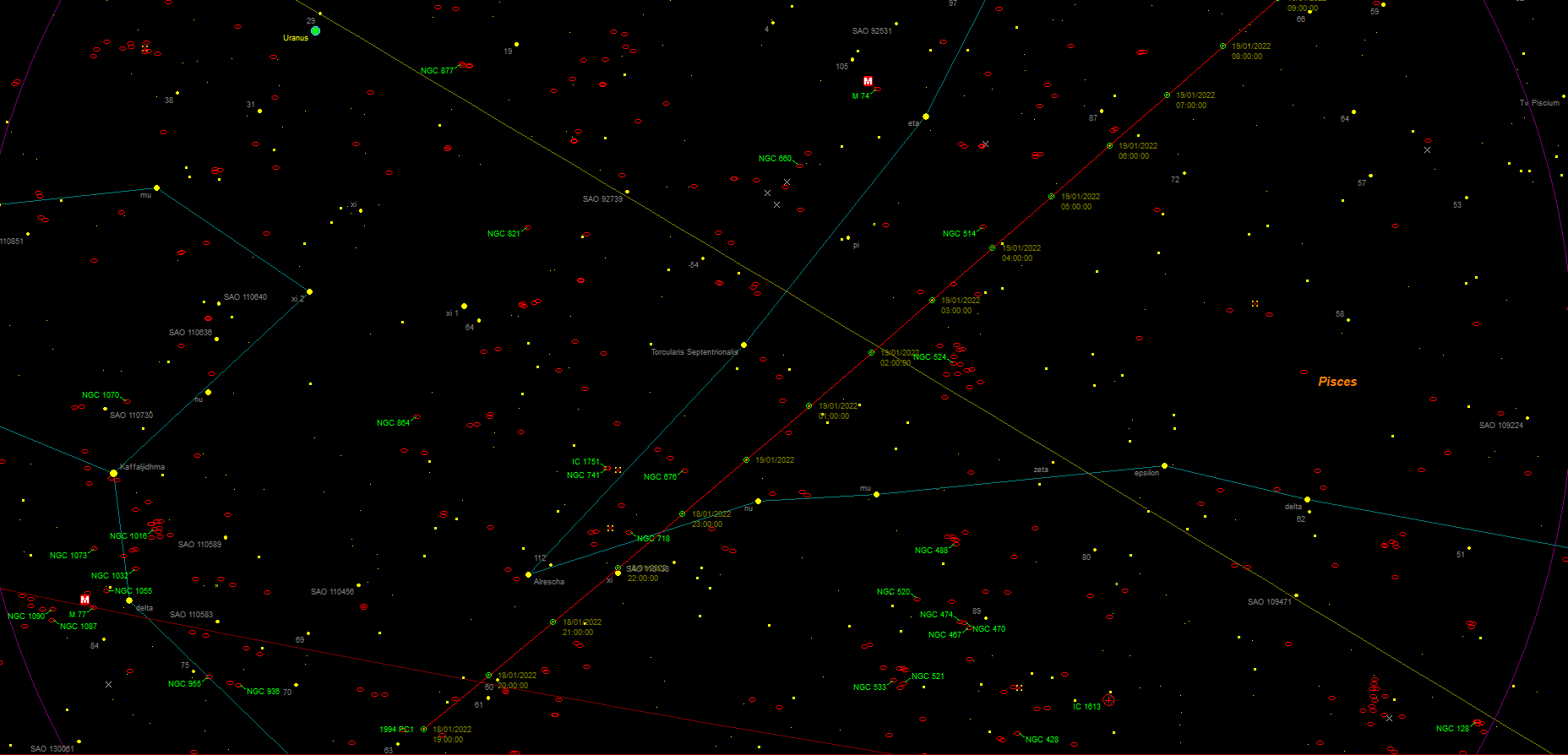
Map 1. 18th – 19th of January 2022.
Our first chance to catch the asteroid occurs this evening.
It will be at its highest at about 18:30h UT, when it will be about magnitude +10.4, moving through the body of Pisces.
So it should be bright enough to catch it slowly moving through the background stars with a fairly small telescope.
Doing a long exposure of its position should reveal the object as a small trail due to its relatively fast motion.

By 21:00h UT it will be passing just to the west of the 4th magnitude star Alrescha.
But by this time it will only be 28 degrees above the horizon.
It will set from central UK by 0:28 UT.

7482-Map-20220118-19

Map 2. 19th – 20th of January 2022.
The next evening on the day of closest approach as it gets dark, we catch up on it in the constellation of Pegasus.
It will be close to the 2nd magnitude star Alpheratz, 61 degrees above the horizon.
This is the top left star in the Square of Pegasus, so this nice landmark should make it a bit easier to find.
The magnitude will how have dipped to about +11.5.
7482 made its closest pass to Earth earlier that day, so the brightness is fading and it has started to slow down as the distance from Earth is increasing.
Throughout the night, it progresses in a north western direction, fading and slowing down as it goes.

7482-Map-20220119-20


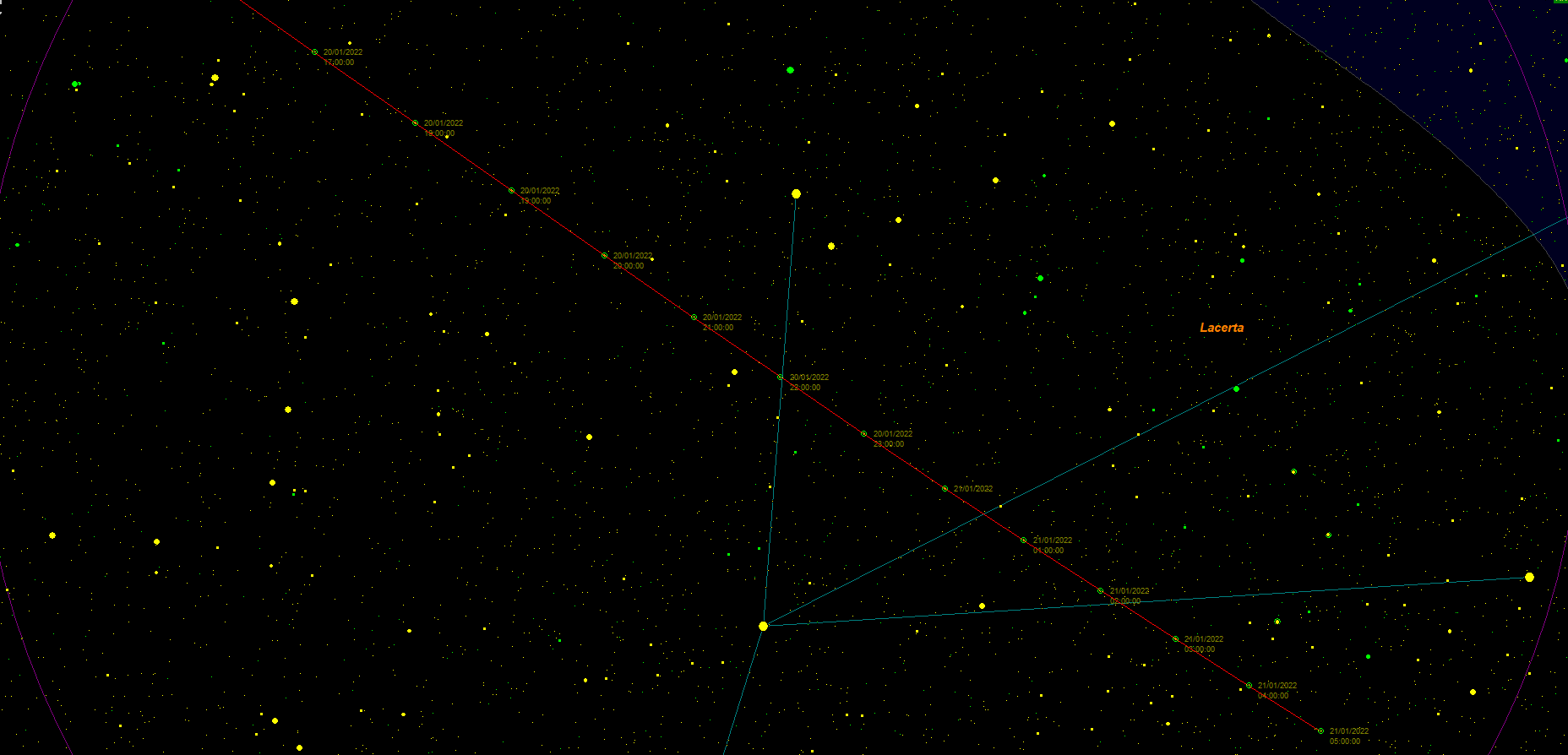
Map 3. 20th – 21st of January 2022.
The next evening as darkness falls, we catch up with it within the constellation of Lacerta, 57 degrees above the horizon.
It will now have faded to about magnitude +12.5.
Lying in an indistinct constellation like Lacerta, and being so faint and now moving slower, this will make it a bit harder to pick out amongst the background stars.

7482-Map-20220120-21

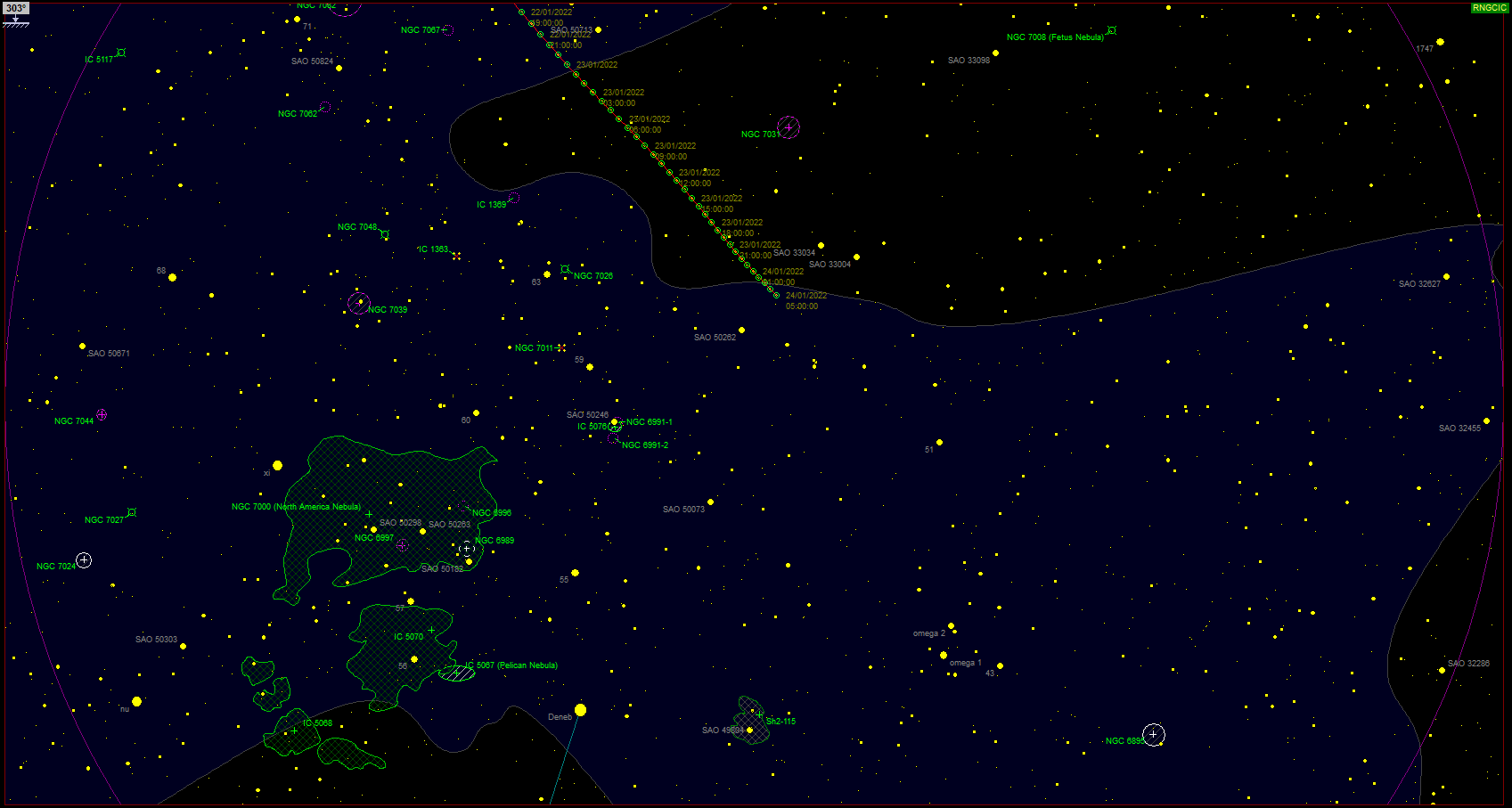
Map 4. 22nd – 24th of January. On into Cygnus.
By this evening, the asteroid’s apparent motion has slowed right down as it enters the north part of Cygnus.
It will now have faded to below magnitude +13 and will be about 51 degrees above the horizon as it gets dark.
7482-Map-20220122-24


Webb Space Telescope – Last Gasp?

Another relatively clear night last night (8th January), so another chance to try and better my images of The Webb Space Telescope.

By now, I was fairly confident in finding it, as Project Pluto (https://projectpluto.com/sat_eph.htm?) got me right on target the evening before.

As Webb was relatively bright the previous night, I thought I would drop the exposure to 60 seconds, to see if I could capture a bit more clearly the rapid changes in brightness others had captured.

Boy did I struggle to see anything! ?
As time progressed and I kept flicking between the incoming images, but could see nothing moving at all.
So I thought my luck was out. A little while before my patience ran out, I thought I could see a very faint moving object.
But it was only a very faint smudge. Could it have dropped in brightness that much in one day?

I upped the exposure to 120 seconds, the same as the previous night, but could see nothing.

I kept the system capturing images, and kept flicking through.
Eventually I spotted the faint object moving away from a +14.63 magnitude star.

Subsequent images showed it moving even further away. SUCCESS! ?
But it was extremely faint.
The initial identification images are below.
You can see it ping-ponging between two stars listed as magnitude +14.63 and +15.73.
So Webb must now be at least +16th magnitude.

Is that the faintest it will get, or will it fade even more as it gets out to the L2 orbit?
Chances are it will fade, making it a lot more difficult for us amateurs to capture.

So is this the last opportunity I’ll have of being able to capture it?
Never say never!

Webb’s brightness depends on the angle of the sunshield to us and The Sun and the amount of sunlight reflected back towards us.
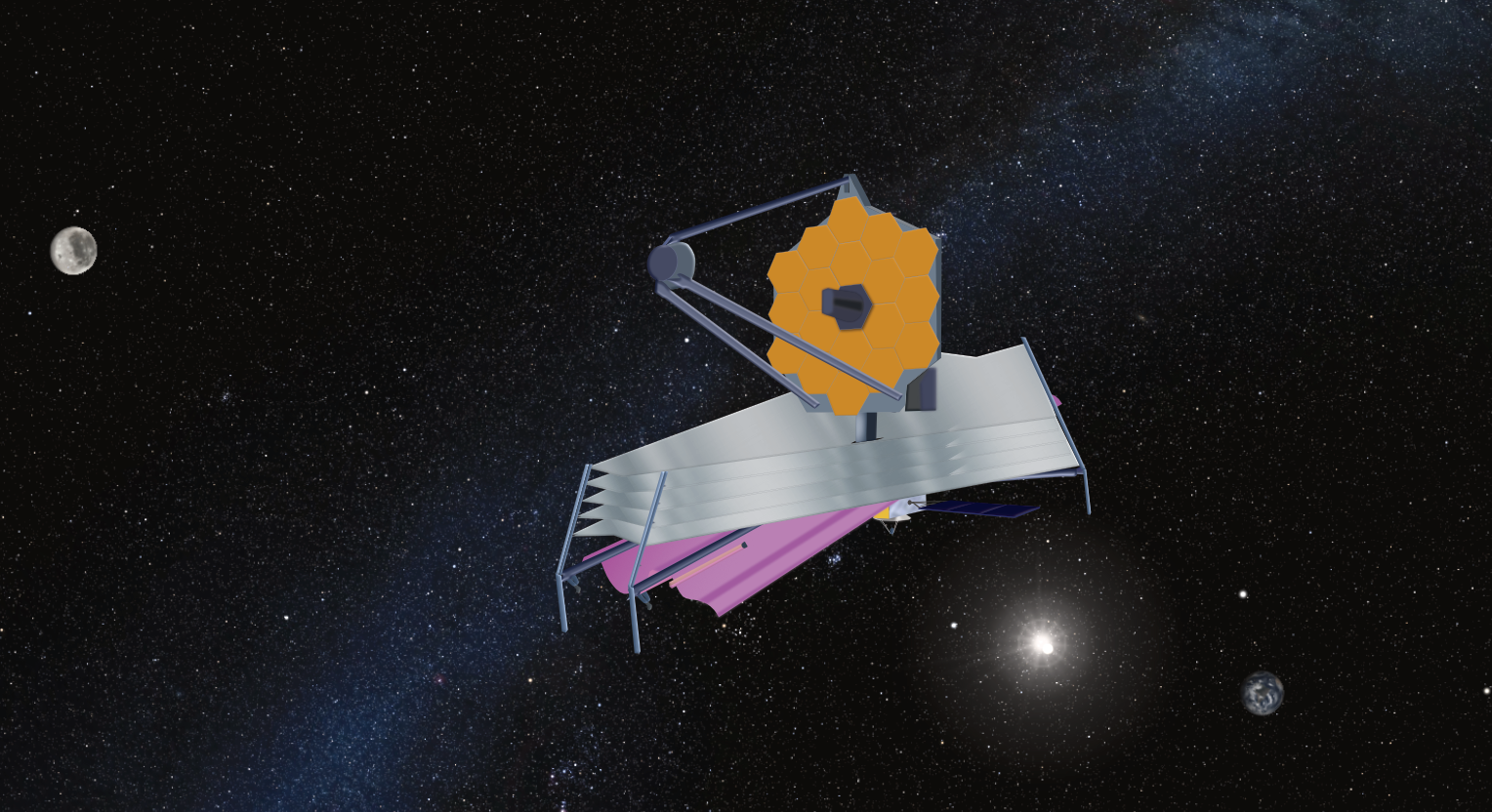
We will always be observing Webb from beneath the sunshield as that is protecting the mirror from The Sun and Earth.
This keeps the mirror and instruments on the cold side as cold as possible so they are able to detect infra red light.

During operation, as Webb is sent to image different targets, if the sunshield is at a different angle, this could make it a lot brighter.
I have been informed by John Thatcher that the telescope can rotate 360 about the radius from the sun and ’nod’ over about 50 degrees.

This could make a great difference to the apparent brightness.

So although we might think we’ll soon be losing sight of it now, just keep looking up.
It just might brighten enough for us to capture it as it is performing all that wonderful research over the next few years.
So it is always worthwhile having a bash from time to time.
I will trying again on the next clear night anyway.

Right, back to last nights session.
I finally gave up capturing images at just before 23:00h UT as the sky was getting a bit murky by then.
Sudden gusts of wind also jiggled a few images.

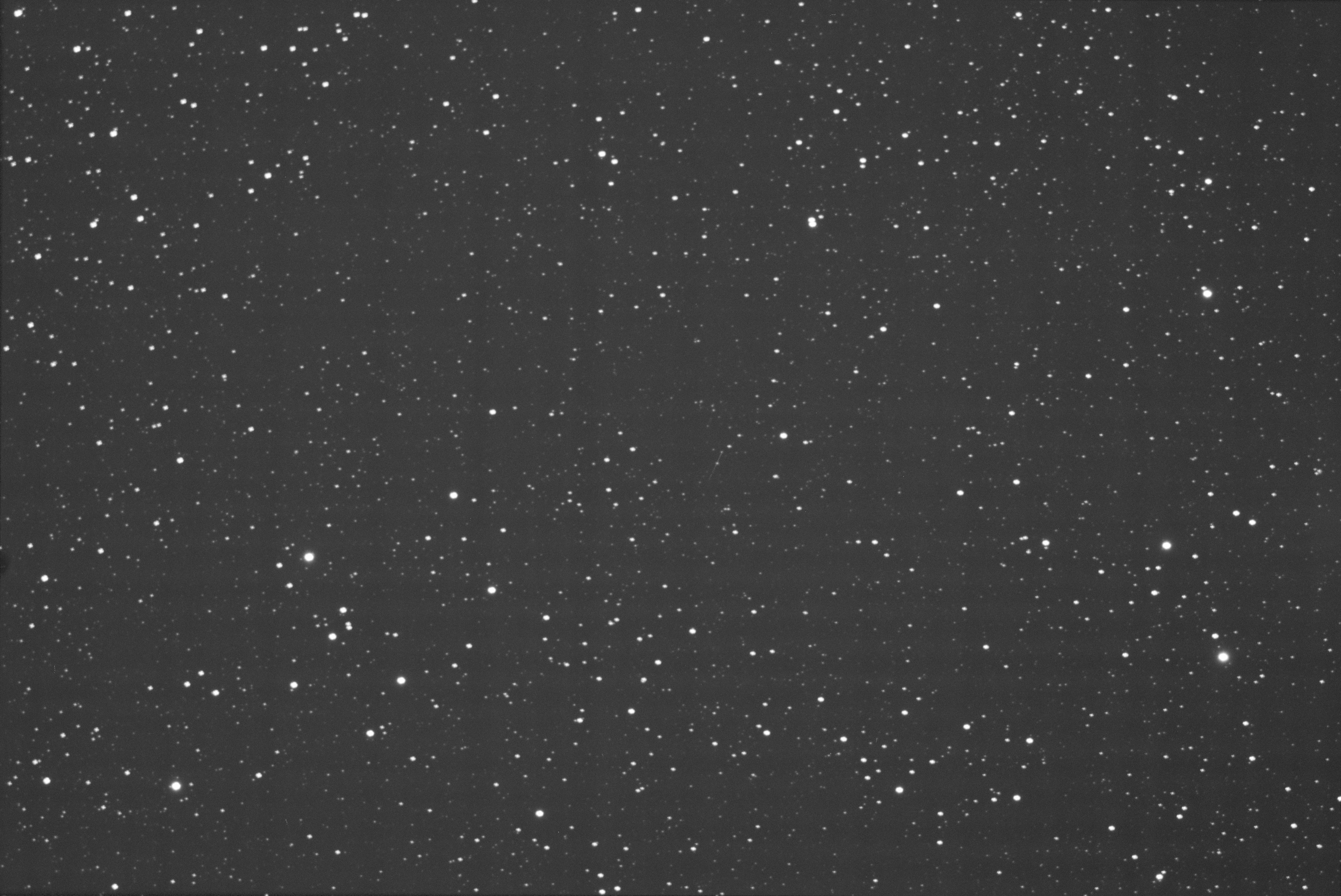
Here’s the resulting trail in the full frame with the track in the centre.

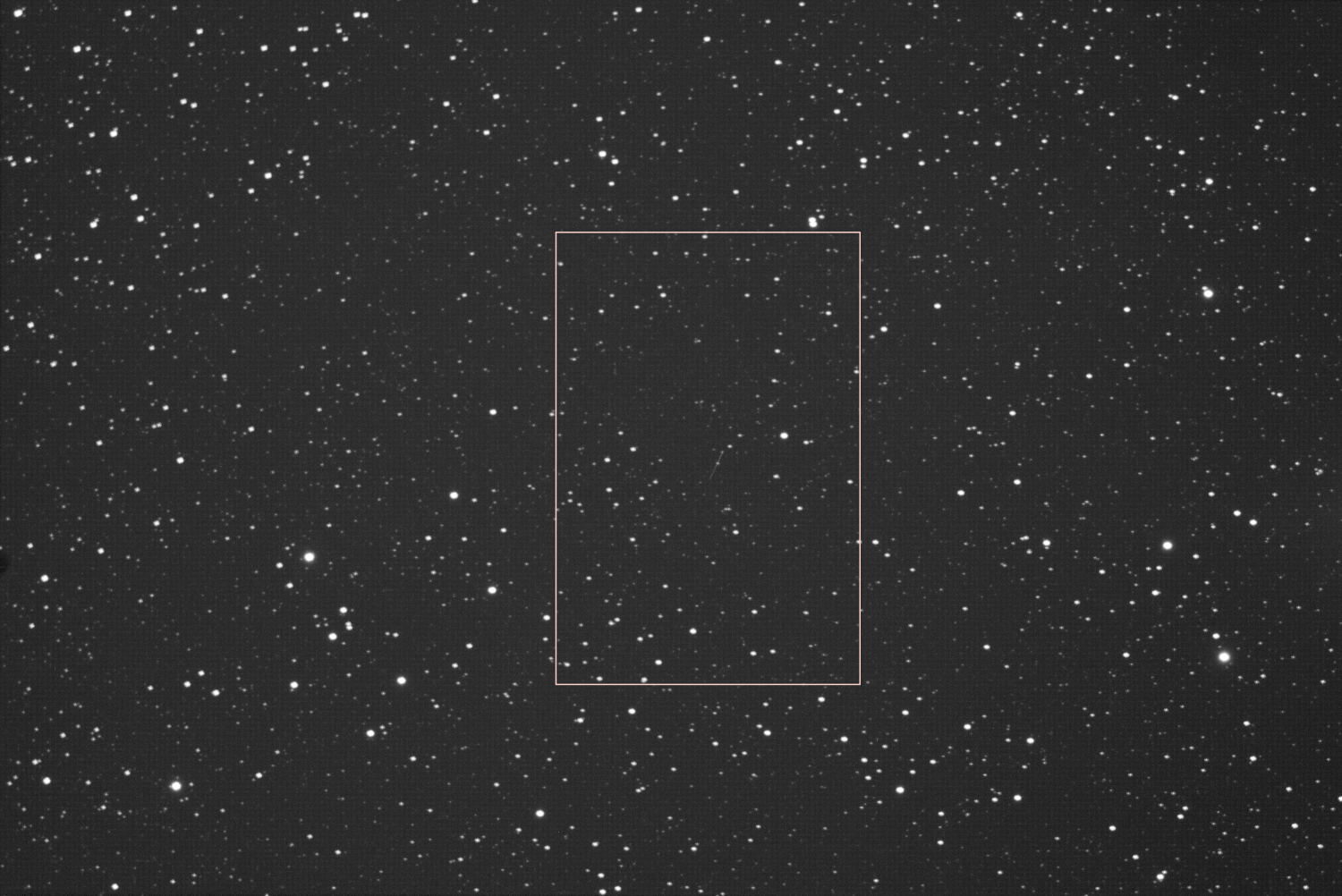
To make it a bit easier to see the trail I have boxed the area of interest below:

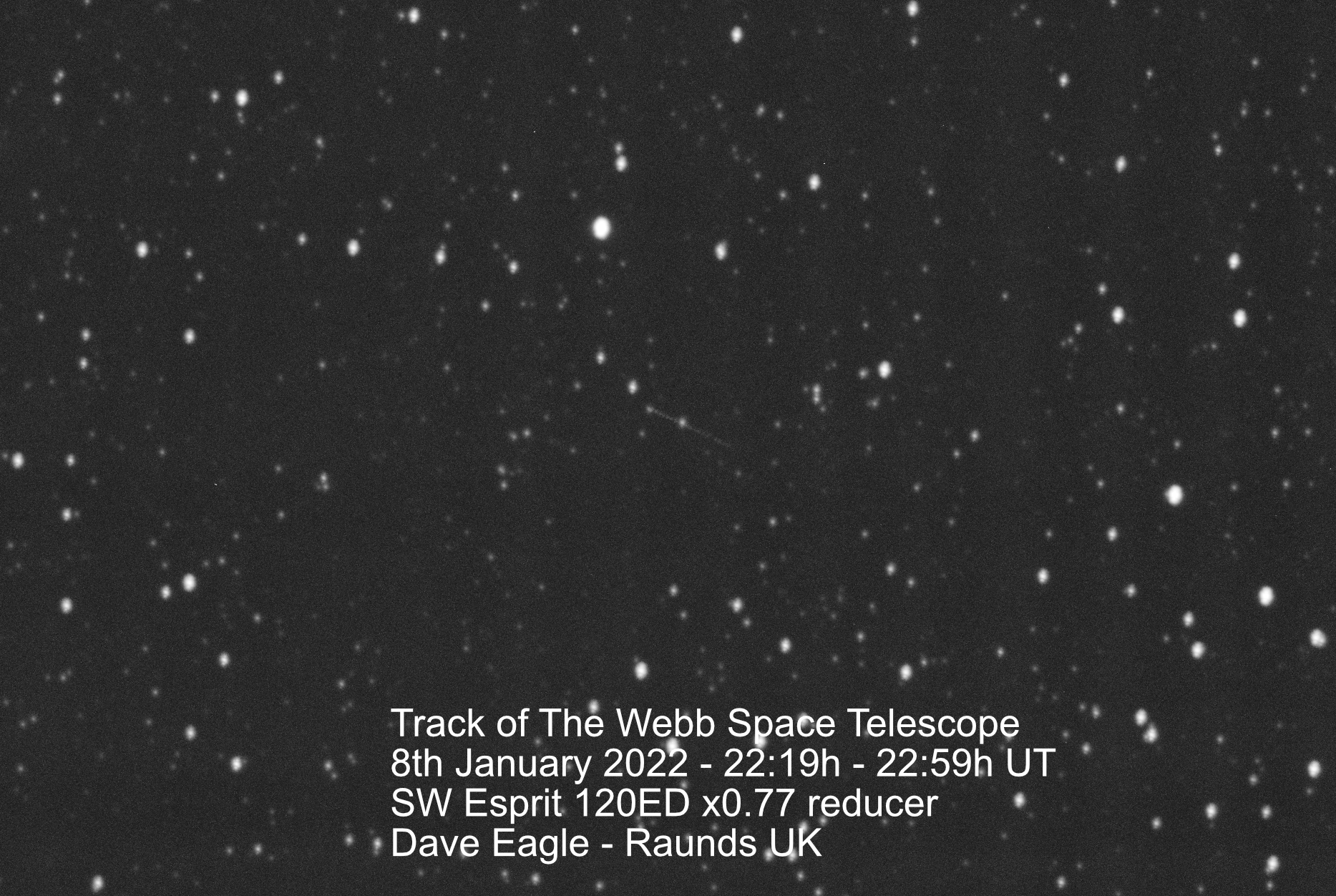
I then cropped to the rectangle and rotated the image so north is towards the top of the image.

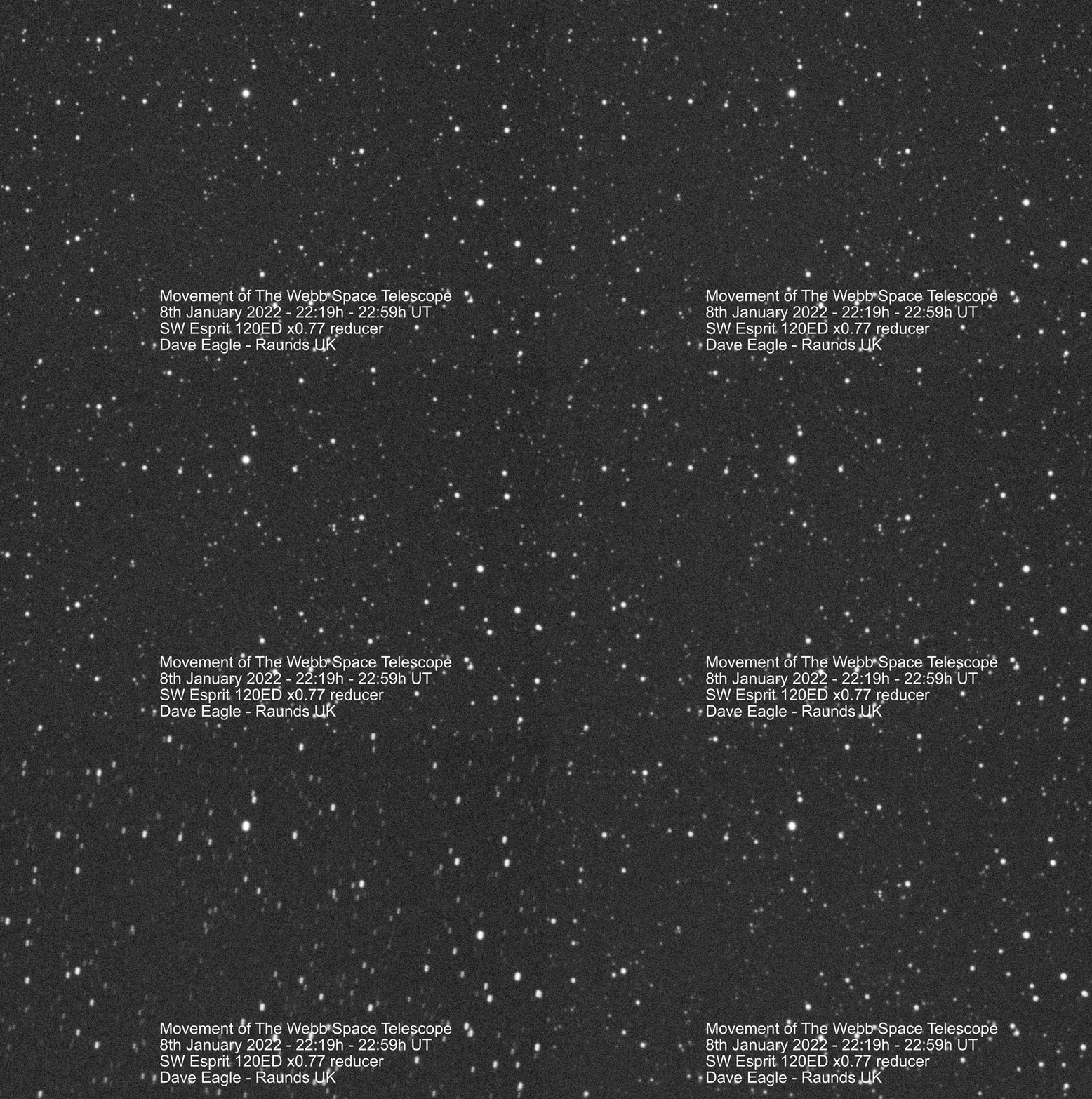
The final animation from the images is here:

More Webb Telescope Stalking and Ariane Booster?

I had some success using another Web page to make predictions of where The Webb Space Telescope is as it goes out to its L2 orbit.

Nasa’s Horizon Web page (https://ssd.jpl.nasa.gov/horizons/app.html#/) managed to get me close, but I still had to search around to see if i could spot something moving between the images.

I was given ProjectPluto (https://projectpluto.com/sat_eph.htm) by Nick James from the BAA.

I plotted positions and compared them to Horizon.

When the skies cleared, I got out and found Webb almost exactly where ProjectPluto had predicted it would be.
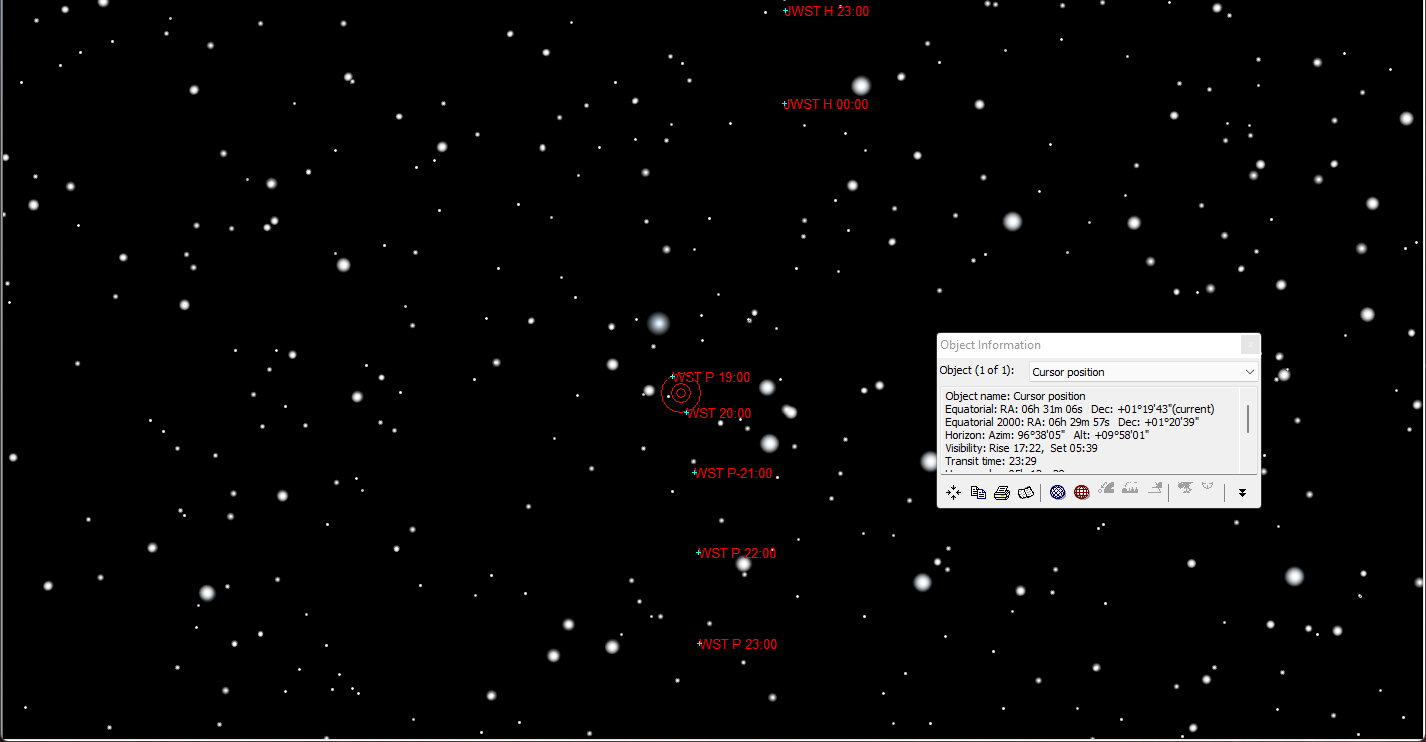
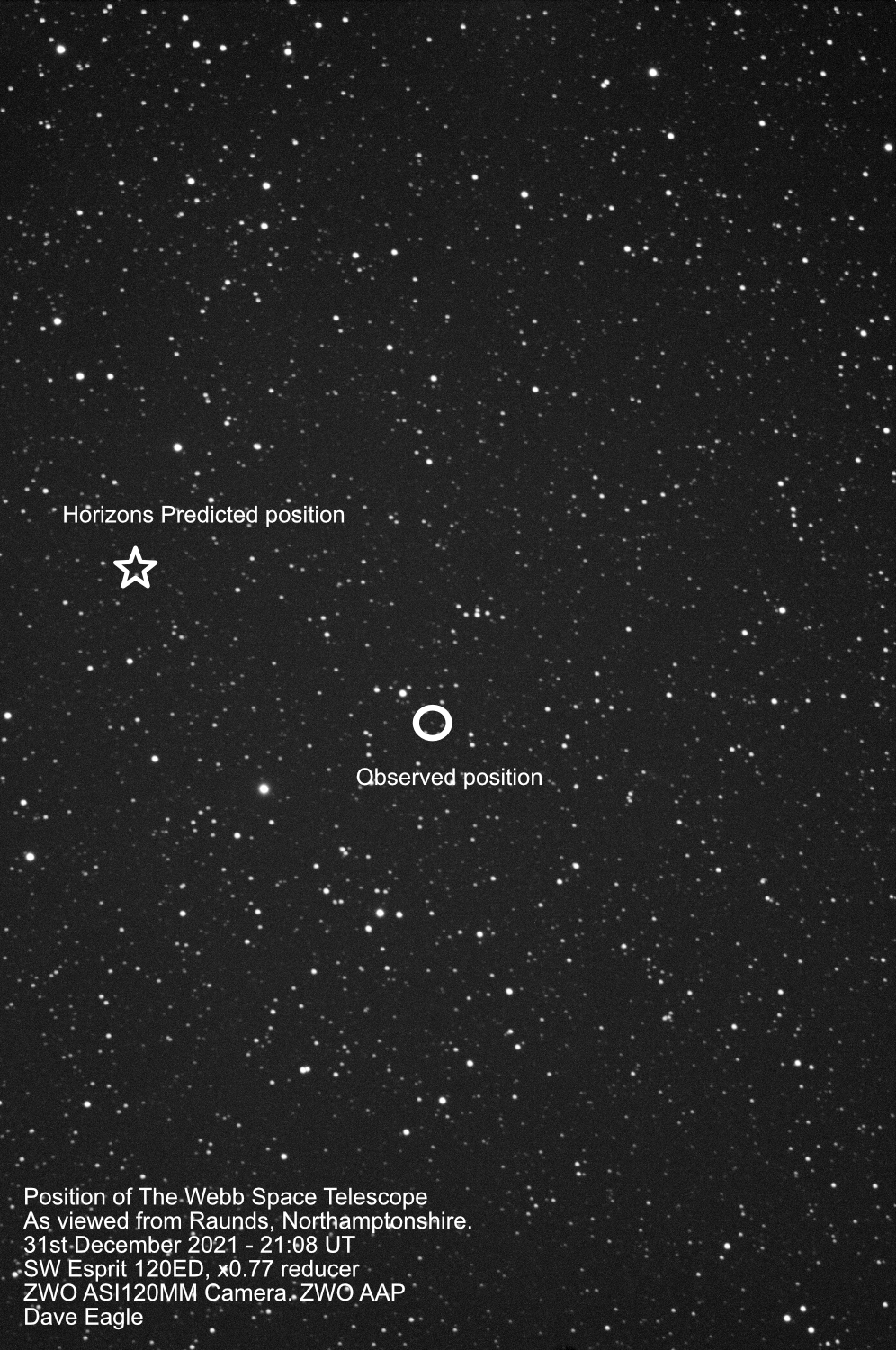
The exact position I found it a little before 21:00h UT is shown in the circles below:

Webb-Prediction-20220107

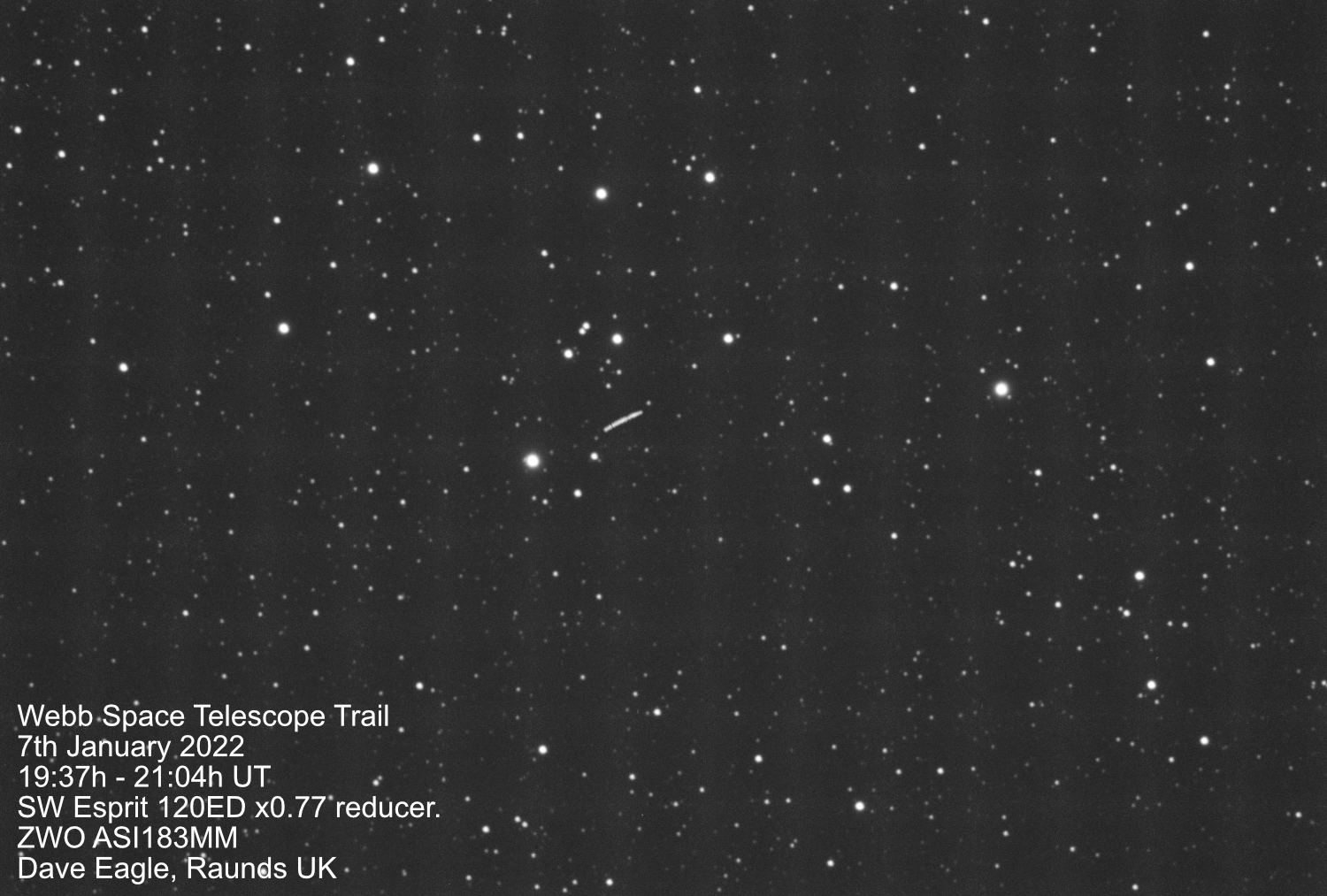
The image below shows Webb’s trail across the sky by compositing the individual images together:
(Processed images rotated with North at the top).
You can definitely see some changes in brightness throughout the track.
WST-Trail-20220107

Then this animation:
Webb-Stack-For-Animation-20220107-Small

As this prediction was so spot on, I decided to see if i could catch the upper stage of the Ariane rocket that placed Webb on this perfect trajectory.
(2021-130A = NORAD 50463)

I knew it would be a tough target, as it was reported at about +17th magnitude on the 2nd of January.

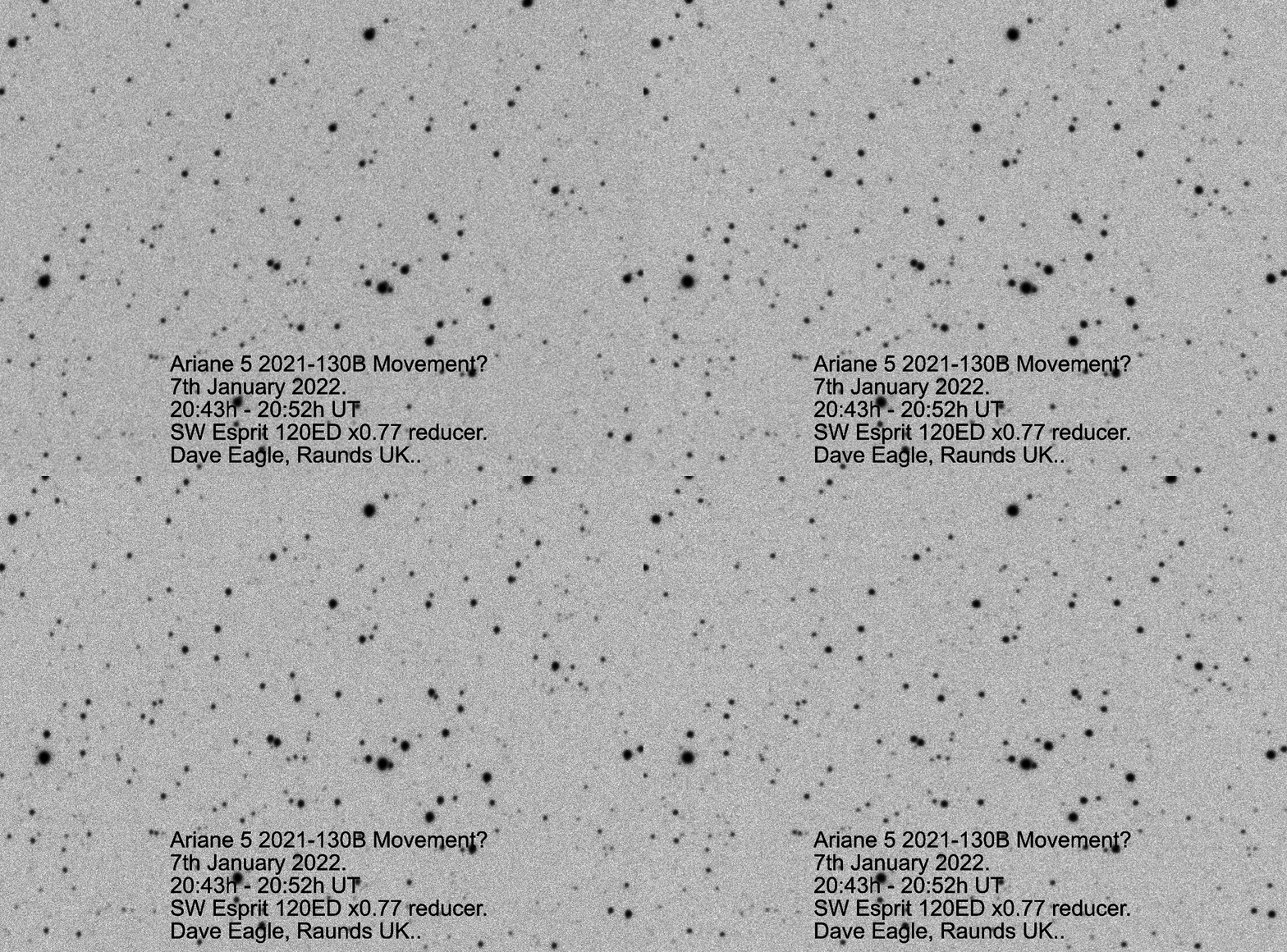
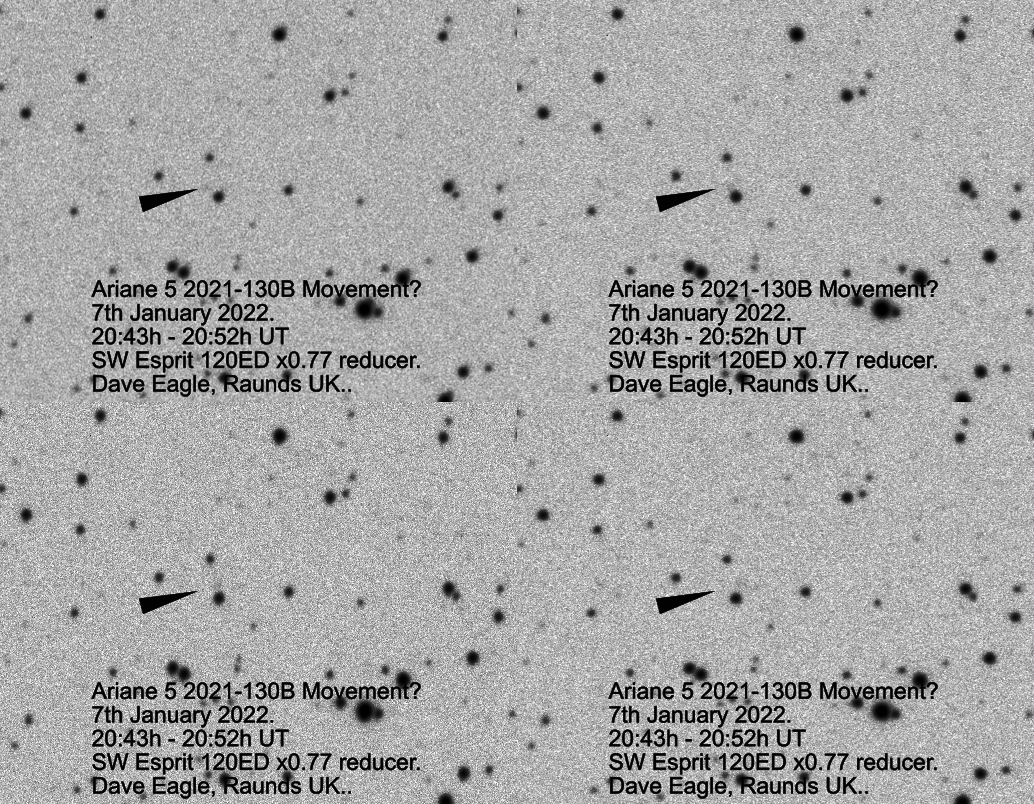
It Might or might not be revealed. But here’s my two animations of the position, slap bang on where ProjectPluto predicted it would be.
One is a wide field, the other cropped closer in, with the starting position indicated with an arrow.
I think you can see a very faint object passing that star.
I only manged to capture 4 images, before the clouds rolled in again.

If it’s not the upper stage, then it’s probably noise. ?

It did clear a bit later, but I’d packed everything away by then. ?

Ariane-Stack-20220107-Cropped-Close


A New Challenge? The Ariane Upper Stage.

I’ve had great fun trying to capture The Webb Space Telescope since launch.
A new challenge beckons.
I am going to see if I can also catch the upper stage booster of the Ariane rocket.

You can generate an ephemeris of both Webb and the upper stage using the ProjectPluto Web page:
https://projectpluto.com/sat_eph.htm

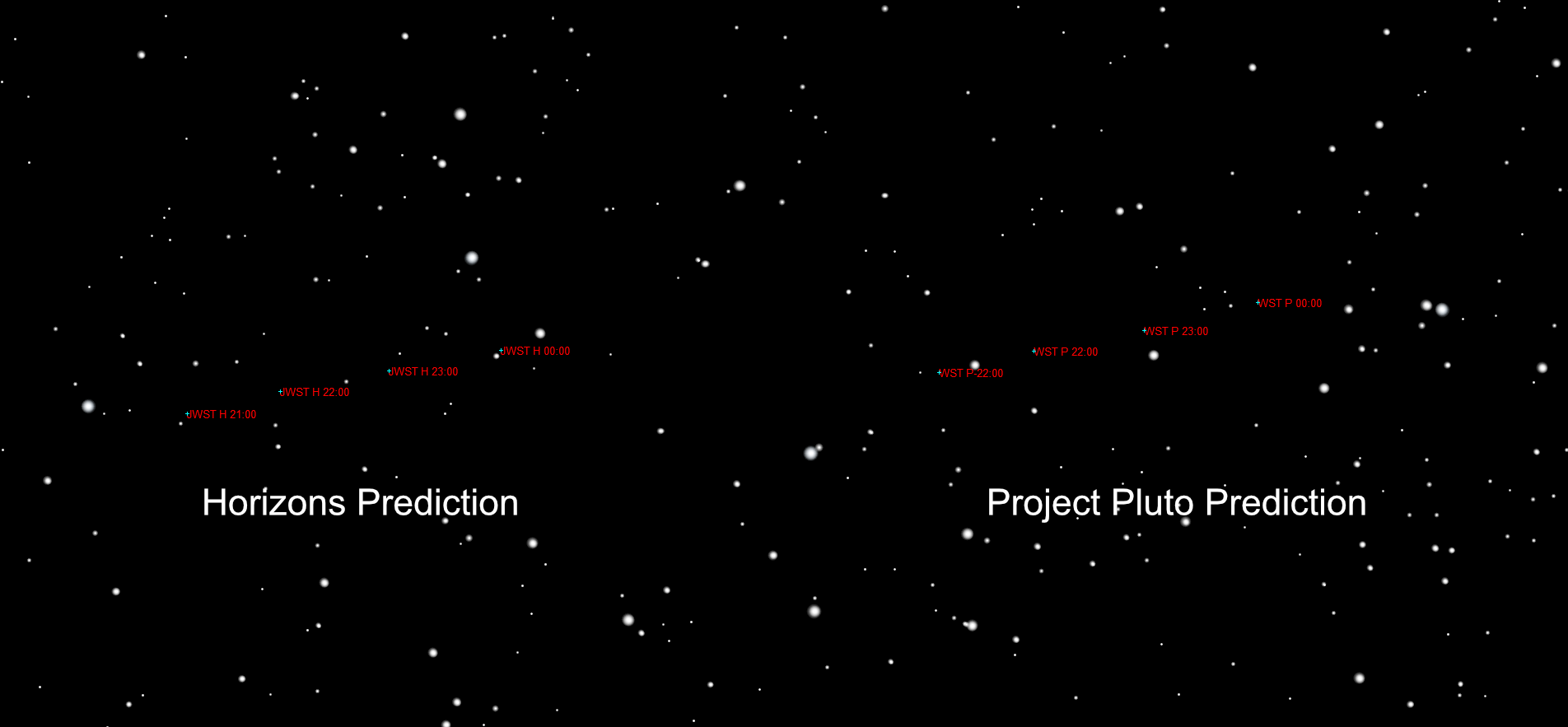
So it would be good to see how this Webb prediction compares to NASA’s Horizons tool:
https://ssd.jpl.nasa.gov/horizons/app.html#/

I have generated their ephemerides for tonight and have put these positions into my planetarium program to produce the map below.
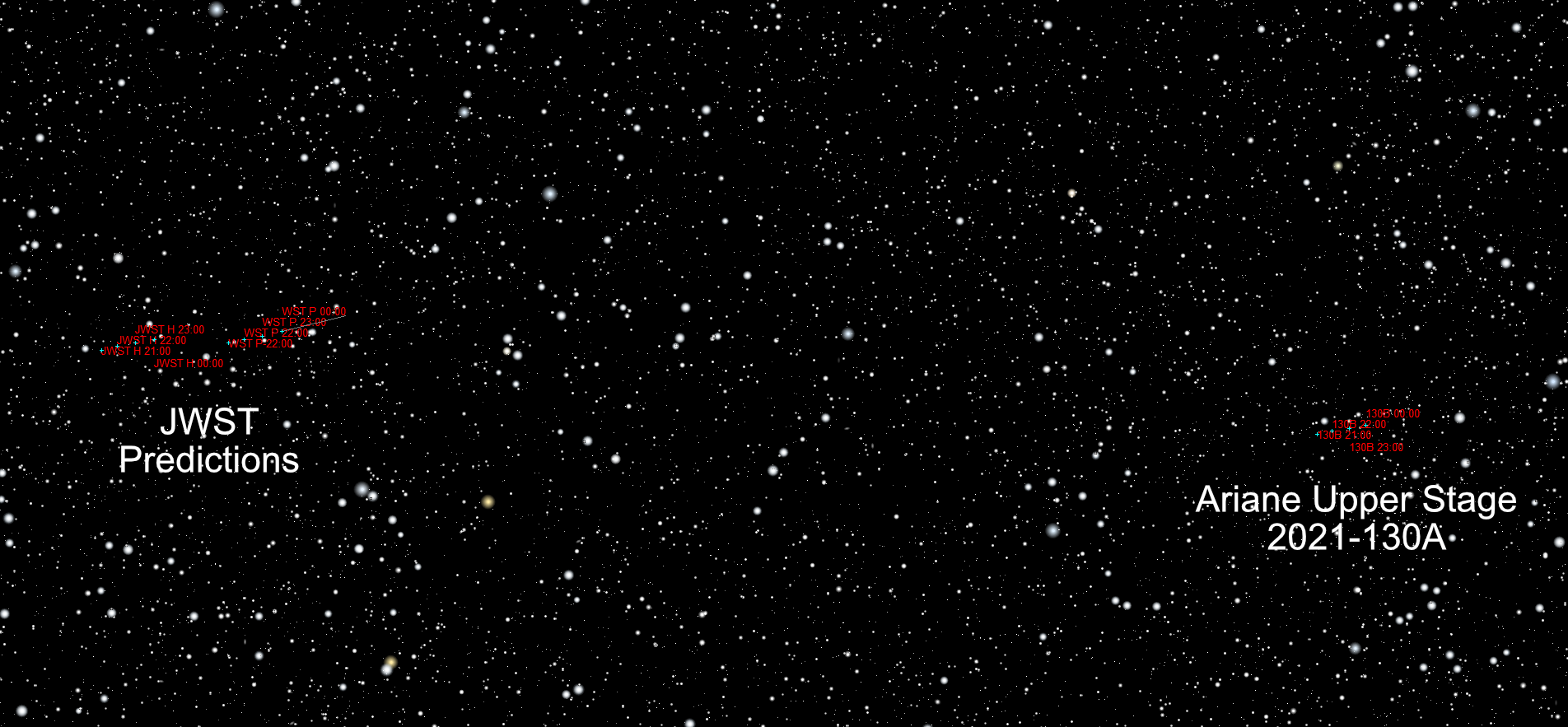
The second map shows a wider view with the Ariane upper stage mapped as well.

As you can see it is trailing quite a way behind the Webb Space Telescope.
But I have heard that the booster was fainter than magnitude +17 on Sunday night, so I think it might be a thankless task.

But you’ll never know unless you try!

We might get another chance to see it later though!
After going into solar orbit it will come back close to Earth around 2047.

When I get a moment, I’ll do an ephemeris for last night and see how accurate PlutoProject is was compared to the images I captured.

But, before that, if we get some clear skies in a bit, you know where I’ll be, and where my scope will be pointed…

JWST-Predictions-20220106 Ariane-Prediction-20210206

A Productive Evening (Eventually)

Last night was a very cold but a really nice clear night.
Are we really closer to The Sun this time of the year?

Anyway, I was determined to see if I could catch up with The Webb Space Telescope again and catch a couple of comets.

Despite the ASIAIR Plus preforming wonderfully all this time, I had real technical issues.

One problem I have had for a while with using the Android Emulator on my PC is that location always defaults to Washington in the US.
So if I wanted to point the scope to an object in the east, it told me it was below the horizon.
I could even take an image and then click on the screen to re-centre on that point, something I’ve done loads of times.
That also told me it was below the horizon.
(Thankfully this morning, I have finally resolved that particular problem).

I swapped the Plus for the older Pro and used my tablet to control it.

All connected OK, but that was when I discovered a new issue.
Every time I tried to take an image the main camera disconnected itself.
With frustration building, I almost threw in the towel at that point.

Thinking logically, this sounded like a power issue, so I checked the power port that the main camera was plugged into.
Numpty here had plugged the camera into a port I’d set up as a dew heater, set at 75%.

Once I got on top of that, it performed flawlessly, so the hunt for Webb was now on yet again.
As before, the predictions made were close, but not exact, so I did have to hunt around for it.

It took me quite a long time to find Webb, as it seemed to be moving a lot slower against the background stars this evening.
Perhaps the angle we are viewing it has changed so the motion is mainly away from us, rather than across our line of sight?

Webb also seemed to be a bit brighter.
I estimated it at about magnitude +14.5 when compared to background stars.
Could this be because its slower motion is leaving it on a pixel for longer, so it collects more light?

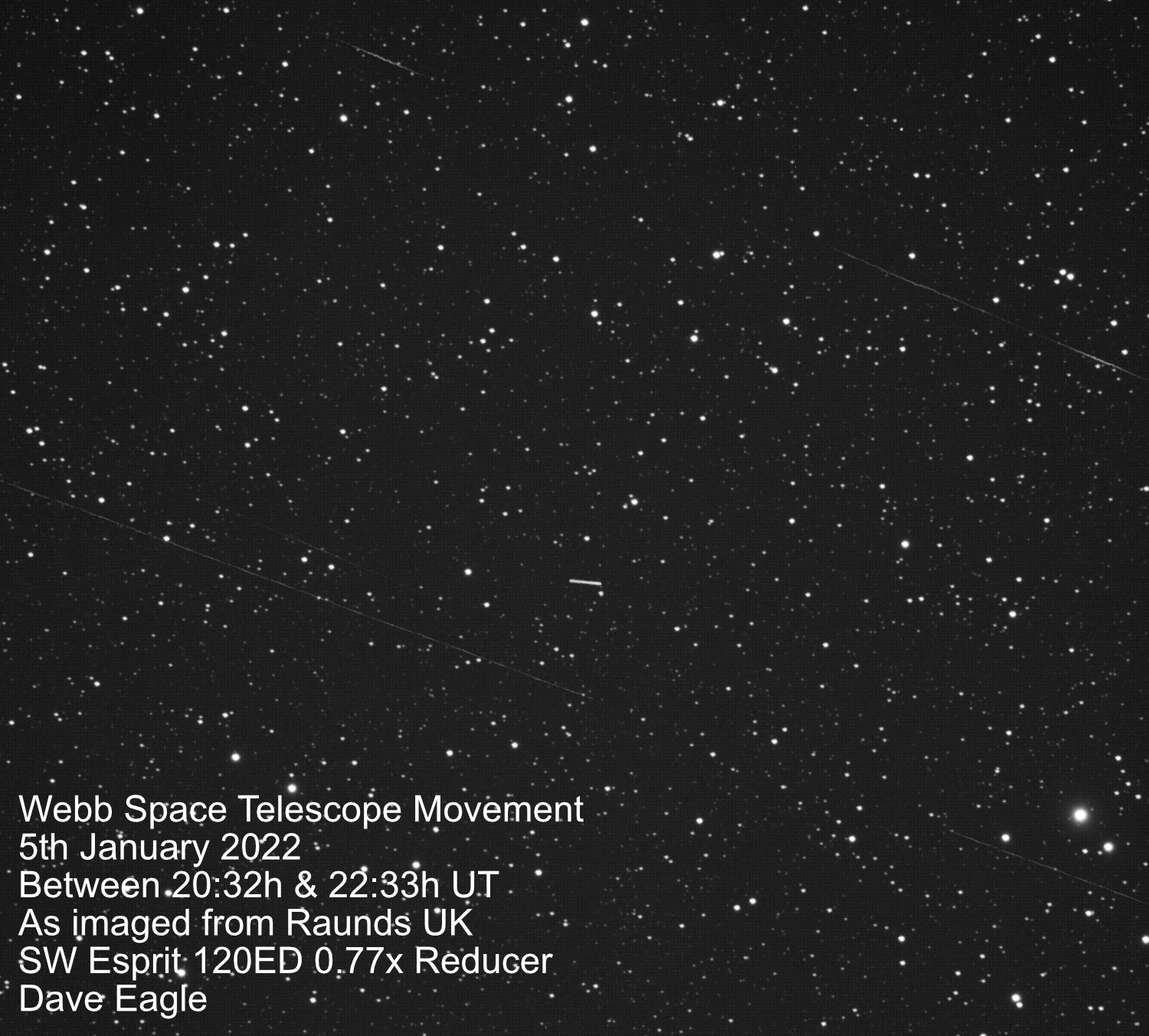
Anyway, below is the resulting image trail and animation (the thin streaks are satellite trails).
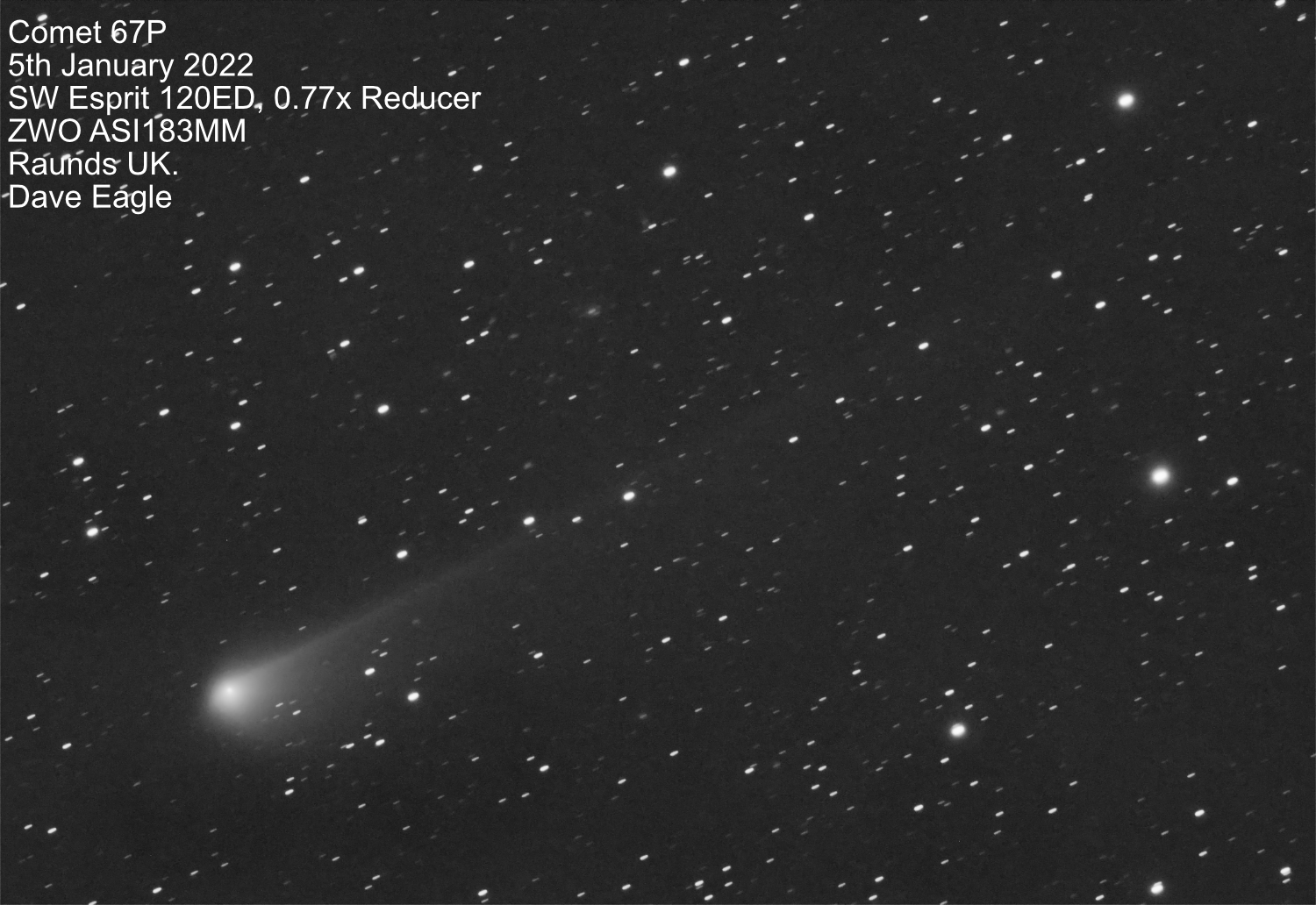
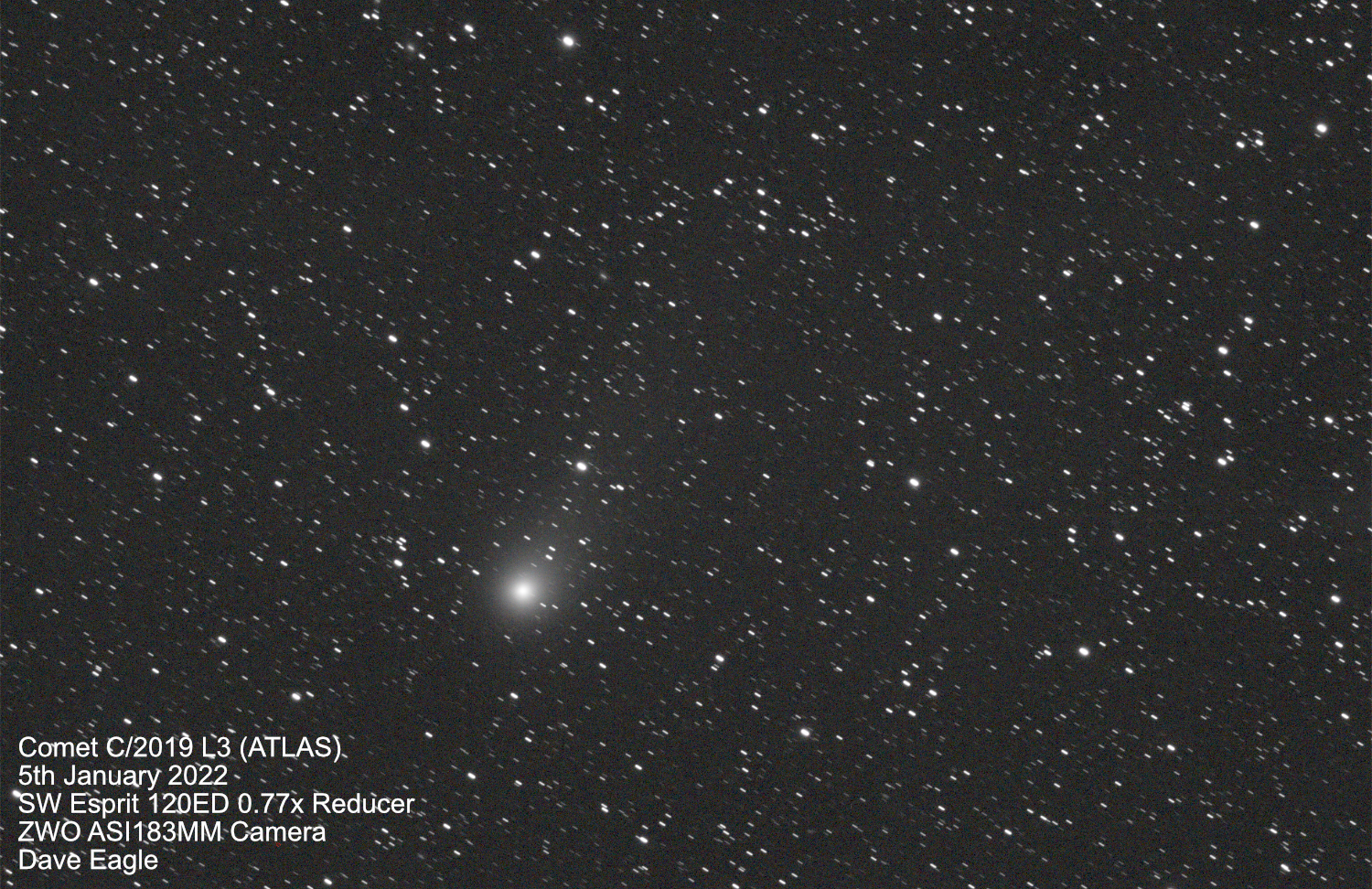
I finally finished the evening by looking in on my old friend Comet 67P and then onto Comet C/2019 L3 (ATLAS).

I wonder what technical problems I’ll encounter next time?
And no doubt, it will be me that’s caused them…

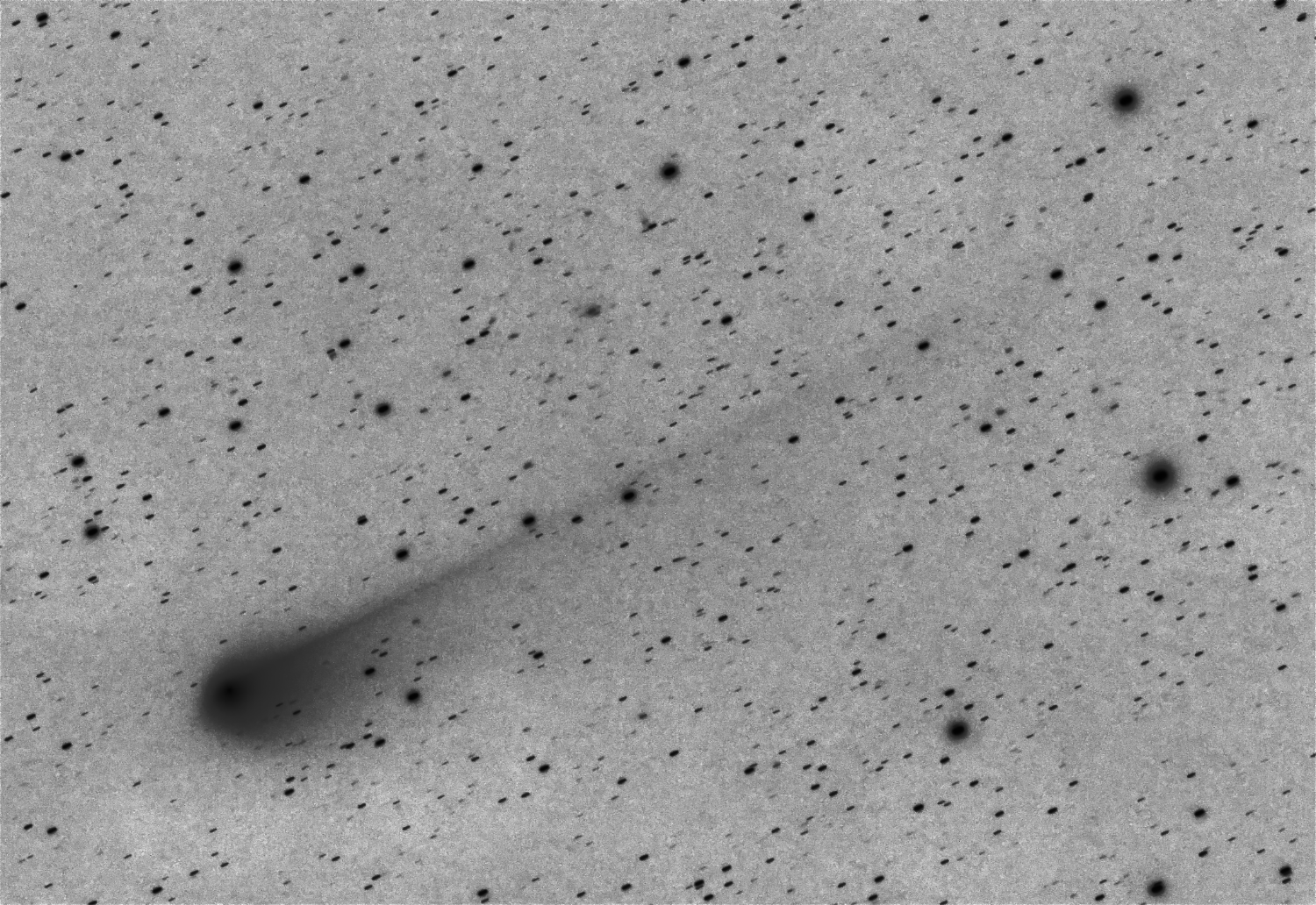
67P Inverted to show structure in tail.


How prediction matches reality.

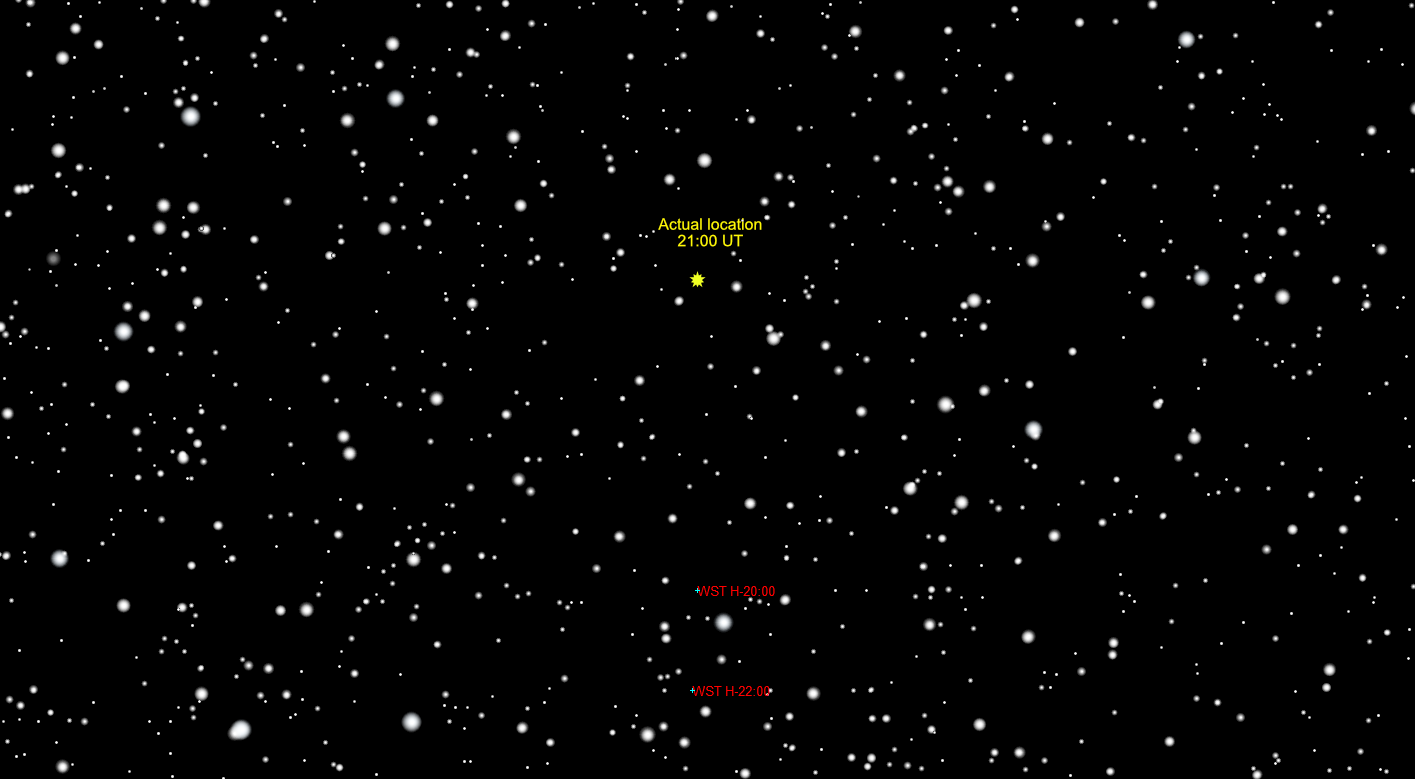
After creating new predictions earlier, I thought I’d give you an update on where I actually found Webb tonight.

Well, it took a bit of finding tonight, mainly because all the predictions weren’t quiet correct.
Plus the fact that it has really slowed down and was really hard to spot moving.

The image below shows the predicted positions towards the bottom for 20:00h and 22:00h UT.
The yellow star shows the position I imaged it at 21:00h UT.
It was travelling in the same direction as the predicted track.

Webb-Actual-Location-20220105

As Webb is moving slower, it is coming up a bit brighter in my images tonight.
I now make it about magnitude +14.5, when compared to some background stars.

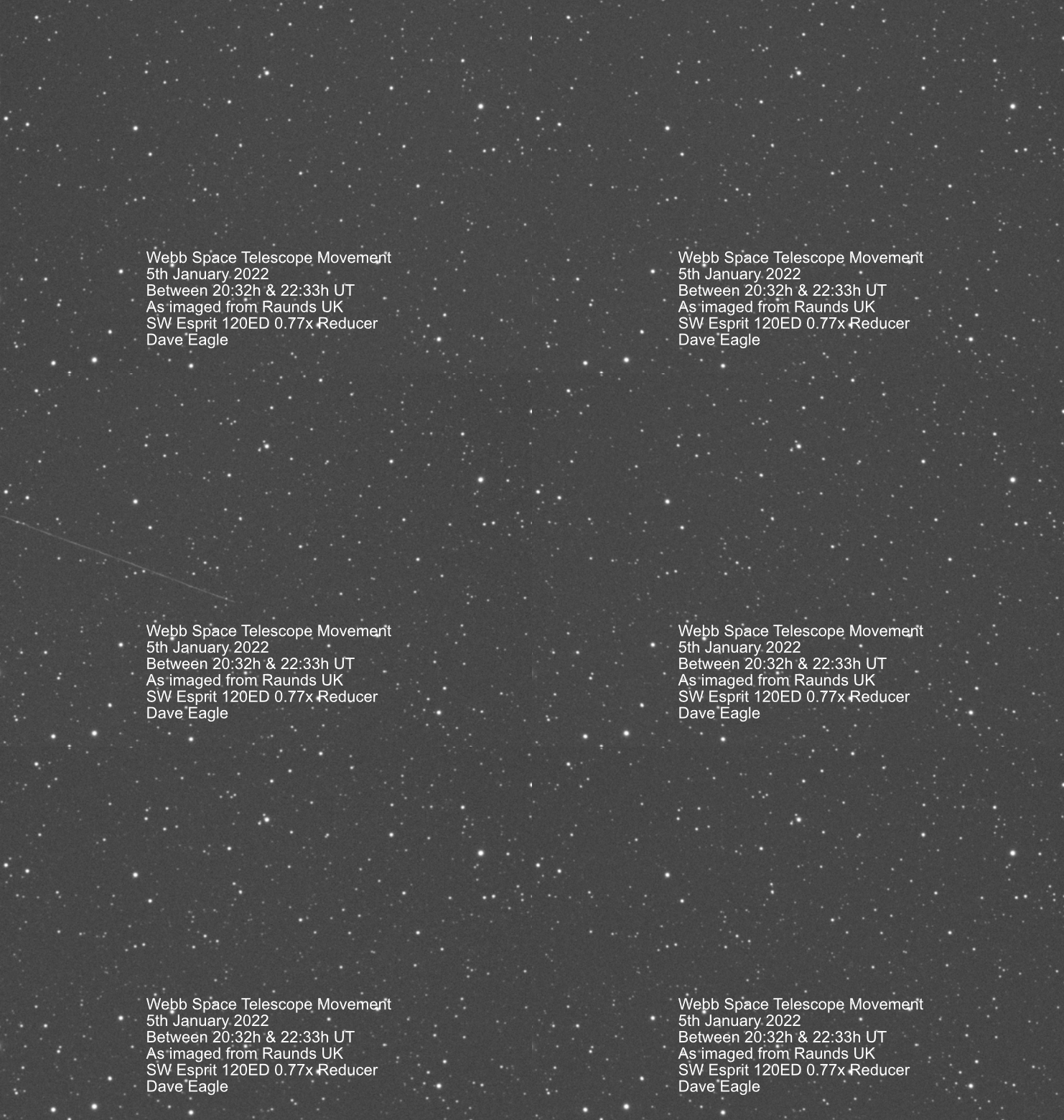
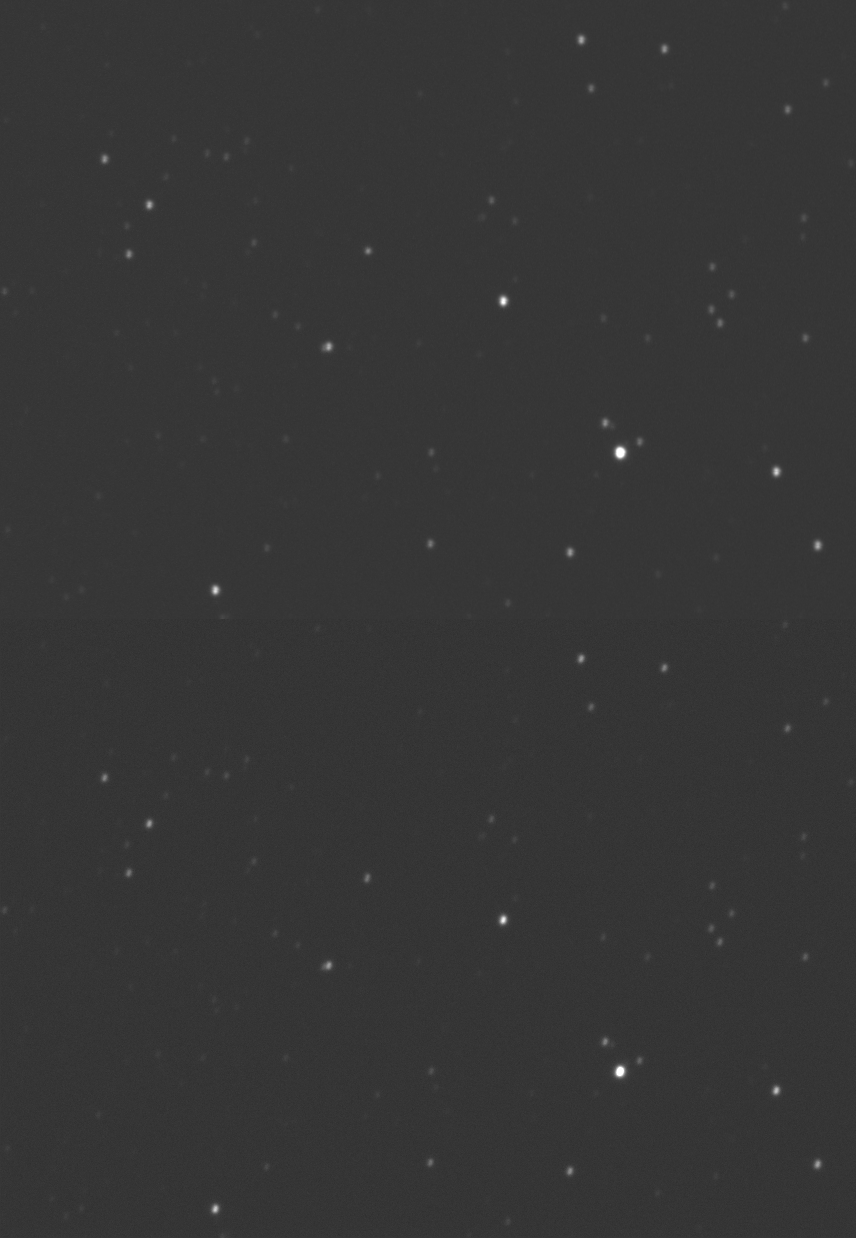
Below are my two discovery images put together as an animation.
I’ll do a fuller animation once I’ve taken all the images and processed them.

Webb Space Telescope Predictions

I have had some fun the last few clear nights we have had, catching The Webb Space Telescope as it passed from Orion into Monoceros.

It has been challenging as the positions given by The Nasa Horizons Web page haven’t always been that accurate.

They have got me to the general area of sky, but I have had to take a number of images some minutes apart and use the blink comparator method used by Clyde Tomaugh to flick between them and identify the faint moving target.
This was often to one side of the filed of view and had to be re-centred to put Webb in the centre of the image.

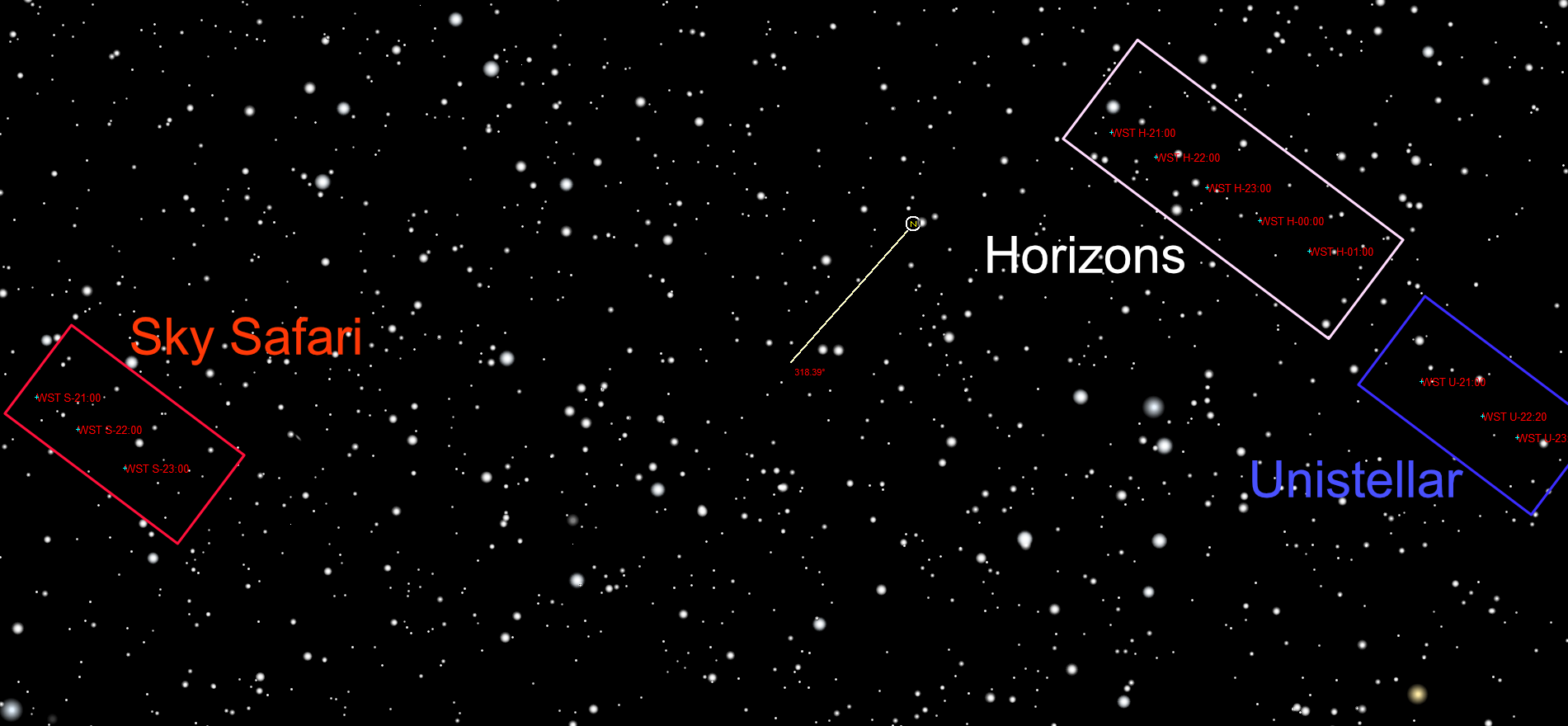
So when I was directed to Unistellar’s Web site and Webb appeared as a satellite in Sky Safari, I thought I would see how close their predicted positions compared to one another.

Horizons: https://ssd.jpl.nasa.gov/horizons/app.html#/

Unistellar: https://unistellaroptics.com/ephemeris/?fbclid=IwAR3fx3BlINOwRSpU6ZJ1EFUhJOaRF_LOdFaJ3zab9ZoS5pi-nDDbjMebR5A

I generated positions for tonight, using both Web sites and Sky Safari and plotted them in planetarium software.
The results are shown below.
I think I will stick to using NASA’s Horizon Web site to make the predictions, as at least this did get me fairly close to the space telescopes position, the last three times.

But considering how faint it was last night, I’m sure it won’t be long before it is lost from my view.
But of course you just never know unless you keep trying.

Webb Positions-Compared

Webb Space Telescope fading as it gets further away.

Last night my stalking of The Webb Space Telescope continued.
Yes, I went out to see if I could still catch The Webb Space Telescope.

I compared a few sources to predict the position, and found discrepancies between them all.
More on that to come in a blog entry I will put up tonight…

Anyway, I finally tracked Webb down and it has definitely faded since the 2nd of January.

I estimated that it is now about +15th Magnitude.

That’s not really surprising, as it was over 515,000 miles from Earth by the time I took these images.
I’m absolutely gobsmacked that I can pick it up at all from my back garden.

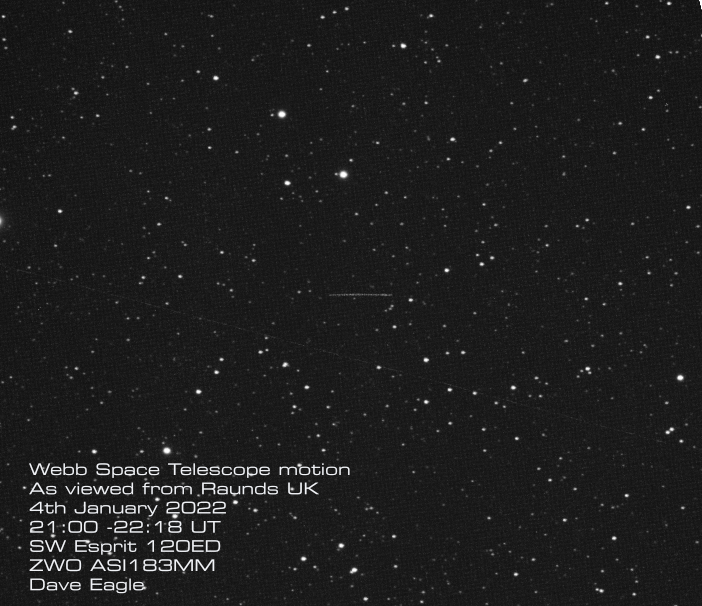
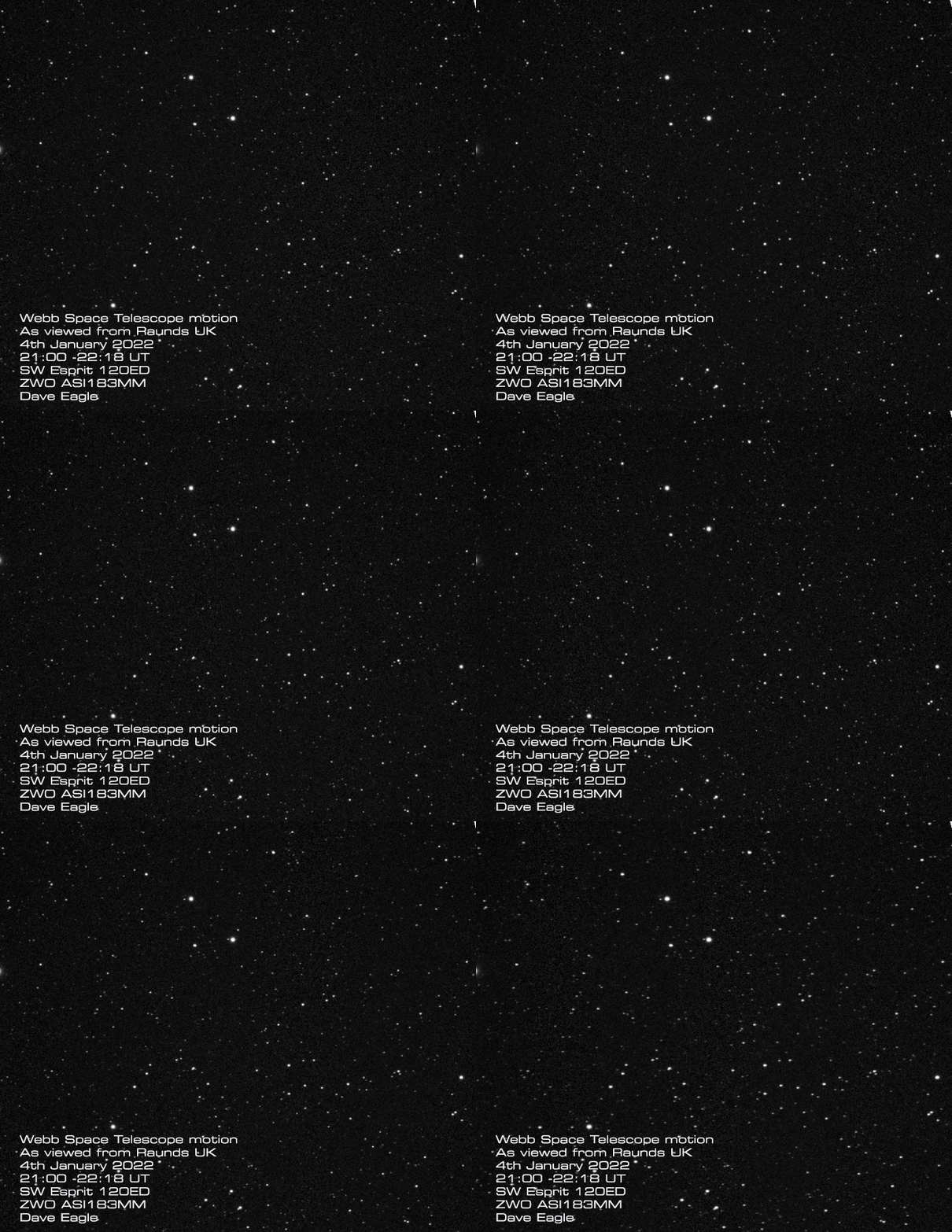
Anyway, here’s the images stacked together showing the trail and the resulting animation:
JWST-Trail

Webb Space Telescope brightens

Since The Webb Space telescopes sunshield was extended on New Years Day, the brightness has increased quite a bit.

I imaged Webb on New Years Eve and roughly estimated its magnitude at about +15.
(See my blog entry for the 1st of January).

Estimating the brightness is always going to be difficult to do as Webb is a moving object.

As a result of this movement, its light will only fall on a pixel for a certain amount of time before it moves onto another pixel. So it may look a bit fainter in the resulting images. More of this in a little bit.

I got another chance with clear-ish skies last night, so I got everything set up again.

After starting imaging, I flicked through some of the images as they came off the camera and found Webb was directly in the centre of the first field of view. RESULT! ?

After the sunshield has been deployed, it was definitely brighter, despite being over twice the distance from Earth as it was a couple of days ago. I now make it a full magnitude brighter at ~+14.

Looking forward to prospects for later.
As Webb gets further away from Earth, the apparent motion will become slower.
This means that we may still be able to pick it up, despite getting fainter, as during a longer exposure it will stay on a pixel, making it show up brighter in our images. ?

I then kept the AAP rattling off images. To produce the resulting image and animation below.

I then decided while the images were being collected to GO LIVE on YouTube to do a Webbcast.
That’s always a nervous decision, as you are relying on technology to keep going.

But despite gusts of wind wobbling the telescope and thin cloud interfering at times, I did manage to get some images broadcast live as they came off the camera. The AAP image froze at a crucial point, but managed to get back in to show the last few images of the faint dot moving.

We also had a rather familiar visitor introduce himself.
I couldn’t see folks videos at the time of the live stream, so I only heard the voice.
So I only heard who it might have been after people mentioned it later in the broadcast.
But I very much doubt it was that person. ?
See if you can identify him?

Webb Space Telescope captured on New Years Eve

Wow!! I managed to capture The Webb Space Telescope on New Years Eve.
It’s been another truly awful year, but this has at least finished 2021 off with a real positive note.

More details about making predictions of its position using New horizons and capturing it are shown here:
https://www.star-gazing.co.uk/WebPage/wst-spotting-20211222

Third time lucky!
On a couple of previous nights, I set up the scope when there was a gap in the clouds.
I managed to get the scope pointed in the right direction, and take an image to confirm I had the scope pointed in the right direction so that it gave the correct field of view, which should include the Webb Space Telescope.
As long as it was still bright enough for me to capture it, that is.
As soon as I got my field of view, it clouded over both nights, even starting to drizzle on the first occasion.
Well, that did reflect my current mood.

So on New Years Eve, I set everything up, got my confirmation field of view, and yes, you’ve guessed it, it yet again clouded over.
Weather forecasts for the New Year Celebrations showed it would be dry, but with 100% cloud all night.

So, should I break it all down and bring it in again?
As it was going to be dry, I left it out and as the clock ticked on I kept checking the sky.
At about 20:20 UT, stars were once again visible, so off I went again and started imaging.

I took a few images and after a few minutes transferred some images to the PC, so i could see if I could see something moving between the images. I left the camera running.

All images taken using the following setup from my back garden:
Sky Watcher Esprit 120ED. x0.77 reducer.
ZWO ASI183MM Camera.
120 second exposures.

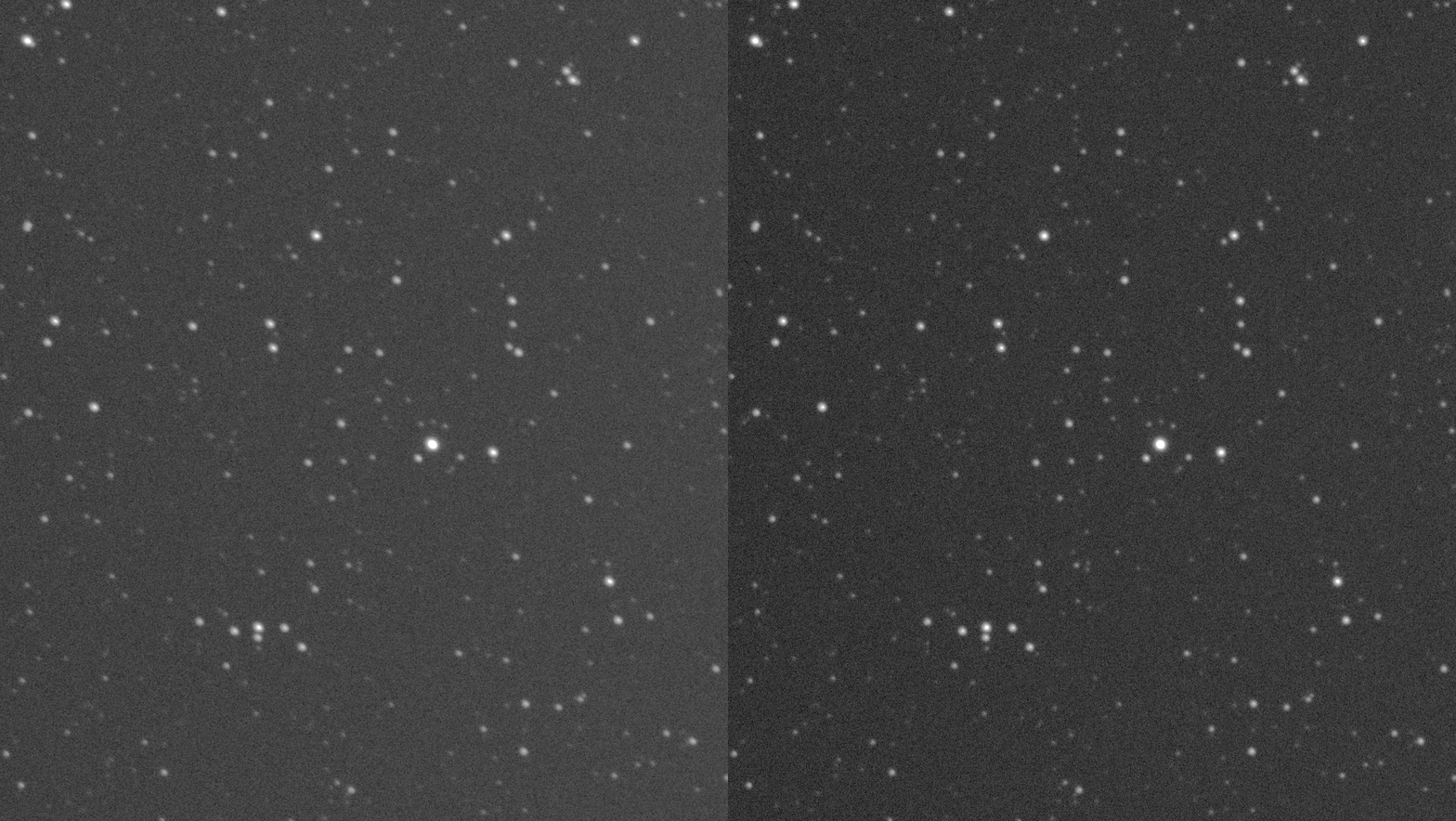
These are my two “Discovery” images showing the Webb Space Telescope moving through the star field a week after launch.
It was a little over 446,000 miles from Earth, Nearly twice The distance of The Moon.
I compared it to some of the background stars and I make it between +14th & +15th magnitude.

I managed to identify Webb by comparing two of my images like a blink comparator.
Here’s the cropped version.

Horizons predicted position was a little bit out, as you can see below, but I managed to spot Webb in my first field of view over towards one edge. It took quite a while to identify it, so thank goodness it stayed clear for a reasonable time.

Once I had identified and centred Webb’s position, I took a number of images until it clouded over once again at just past 23:00.
So I now had time to pack everything away and crack open a beer to see in the new year.

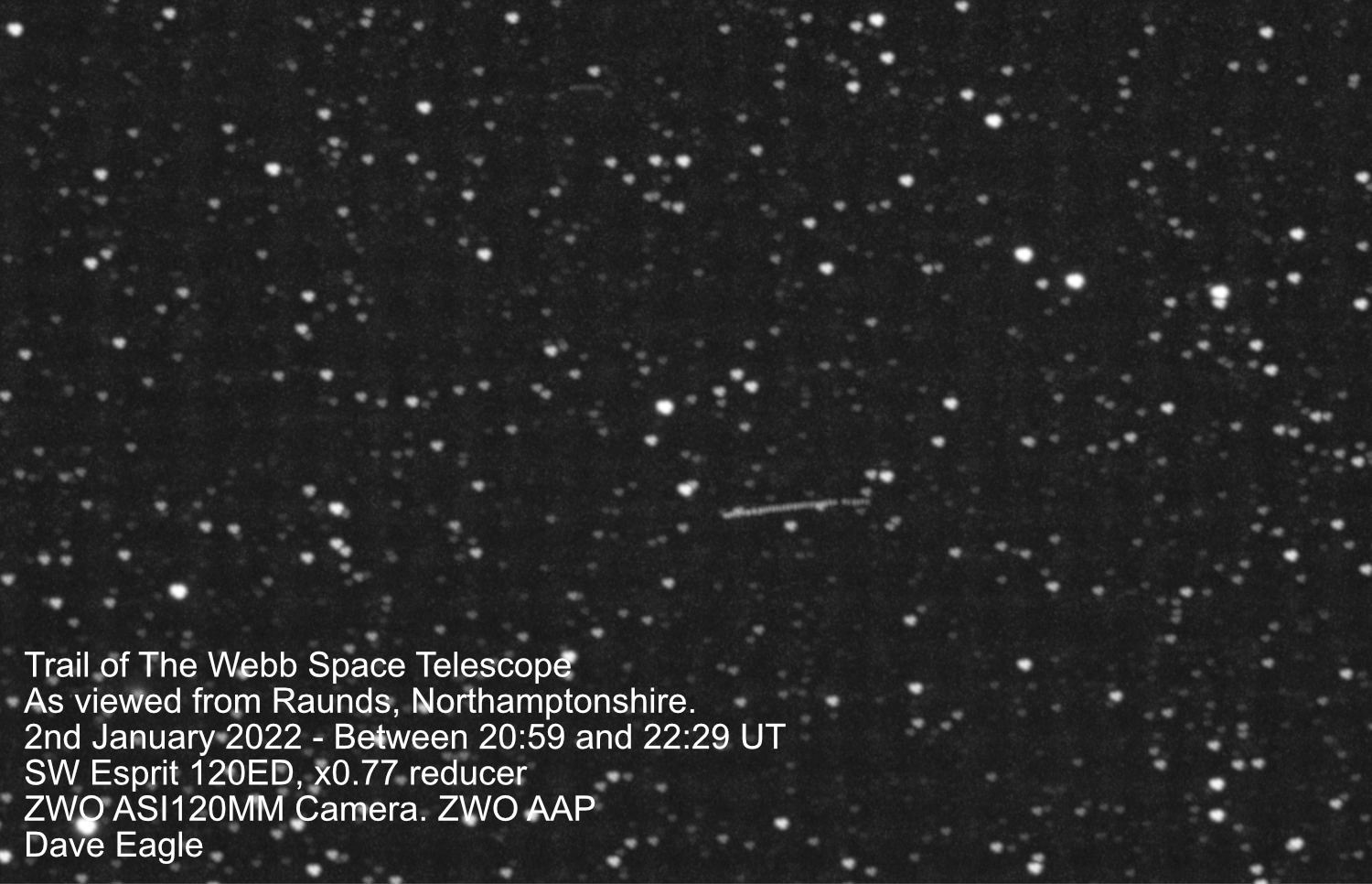
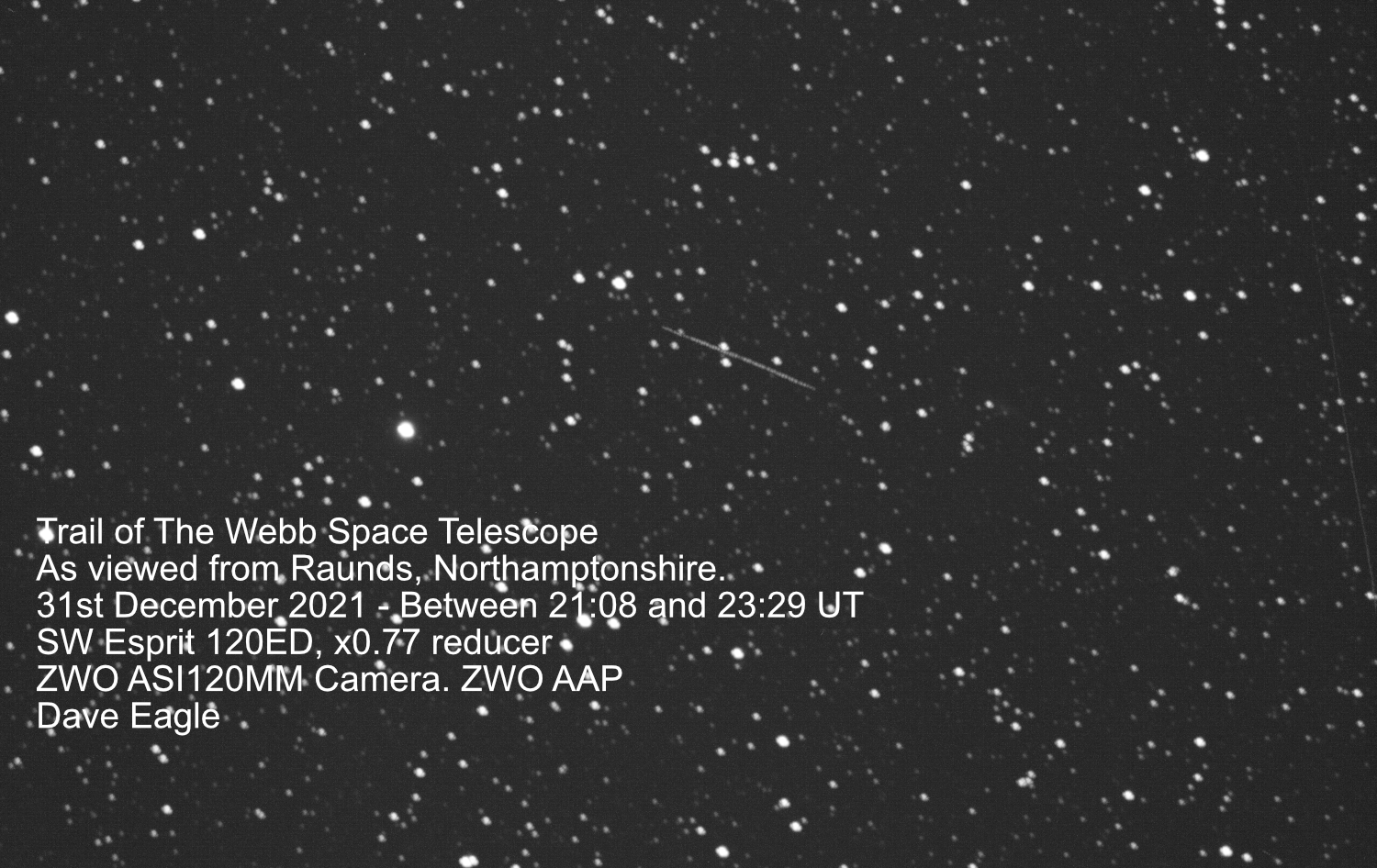
The 56 images I took in that time were put together into a composite to show Webb’s trail:

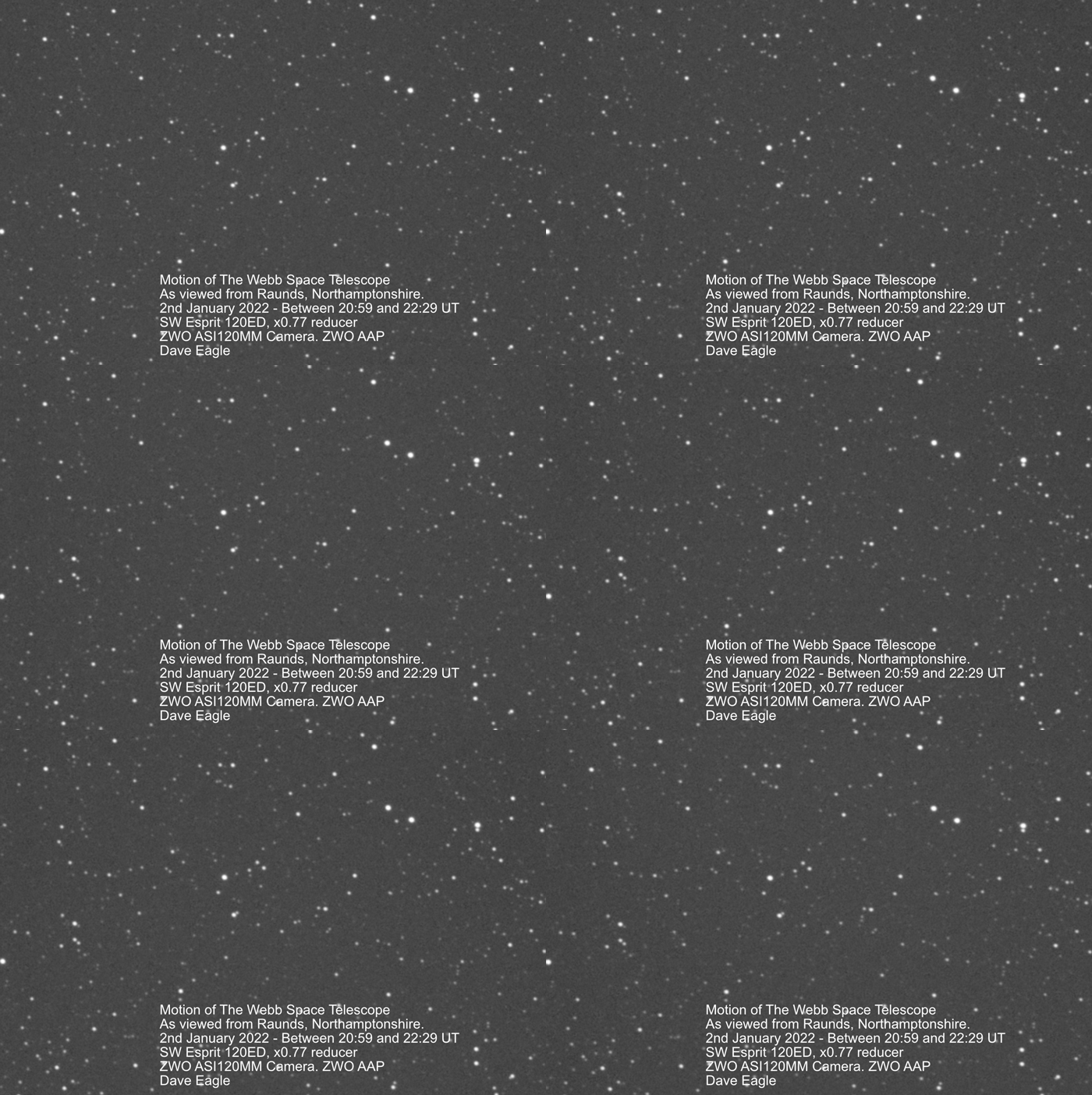
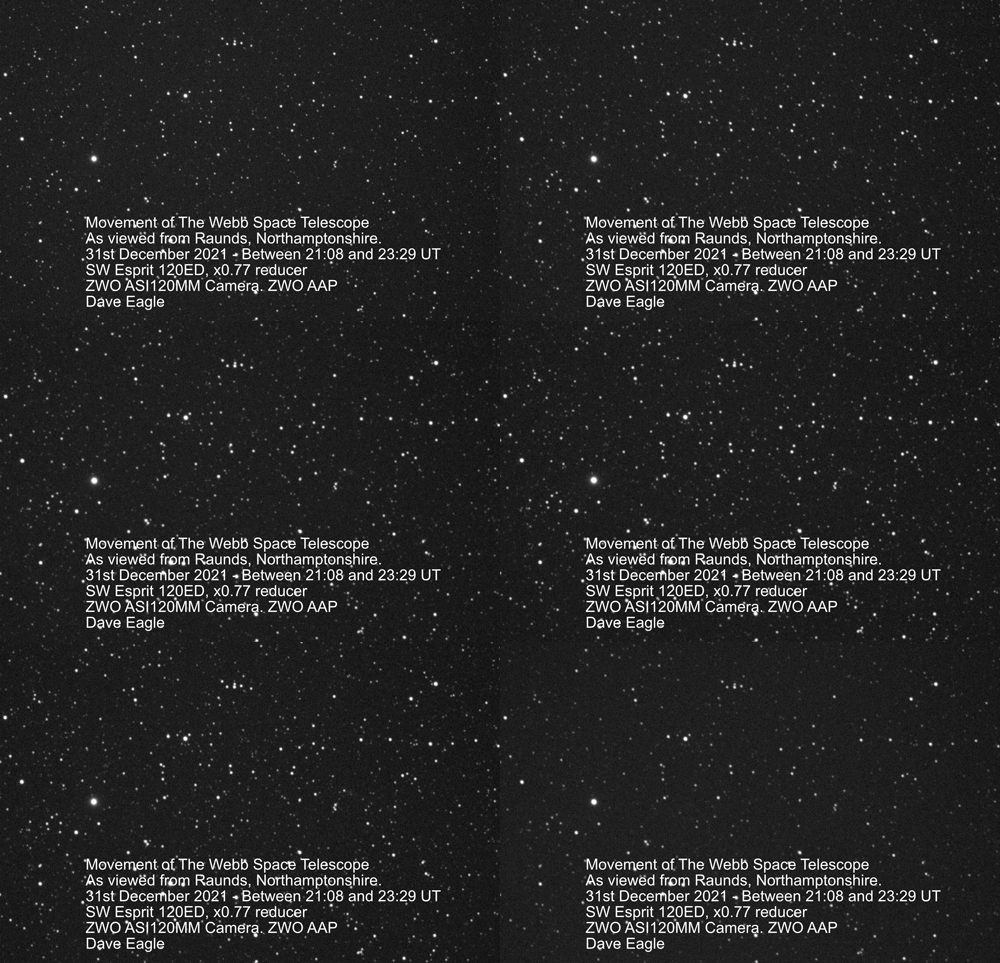
These were then used to create an animation.
I do not think the slight dips in brightness are real.
I think it is thin haze interfering. Webb fades at the end as the cloud thickened.

As you can imagine. I am a very happy bunny at successfully capturing this real challenge.