
£19.00
I’m Dave Eagle, a UK astrophotographer, and have been imaging the sky since 1987.
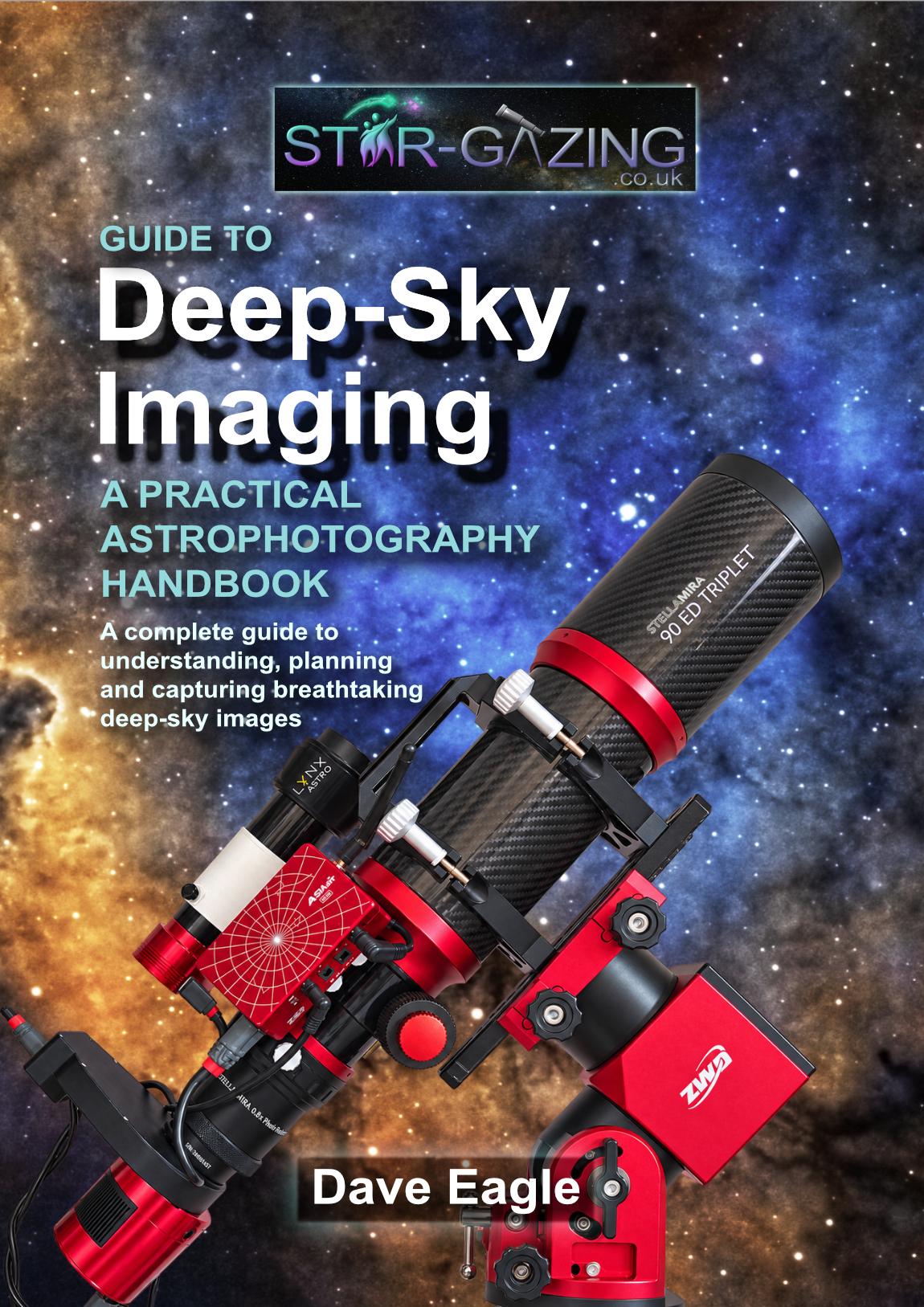
In this comprehensive, full-colour guide, which has taken me three years to write, I focus on the part most beginners struggle with: setting up your equipment correctly and capturing your first images to reveal stunning detail in deep-sky objects.
Description
From Theory to Your First Stunning Deep Sky Image.
In my Deep-Sky Imaging Guide, I’ll walk you through everything you need to know to capture stunning deep sky images, starting with the fundamentals and building up to your first finished photograph, ready to process and share.
Understand the theory first.
Before you spend a penny, I cover the full theory behind astrophotography and how cameras actually work, explained in plain English. Pixel size, image scale and camera features stop being confusing jargon and start making sense, so you understand exactly what you’re working with and why it matters.
Choose the right telescope, mount and camera
With the theory in place, I help you turn that knowledge into a buying decision. Once you understand pixel size and image scale, matching a camera to a telescope stops being guesswork. I’ll help you confidently choose a combination that suits your goals and budget.
Set it all up properly.
This is where most imaging nights go wrong. I cover focus and back focus for the most common setups, including field flatteners and focal reducers, with a worked spacing calculation so you can get your own numbers right the first time. I also cover Bahtinov masks and motorised focusers, so you can achieve sharp, reliable focus every session.
Taking your first images.
Once your equipment is set up and focused, I take you through your first steps at the eyepiece (or rather, the camera) so you can start capturing usable data with confidence, rather than trial and error under the stars.
Process your data.
With your data captured, I give you a very brief guide to processing, enough to turn your raw frames into a genuinely stunning deep sky image.
Share your images.
Finally, I suggest ways to share your finished images with others, so all that hard work under dark skies gets the audience it deserves.
If you want your imaging nights to actually work, this guide gets your equipment and technique sorted first, so you can focus on what matters: capturing great data and turning it into images you’re proud of.
Pre-order your copy today with a discount until the 15th of September.
First copies will be posted out mid-September.
Contents:
What is Astrophotography?
Astrophotography Theory
Why the Camera Sees More Than We Do
How a Camera Works
One-Shot Colour Cameras
The Bayer Matrix
Debayering
BIT Depth
Image File Formats
UV/IR Filter
Simple DSLR / Mirrorless Camera Imaging
Tripods
Lenses
Camera Settings
ISO
Bahtinov Mask
Aperture / F-ratio
Intervalometer
The 500 Rule
Taking Images
Telescopes
Considerations When Selecting a Telescope
Smart Telescopes
Refracting Telescopes – Refractors
Reflecting Telescopes – Reflectors
Aperture
Focal Length
Focal Ratio
Collimating Telescopes
Optical Aberrations
Comatic aberration and Off-Axis Astigmatism
Chromatic Aberration
Vignetting
Pinched Optics
Attaching a DSLR to a Telescope
Dedicated Astronomy Cameras
Camera Specifications
Imaging Chip Size
Pixel Size & Image Scale
Number of Pixels
Amp Glow
Memory Buffer
Camera Graphs and settings – What do they mean?
Full Well
Dynamic Range in Stops
Read Noise
Conversion Gain
QE = Peak Quantum Efficiency
Relative Response
Dark Current
Offset
Region of Interest (ROI)
Binning
Camera Cooling
Attaching Dedicated Astronomy Cameras
Focal Point and Back Focus
Back Focus Issues when fitting extra accessories
Camera Tilt
Light Pollution and Nebula Filters
Filter Sizes
Using a Filter with a DSLR
Filter Drawers and Filter Wheels
Filter Drawers
Filter Wheels
Different types of Filters
Tri-Band Filters
Dual-Band Filters
Narrowband Filters
Alt-Azimuth (Alt-Az) Mounts
Equatorial Mounts
Polar Alignment
Other Accessories
Focal Reducers, Extenders and Barlow Lenses
Dew Control
Image Rotators
Flip Mirrors
Flap Panels
Electronic Focusers
Replacement focusers
Auto-Guiding
Guide Scope and Camera
Off-Axis Guider (OAG)
Guided Dual Camera
Connecting the guiding setup to the mount
ST4 Guiding
Auto-Guiding Software and Calibration
Dithering
Automatic Meridian Flip
Plate Solving
ASCOM
EQMOD / EQDIR
Green Swamp Server
INDI Library
Computer Control Software
Astronomy Controllers
Powering Accessories
Monochrome Imaging
Monochrome Cameras
Monochrome Imaging with Filters
Narrowband Imaging
Calibration Frames
Planning your imaging
Light Pollution
Dark Sky Sites
Star Parties
Observing Sites and Safety
Troubleshooting
Basic Image Processing
Sharing and Presenting Your Images
Final Thoughts
Example Images
Additional information
| Pages | 196 |
|---|---|
| Weight | 420g |
Related products
-
Photoshop Astrophotography Image Processing Guide.
£13.00 Add to basket -
PixInsight Astrophotography Image Processing Guide
£17.00 Add to basket -
Affinity Astrophotography Image Processing Guide.
£17.00 Add to basket -
Sale!
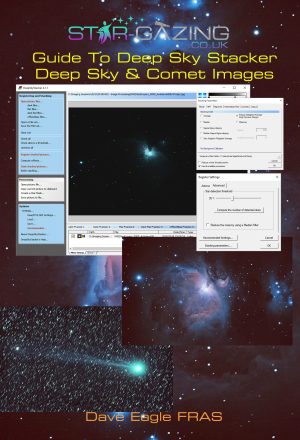
Guide to Deep Sky Stacker (Free PDF)
Original price was: £5.00.£0.00Current price is: £0.00. Add to basket